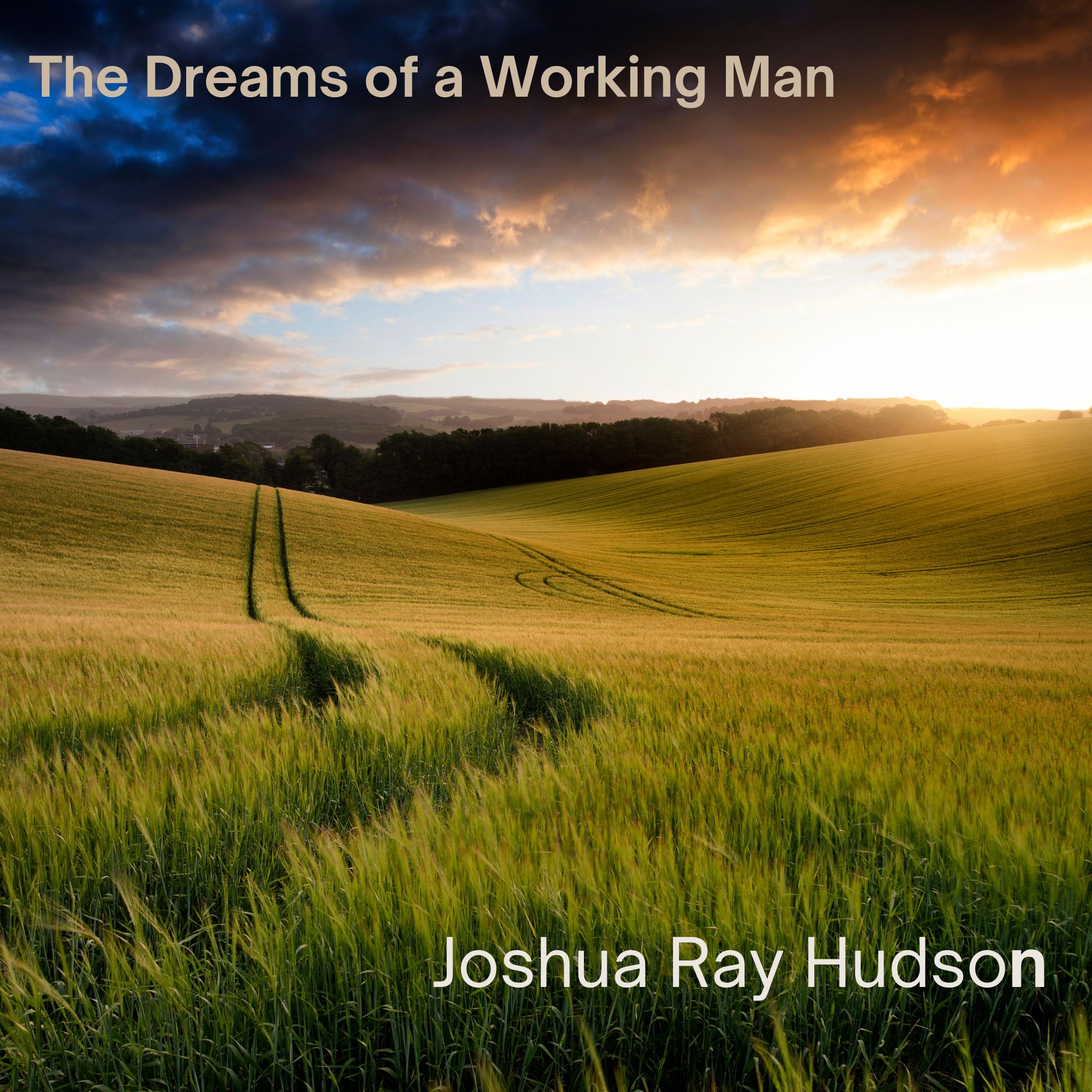
By the time you reach the final track of Joshua Ray Hudson’s The Dreams of a Working Man, you feel like you’ve lived an entire lifetime with its grind, its beauty, its heartbreaks, and its miracles. Across ten soul-baring songs, Hudson distills what it means to grow up hard, love deeply, work yourself to the bone, and still keep faith in something bigger than yourself.
A three-time Don Gibson Singer/Songwriter Award winner, Hudson doesn’t merely write songs, he documents lives. With over 350 compositions under his belt, he’s honed a craft that leans on plainspoken lyrics, powerful melodies, and razor-sharp emotional honesty. On this album, he channels all of that into a sound that blends country grit with Americana warmth, rooting each track in a lived-in authenticity that makes you believe every word he sings.
The album opens with “The Wolf,” a blue-collar anthem that captures the tightrope walk of working-class survival with biting humor and raw vulnerability. “The wolf ain’t scratching at my door, but he’s on the front porch,” Hudson sings, delivering a sobering image of economic precarity dressed in toe-tapping guitars and laid-back swagger. It sets the tone for the record’s unflinching gaze into the life of a man carrying more weight than rest.
That balance of heaviness and hope continues in “I Had a Dream Last Night,” a standout track soaked in nostalgia. With just voice and acoustic guitar for most of its duration, it paints a picture of lost innocence and fleeting time. The song’s power lies not just in its subject: memories of a father, a river, and childhood joy, but in how it dares to say we can never truly go back, even in dreams. This is Hudson at his most poetic.
“Barefoot Southern Heart” shifts the energy upward with a youthful, sun-drenched tribute to a love that’s rooted in place and simplicity. It’s a celebration of Southern womanhood that’s more affectionate than objectifying, and the subtle violin flourishes lend the track a gentle richness. Where many country love songs collapse under cliché, Hudson’s version dances with warmth and sincerity.
On the spiritual side, “The Silver Lining” speaks directly to God with the confessional tone of a man who’s made peace with his imperfections. Hudson doesn’t claim to have all the answers, he asks for rain, knowing it might be the only way to cleanse the pain. The instrumentation here, especially the wistful fiddle lines, give this track the soul of a church hymn whispered from a kitchen table after midnight.
Then comes the heart of the album: “The Dreams of a Working Man.” This is a mission statement. Hudson doesn’t shy away from indicting the forces, corporations, offshored jobs, political betrayal, that have fractured the American promise. But this isn’t a protest for its own sake. It’s a cry from someone who’s still trying, still hoping, still praying. His voice carries the weary strength of a man who clocks in, not out.
“Moonshine Runner” arrives like a lightning bolt, fast-paced, intricate, and gloriously reckless. It’s here that Hudson flexes his flat-picking guitar chops with the speed and agility of someone who knows these Southern roads all too well. The storytelling is vivid, but it’s the playing that makes this song burn like high-proof liquor.
In “That’s Why We Stand,” Hudson offers a solemn tribute to veterans without slipping into overwrought patriotism. It’s clear-eyed and deeply respectful, highlighting individual sacrifice while urging collective memory. The fact that it’s been selected as the official song for Purple Heart Homes feels fitting, it’s not just a good song; it’s a needed one.
“Roots” brings us back home. It’s a generational anthem, chronicling the toil and pride of families whose lives were shaped by the textile mills and sun-scorched fields of the South. “No matter how high I get, they keep me anchored down,” Hudson sings, grounding his musical ascent in the humility of his heritage. It’s a rallying cry for remembering where you came from, no matter where you’re headed.
By the time we reach “Old Too Quick, Wise Too Late,” Hudson steps into the philosopher’s boots. This song could’ve come across as a warning, but instead it lands as a gentle reminder to live while you can. With an acoustic setup and lyrics that feel like underlined entries in a life journal, it offers a soft reckoning: you only get so many pages.
Then, with “Look at Me,” Hudson delivers the album’s most courageous moment. Centering the experience of someone on the autism spectrum, the song does something rare in country music: it offers compassion for neurodiversity without pity or performative awareness. Its slightly psychedelic tones and introspective delivery underscore its emotional gravity. Whether autobiographical or empathetically imagined, it’s a powerful close to the narrative arc, one that invites us to stop assuming, and start listening.
The Dreams of a Working Man isn’t trying to be trendy or polished. Its ambition lies in honesty, not perfection, and its strength comes from Hudson’s refusal to gloss over anything. Whether he’s talking about poverty, prayer, war, love, mental health, or small-town memories, Hudson writes from a place of lived truth. He offers no easy answers, but plenty of reasons to keep going.
This isn’t just an album for fans of Americana or country; it’s an album for anyone who’s ever had to hold it together for others, for those who’ve aged too fast, and for those still dreaming even when the odds are stacked high. In this album, Joshua Ray Hudson reminds us that there’s timeless power in telling the old stories, if you tell them right..