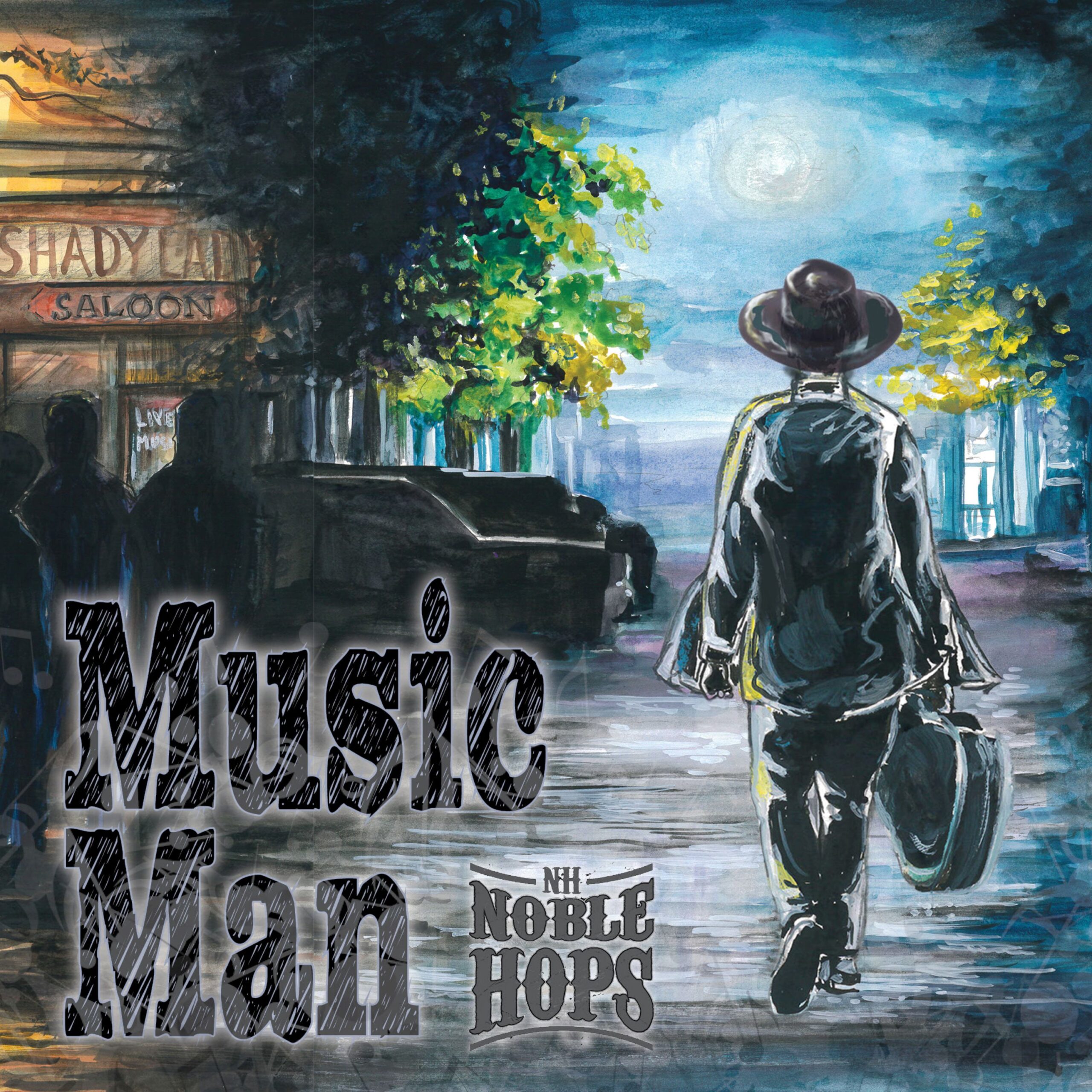
There’s a certain smell to songs like “Music Man.” It ain’t cologne and it sure as hell isn’t success. It smells like stale beer soaked into hardwood floors, cigarette smoke that never quite left the walls, and the faint metallic tang of guitar strings pushed past their breaking point. Noble Hops don’t just flirt with that atmosphere—they live in it, roll around in it, and come out the other side grinning like they’ve got nothing left to lose.
“Music Man” isn’t about the myth. It’s about the guy who didn’t make the deal.
See, rock and roll has always loved its Faustian fairy tales—the crossroads, the devil, the big score. Utah Burgess flips that script like he’s tossing back a cheap whiskey. His protagonist didn’t sell his soul, didn’t strike gold, didn’t get the girl or the mansion or the Rolling Stone cover. Instead, he got the road. He got the bars. He got the music. And if that sounds like a consolation prize, you’re not listening closely enough.
“I didn’t sell my soul for rock and roll, but it became my way of life”—that line hits like a punch you didn’t see coming, mostly because it’s not trying to impress you. It’s just telling the truth. And truth in rock music is a dangerous thing. It strips away all the glitter and leaves you staring at the bones.
The band locks into a groove that feels like it’s been driven hard for miles and never serviced. Tony Villella’s guitars don’t shimmer—they grind. There’s grit in every note, like the amps have been dragged through gravel before they ever got plugged in. Johnny “Sleeves” Costa’s bass doesn’t just hold things together—it lumbers forward like it’s carrying the weight of every dive bar the song’s ever been played in. And Brad Hulburt’s drums? They don’t keep time so much as they keep the whole thing from falling apart.
And that’s the magic trick here. “Music Man” always sounds like it’s about to collapse under its own honesty, but it never does.
Recorded at Rattle Clack Studio in Pittsburgh with Jazz Byers, the track carries that sense of struggle baked right into its DNA. You can hear the false starts, even if you don’t know the story. The fact that Noble Hops scrapped earlier versions and rebuilt the song from the ground up only adds to the mythology—not the devil-at-the-crossroads mythology, but the far more brutal one of persistence. Of getting knocked down, throwing out what didn’t work, and doing it again anyway.
That chorus—“Music Man, playing across the land”—should feel like a cliché. In lesser hands, it would be. But here it lands like a badge of honor worn thin from years of use. There’s no irony, no wink to the audience. Just a guy staking his claim on the only identity he’s got left.
And maybe that’s what makes “Music Man” stick. It’s not trying to be legendary. It’s trying to be lived-in.
By the time Burgess sings about his songs living on in empty bars and beat-up guitars, you realize Noble Hops aren’t chasing immortality. They’re chasing the next gig, the next song, the next night where somebody actually listens. And in a world full of overproduced, overthought, overhyped rock music, that might just be the most rebellious thing left.
No devil. No deal. No regrets. Just the long road and a guitar that refuses to stay quiet.
–Leslie Banks