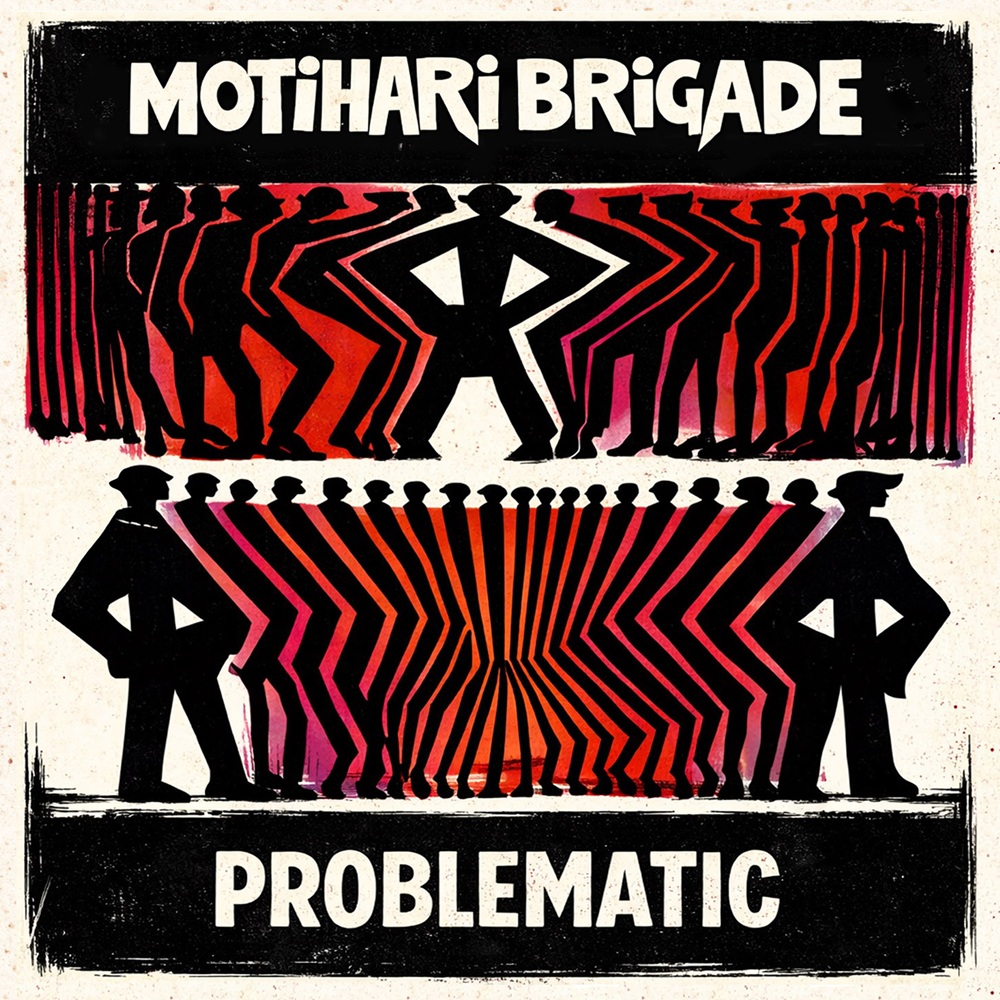
Motihari Brigade takes its name from Motihari, India, the birthplace of George Orwell, and the band, essentially the vehicle for guitarist, singer, and songwriter Eric Winston, timed Problematic, their third album, to release on Orwell’s birthday. The album leans on ideas from Orwell, Huxley and Socrates to build a sprawling critique of algorithmic control, AI, censorship and militarism, all filtered through a garage and glam-inflected classic rock sound out of Indianapolis.
I’m not exaggerating when I say this: this is one of the best albums I have had the pleasure of listening to this year. Mainly because of how timely and topical, and genuinely nuanced the lyrics are. However, that doesn’t mean that other elements of the album aren’t equally as great, but the lyrics are the main reason why I personally really love it. I would argue the album wouldn’t even work if the music wasn’t genuinely so much fun to listen to. I’m gonna dive into the 3 songs I had the most fun listening to.
“Problematic” is the defining piece of the album, the title track that lays down the record’s central groove and establishes its guiding philosophy, urging listeners to keep asking questions and, as the band puts it, be problematic, a direct nod to the Orwellian thoughtcrime idea the whole project is built around. Musically, the song evokes the psychedelic rock sound of the 60s and 70s, which the band doesn’t really deviate from that much because it fits perfectly the anti-establishment sentiment that permeates throughout the entire album. It doesn’t feel like someone trying to play like those 70s bands; it feels like they were actually a part of it, that’s how authentic the sound is and how much of these guys’ personality comes through, and that’s precisely the reason why it sounds fresh and contemporary instead of an attempt to emulate a style.
“Chatbot Don’t Like It” is dystopian and hilarious at the same time. It discusses the world we might live in very soon, where the chatbot interfaces dictate what we get to know and what we can discuss and think about. The band does this in an incredibly funky song with some well-timed text-to-speech vocals coming in to highlight the absurdity of this situation.
“Save Ourselves” is about how selfish and self-obsessed we’ve become in the modern age and shares the same level of nuance in the lyrics as all the other songs on the album. This song stands out because of how important the fact that no one is gonna magically save us and that we’ll have to save ourselves is to hear in these trying times. The song also features one of the best keyboard solos on the album around the halfway point.
The album’s most ambitious stretch comes later with “The Hubris March,” a two-part suite pairing “Heedless Of The Storm” with “Ten Years Time,” meant to be heard as one continuous piece rather than two separate songs. Together, they trace the same grim cycle over and over, the rush toward war followed by the wreckage it leaves behind, with a detuned, feedback-howling guitar transition standing in for the sound of the battlefield itself before the record pivots straight into a cover of Creedence Clearwater Revival’s “Fortunate Son,” in case the point about runaway militarism wasn’t already clear.
It’s so great for a rock album that is so connected to the zeitgeist to release instead of just another throwback nostalgia-bait rock album; this is one for the ages that places itself firmly and confidently in this very uncertain time with some very strong anti-war and pro-humanity messages. A message for the unity of humanity and against the class divide that is growing every day like a giant chasm.