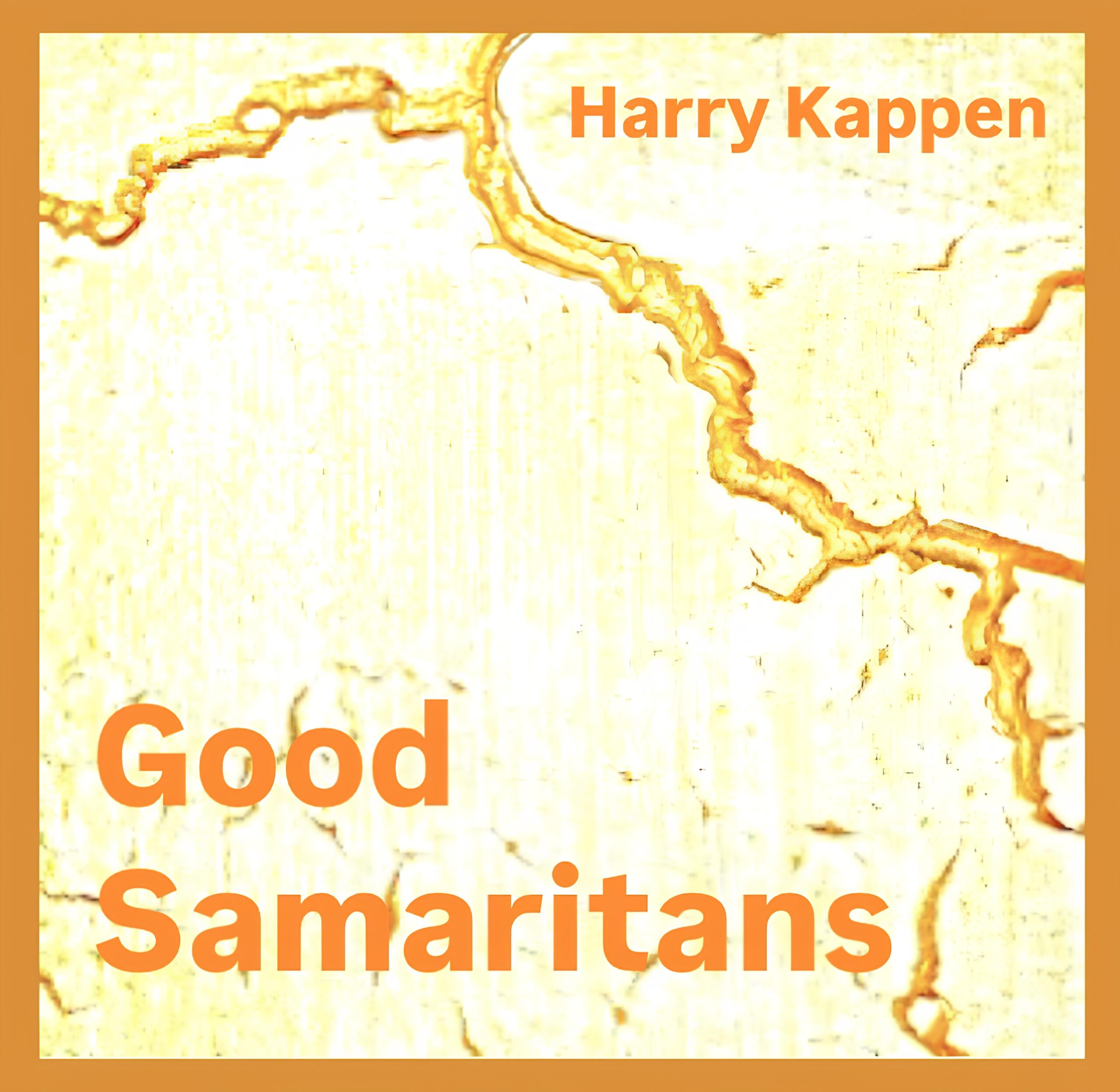
Harry Kappen’s “Good Samaritans” arrives like a brick hurled through the glowing screen of modern life. It is loud, pointed, impatient, and entirely uninterested in flattering a culture that has mistaken visibility for virtue. While everybody else is angling for the perfect photograph, polishing a personal brand, or announcing their own decency in neon letters, Kappen wants to talk about the people who simply stop and help.
Now there is a radical idea.
Taken from his album After the Crossing, the single is a firm, energetic rock song with enough theatrical muscle to make its social criticism feel like a public confrontation. Kappen has acknowledged David Bowie as an influence, and the connection makes sense. “Good Samaritans” shares Bowie’s fascination with performance, masks, manufactured identities, and the strange distance between the person and the persona.
The opening lyrics plunge straight into the carnival: “superheroes,” “flashy words,” and dreams sold with the promise that buying them will make us whole. Kappen surveys the entire digital sideshow—filtered pain, plastic smiles, sculpted skies, hashtags, vacant perfection—and sees a culture feverishly turning its tears into champagne before somebody can photograph the bottle.
It would be funny if it were not so painfully familiar.
Then the chorus cuts through the glitter. While everyone else is fighting for attention, the good Samaritans are standing in the rain, stopping to help and sharing another person’s pain. They are unseen, uncelebrated, and decidedly unmarketable. They do not rescue people because there might be a camera nearby. They act because another human being needs them.
That distinction gives the song its punch. Kappen is not merely criticizing social media; that would be too easy, and the world has already produced enough songs complaining about phones. He is attacking the transformation of compassion into performance. In this universe, even goodness requires branding, and suffering matters only when it can be packaged into content.
Mexican singer Danna Gomez joins the choruses, adding another voice to what increasingly feels like a communal declaration. Her presence also reflects the new chapter behind After the Crossing, Kappen’s first album recorded after relocating from the Netherlands to Mexico. Kappen performed, sang, and produced the album himself, but Gomez’s contribution prevents this particular anthem from becoming a solitary sermon.
The finest line is also the simplest: “These saints don’t wear capes.” It could have collapsed into sentimentality, but Kappen earns it by first dragging listeners through the artificial paradise surrounding it. After all the neon promises and carefully planned lies, simple human decency begins to look revolutionary.
“Good Samaritans” is not subtle, but subtlety would defeat its purpose. This is a rock song pointing into the crowd and asking who will remain when the spectacle ends. Kappen’s answer is clear: not the loudest, prettiest, or most followed among us, but those ordinary souls who choose to stay when everyone else walks away.