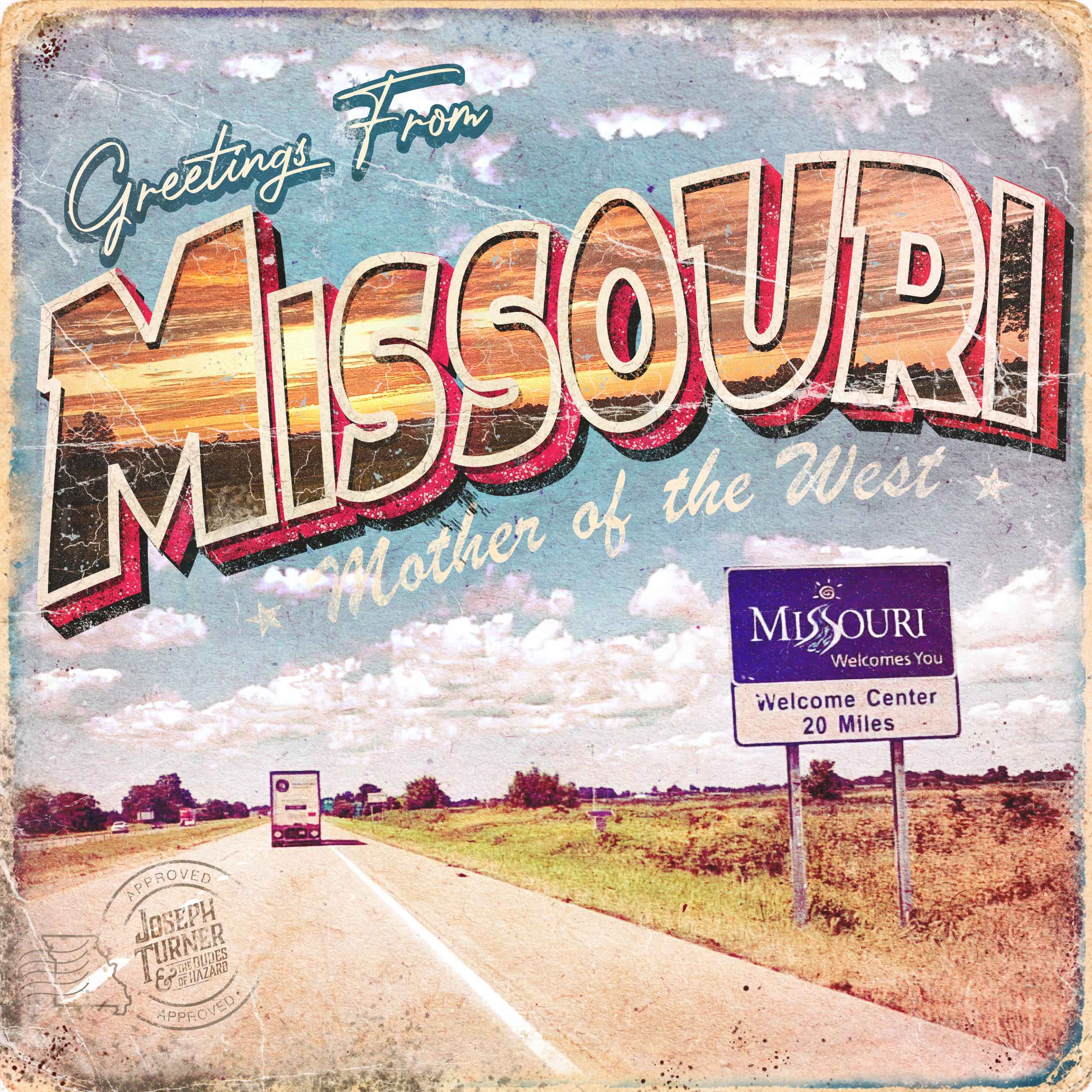
Joseph Turner & The Dudes of Hazard put out “Missouri” on 23 October 2026. It is a dark Americana and country single about loss, faith, and finding your way when life doesn’t go to plan. It begins as a slow, waltz-like country ballad, then shifts gears just past the halfway mark into a faster, bluesier roots-rock groove.
“It’s almost two songs in one, but it’s still one story.” — Joseph Turner

“Missouri” comes from a personal place. Losing people early in life changed the way Turner looked at the world. It knocked him off course and made him question what he thought he understood about life, death, and everything in between.
The song explores that struggle and the choices we face when we’re hurting. Its angel and demon stand for the different pulls we feel at a crossroads, between finding a way forward and giving in to what’s dragging us down. It is a story about trying to make sense of loss, even when there are no easy answers.
“‘Missouri’ is one of those songs that has grown with me. I wrote it years ago, and as my perspective on life, death and loss has changed, so has the way I hear it. Sometimes you write a song before you fully understand what it’s trying to tell you.” — Joseph Turner
It is one of the first songs Turner ever wrote, and it started with a bit of wordplay. He wrote it before ever visiting the state. After finally getting there and discovering how beautiful it was, he went back and adjusted some of the lyrics.
⇒ Check out our thoughts on “Missouri” here.
The first half is a proper country ballad: acoustic guitar, pedal steel, and a story worth telling, with a slow, waltz-like feel and a bluesy edge that leaves plenty of room for the lyrics to breathe. Turner points to John Prine, George Strait, and Bonnie Raitt as the spirit of that half.
Then the song changes. The second half leans toward Sturgill Simpson and Anders Osborne, with more grit and forward motion. The song starts out looking inward and gradually finds a different kind of energy. That change is part of the story. Much like the way we deal with loss, the song doesn’t stay in the same place from beginning to end.