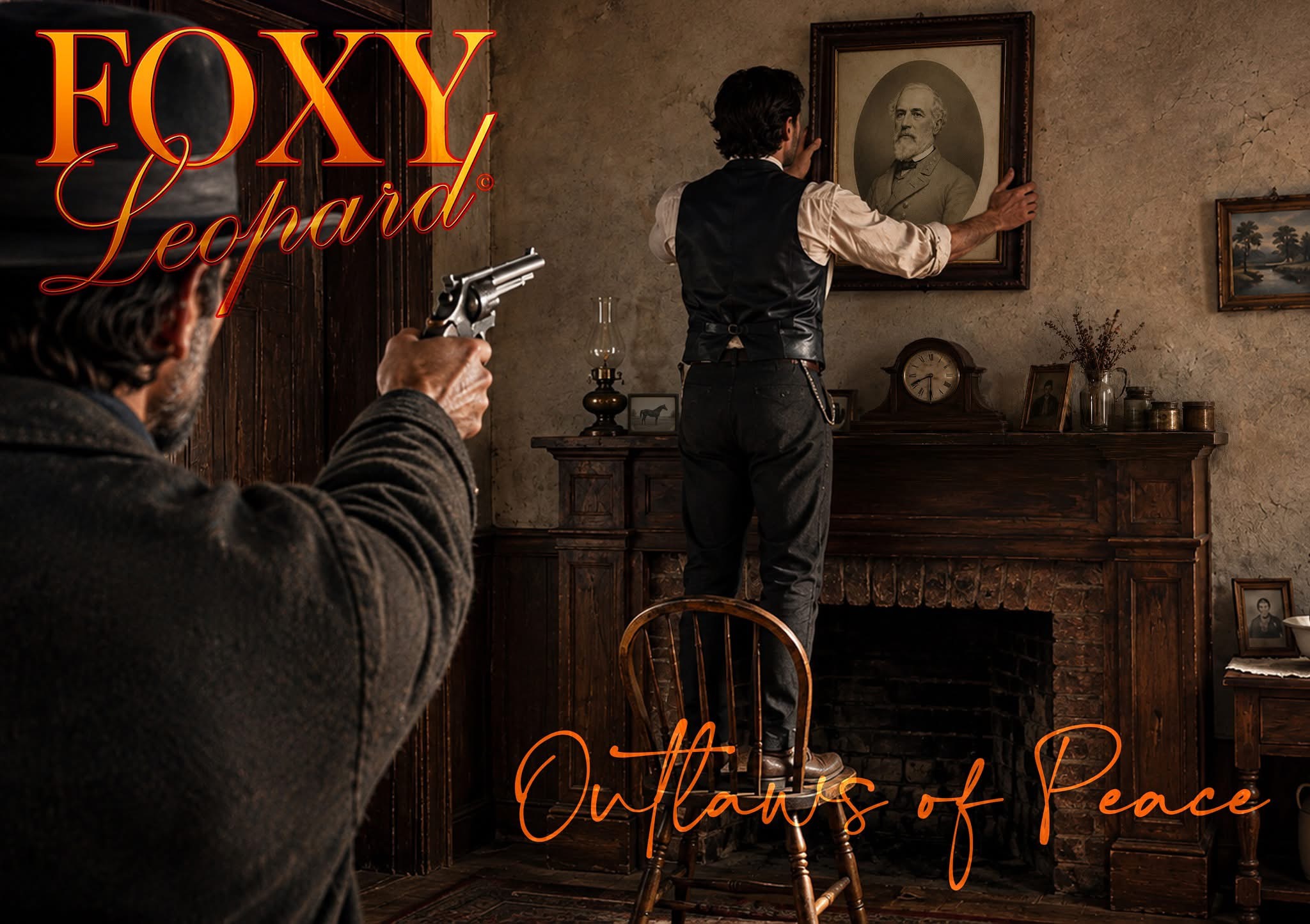
Wars may have their official endings, but their consequences rarely follow the same timeline. With “Outlaws of Peace,” Foxy Leopard revisits the aftermath of the American Civil War, exploring the lives of those who struggled to find their place in a world that had fundamentally changed. Featured on the concept album After, the track draws on the stories of Jesse and Frank James to examine the complicated relationship between violence, identity, and the possibility of starting over.
Rather than focusing on their notorious outlaw reputations, Foxy Leopard looks at the two former Confederate guerrillas through the wider lens of a society struggling to move beyond conflict. The question is not simply what happens when a war ends, but what becomes of those who have spent years living within its violence. It’s a historical perspective that reaches beyond nineteenth-century America, touching on the lasting consequences of conflict across generations.

The track takes an equally unconventional direction. Built around a raw, aggressive resonator guitar, its sound moves between dark folk, alternative country, and acoustic rock. Metallic string attacks, haunting slides, and deep acoustic resonance give the instrument an almost electric growl, creating a distinctive sonic identity. The stripped-back arrangement allows the guitar to take centre stage, with its shifting textures and sharp attacks gradually building an atmosphere that feels gritty, tense, and almost cinematic.
One particularly striking detail is the historical parallel between Abraham Lincoln’s assassination in 1865 and Jesse James’s murder in 1882, both shot from behind. It’s an unsettling connection that adds another dimension to the project’s exploration of the Civil War’s enduring legacy. The guitar’s abrasive character seems particularly fitting here, almost echoing the unresolved tensions and violence embedded in the story.
As part of a wider conceptual project examining how conflict reshapes ordinary lives, Foxy Leopard‘s “Outlaws of Peace,” from the album After, brings together historical storytelling and an unconventional musical approach. Rather than romanticising the outlaw tradition, it offers a more contemplative perspective on the aftermath of violence, reminding us that the end of a war doesn’t necessarily mean the beginning of peace..