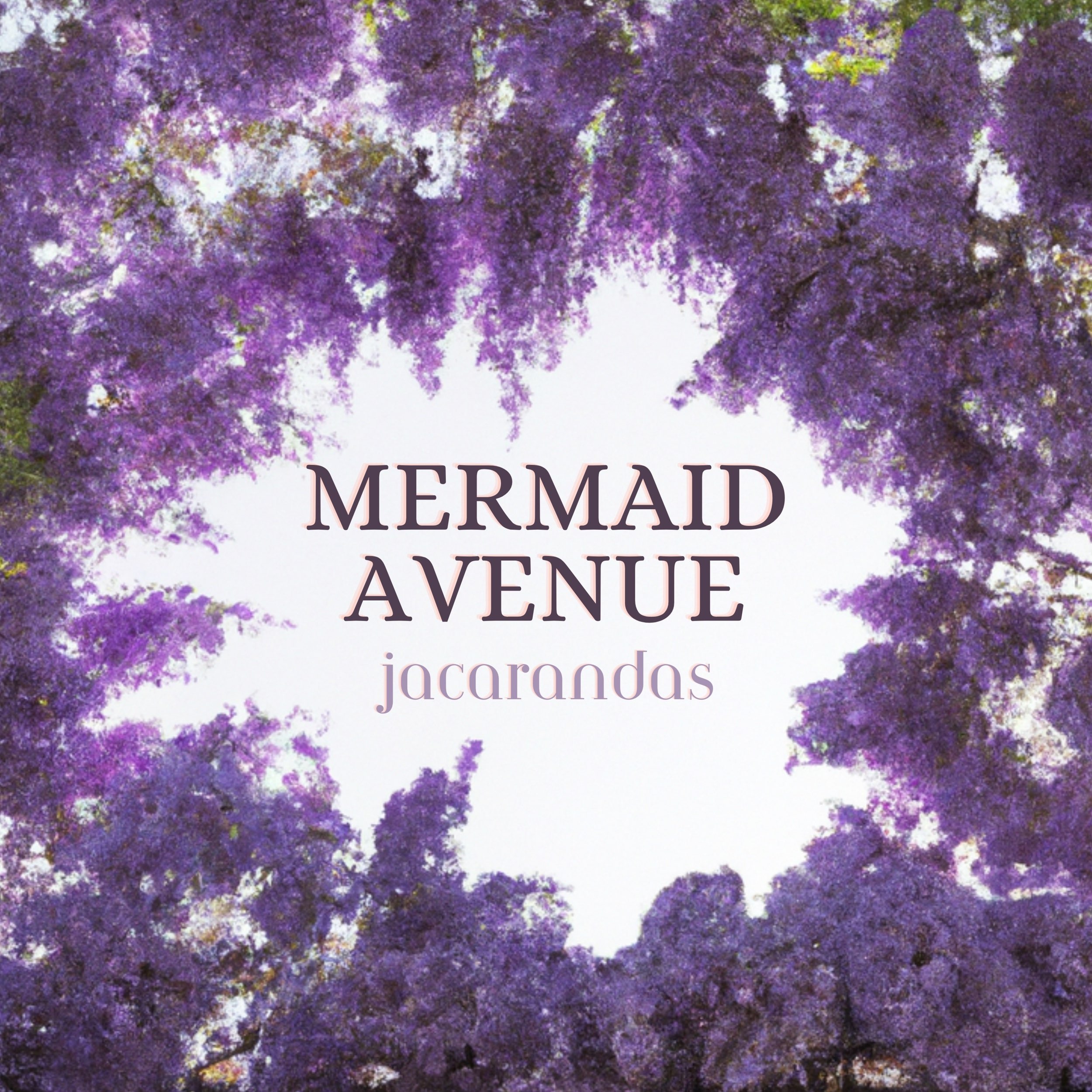
Mermaid Avenue’s Jacarandas stretches outward while quietly turning inward. It carries the feeling of movement, of distance, and of time passing; but always returns to something that feels genuine and deeply human. Across the album, Mermaid Avenue balances openness with introspection in a way that feels effortless.
Named after the jacaranda bloom, the album carries that same seasonal feeling, something that arrives, transforms everything briefly, then fades into memory. Jacarandas becomes more than a title; it frames the entire record as a passing moment you’re invited to sit inside, even if only for a while.
The album opens with “Talk Pretty,” immediately grounding us in a familiar yet inviting sonic space. Guitar-driven and warm, it echoes the spirit of classic Americana without feeling derivative. There’s a sense of ease in how it unfolds, just a band fully settled into their sound. That same sense of motion continues with “First Move,” a track that feels almost cinematic in its openness, like watching landscapes shift through a car window while your thoughts wander elsewhere.
When the album reaches its title track, “Jacarandas,” everything softens into something more suspended. The strumming is simple but emotionally charged, with sliding guitars that seem to stretch each moment just a little longer. It’s a song rooted in longing, but it never collapses into heaviness, instead, it lingers, allowing the listener to sit within its quiet nostalgia.

Mermaid Avenue’s sensitivity to atmosphere is quite evident. “Better Not to Know” introduces a subtle shift, with keys that shimmer gently and create a nocturnal mood, like reflections on wet pavement under dim city lights. Meanwhile, “She’ll Come Down When She’s Ready” carries a quiet tension, its riff looping with a sense of restraint that feels both unresolved and intentional.
At the center of it all is Peter Clarke’s voice: warm, weathered, and deeply present. He doesn’t push emotion outward; he lets it settle inward. Around him, the band builds textured arrangements with care: layered guitars, soft harmonies, touches of lap steel and keys that expand the sound without overwhelming it. Every element feels considered, yet never rigid.
The closing track, “Boy in the Mirror,” gently strips everything back. With Melinda Coles’ fiddle weaving through the arrangement, the song leans into a more traditional, almost timeless space. It feels introspective and exposed, like a quiet moment of reckoning. There’s no dramatic conclusion. Just a soft release, leaving space for reflection.
Jacarandas is an album shaped by time: how it moves, how it settles, how it reshapes what we carry. Mermaid Avenue navigate alt-country, indie rock, and folk with a quiet confidence, never losing their emotional center. The result is a record that feels cohesive not because it tries to be, but because it simply is..