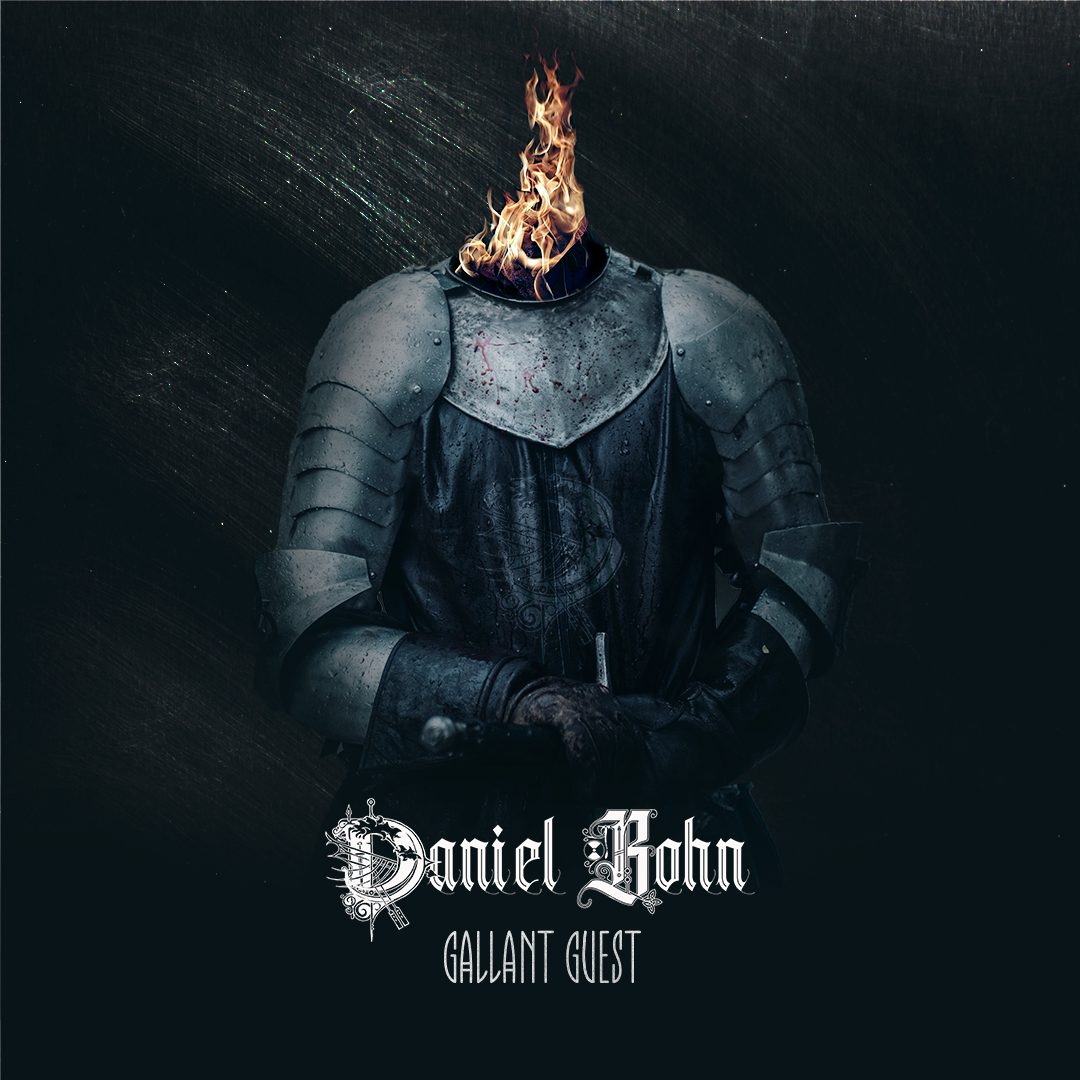
Daniel Bohn operates alone out of St. Louis, writing, performing, and recording everything himself, handling guitars, drums, piano, bass, and vocals on his own. Gallant Guest is his first release under Sliptrick Records, mixed and mastered by Dorian Falconeri, and it arrives as a concept album that picks up the narrative thread from its predecessor, Colors of the Land. The story follows a god seeking revenge on another, using the album’s central character as an instrument of destruction, ultimately targeting the mortals and erasing the great symbol of courage and life, the Whale. It is a dark and deliberately grim piece of world-building, and the music lives entirely inside that atmosphere.

Those who have been following Bohn’s output will recognize the title. “The Gallant Guest,” which we covered previously, is now the album’s title track and the centerpiece of this larger work. We noted then its raw intensity, its debt to Slayer and Lamb of God, and the way Bohn’s guttural vocals served the track’s unrelenting weight rather than fighting it. That song’s DNA runs through the entire record, but Gallant Guest as a full-length proves there is considerably more range here than any single track could suggest. The influences Bohn cites, Between the Buried and Me, Porcupine Tree, Opeth, Persefone, tell you more about what this album is actually doing than the death metal tag alone would. There is prog architecture underneath the brutality, and the concept album framing demands it. I’ll be focusing on three tracks that best illustrate what makes this record worth your time.
Daniel Bohn kicks the album off with “Runes,” which gradually builds with sweet atmospheric tom grooves accompanying washed-out, haunted guitar sounds, then morphs into a very modern interpretation of classic black metal riffs. The secret to why it sounds so modern is how ever-evolving the drums sound; you can’t really pin the drumming to one groove for a long time, which is the reason why it sounds so intense. In my opinion, it’s like a flailing monster lashing out, but at the same time, it’s brilliantly musical.
“Failure” stands out as one of the more melancholic and dynamic pieces on the album, featuring clean guitars, piano, and soft vocals at the helm. It manages to really tug at the heartstrings because of the huge sonic space it takes and because of how it utilizes the silence between the notes and the tom hits. Even when it does dial it up and introduces a full groove and the delicate vocals turn to screams, it feels earned and in tandem with the narrative, creates a unique almost post-metal sound.
“Verisimilitude” begins with an absolutely gut-wrenching cello melody that is reminiscent of the great Russian composers, with how infinitely depressed it sounds. It ushers in the end of this beautifully tragic album. The cello melody fades out, and a musical section that sounds like what thick fog looks like fades in. The bass and drums create the horror beneath the surface, and the guitars create the suspense as the vocals sound like the ghastly fog speaking. But it doesn’t last forever; soon that fog turns into a storm, as what I personally feel is the most intense rhythm section on the album takes lead and relentlessly moves from one groove to the next, from screams to solos, it’s sublime. The way it returns to a choir singing the main theme is an absolute masterclass of writing.
Gallant Guest is a record that earns its ambitions. Pulling off a concept album as a solo project, with this level of compositional range, from the feral black metal of the opener to the elegiac cello of the closer, is a significant undertaking, and Bohn handles it with the kind of conviction that makes you want to go back and hear it again from the beginning. His first record under a label is a strong statement of what this project is capable of.