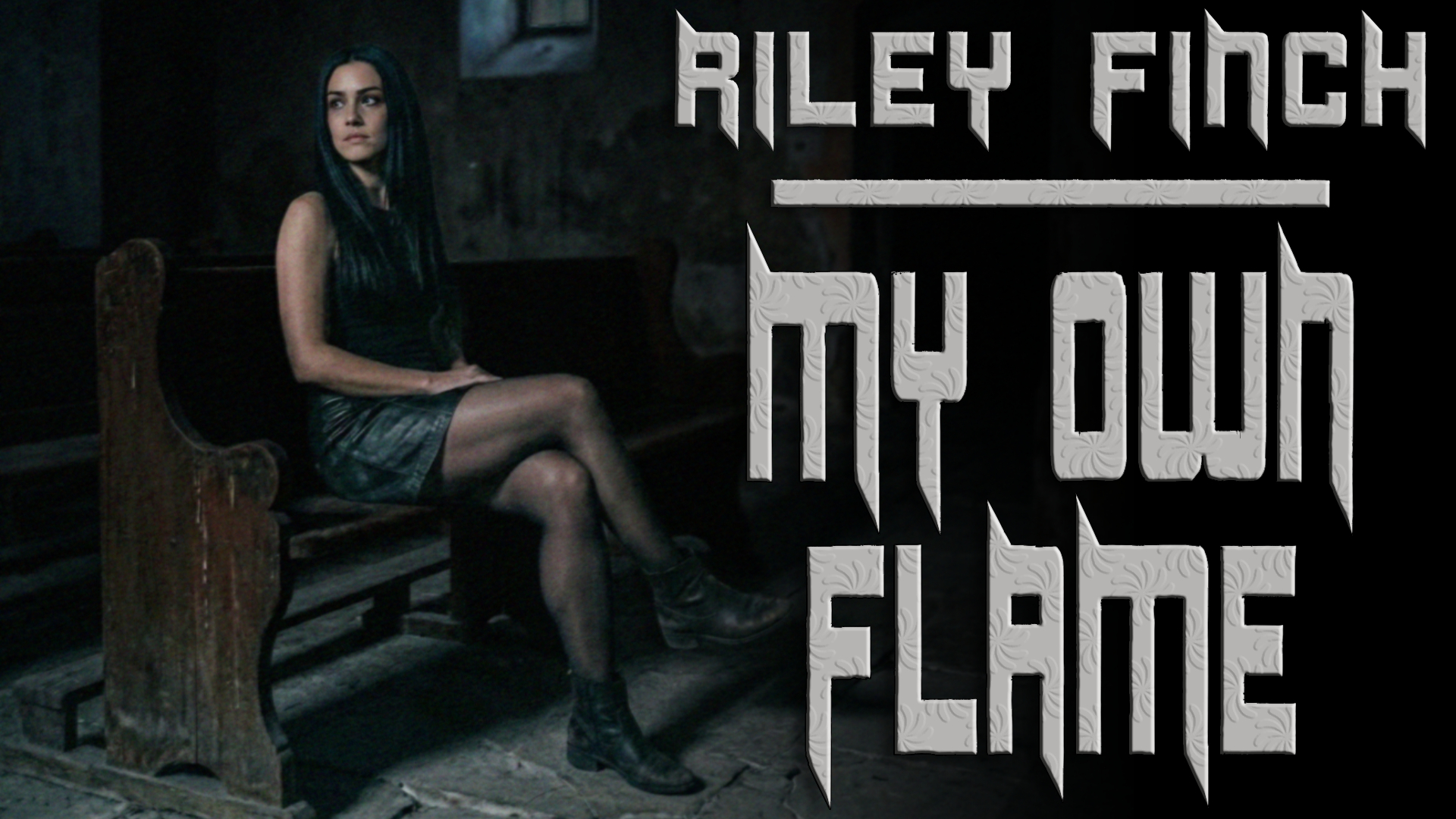
Fire runs through every corner of Riley Finch’s “My Own Flame,” not as destruction, but as rebirth. The track transforms flames into symbols of self-worth, resilience, and emotional renewal, carrying listeners through a landscape built from old wounds and newfound clarity. Through acoustic-driven arrangements and confessional lyricism, Riley Finch crafts a piece that burns softly before revealing its full intensity.
“My Own Flame” is a story about rediscovery. The song moves through emotional spaces shaped by silence, self-erasure, and the painful habit of shrinking oneself to fit into expectations. Rather than turning those experiences into bitterness, Riley Finch reshapes them into something restorative.
 That transformation appears immediately within the opening lines: “I walked through fire they told me to fear / They tried to break me, but I’m still here.” The imagery is simple yet effective. Fire becomes both the obstacle and the path forward, representing not only survival but the willingness to emerge changed.
The track sits comfortably between acoustic rock intimacy and alternative rock depth. The arrangement avoids unnecessary excess, allowing the emotional weight of the lyrics to remain at the center. There is restraint throughout, but it never weakens the impact. Instead, the quieter moments give the song its pulse.
The chorus acts as the emotional turning point: “I light my own flame, I beat my own drum / Don’t need permission, I don’t need to run.” Here, the fire motif shifts from struggle into ownership. What once threatened becomes something carried with intention. The song stops asking for acceptance and begins speaking from self-recognition.
One of the strongest lyrical moments arrives in: “I wore your mask, I bit my tongue / Lost myself trying to belong.” It is perhaps the most vulnerable section of the track because it addresses something deeply human, the exhaustion of abandoning parts of ourselves in pursuit of belonging.
As the song progresses, its emotional landscape widens. The bridge introduces a decisive shift: “They tried to write my ending / But I rewrote the page.” This moment feels less like rebellion and more like reclamation. The narrative no longer centers on what was lost, but on what can still be rebuilt.
By the closing lines, “Yeah, I light my own flame / And it’s mine alone to carry,” the fire imagery reaches its final form. It is no longer a symbol of pain or resistance. It becomes responsibility, identity, and acceptance.
“My Own Flame” by Riley Finch delivers an emotionally charged piece where heartbreak gives way to healing and resilience grows quietly beneath the surface. It is a song that does not burn everything down; it, indeed, lights the way forward..