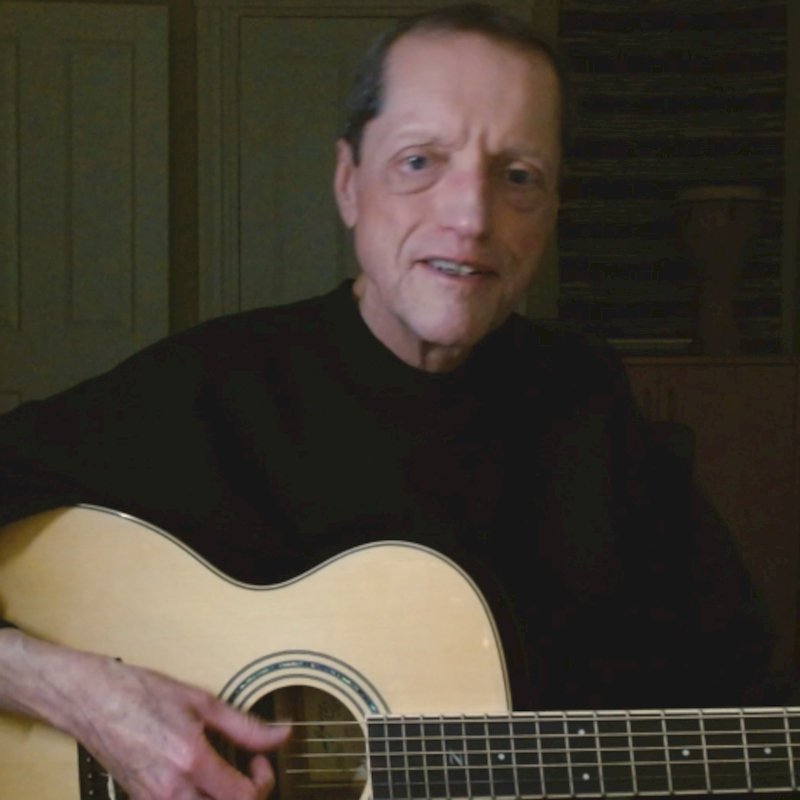
In a music landscape often more concerned with trends than truth, Tom Garfield is a rare and welcome exception. A lifelong community artist, activist, and folk rock singer-songwriter, Tom’s new four-track EP “Greed” — released July 4th, 2026 — is a scathing, unfiltered indictment of the status quo, delivered with the whispery rasp and raw conviction of someone who has spent decades standing for the voiceless. Available exclusively on Bandcamp, “Greed” draws a direct line from Woody Guthrie and Bob Dylan to the urgent political realities of today — folk rock as a hammer, not a mirror. We sat down with Tom to talk about the music, the mission, and why now is exactly the right time for songs like these.
- You released “Greed” on July 4th — Independence Day. Was that date a deliberate statement, and what does independence — political, artistic, or otherwise — mean to you as both an artist and an activist in 2026?
Yes, deliberate. We’re celebrating the 250th anniversary of our Declaration of Independence from tyrannical rule under England’s obscenely rich aristocracy while today’s obscenely rich wield more power over the rest of us than at any time since the Gilded Age.
- The EP’s title track is described as a scathing indictment of the status quo. Without pulling any punches — what specifically are you indicting, and what do you want listeners to feel or do after hearing it?
I’m not against making money. But I am against anyone willing to do absolutely anything to make it, regardless of any law or harm inflicted on others. And I’m against anyone using their wealth to buy inordinate political power or avoid accountability for breaking the law or inflicting those harms. I hope the song resonates with listeners who feel the same and, even better, maybe inspires engagement in the fight for a truly representative democracy.
- You’ve quoted Bertolt Brecht: “Art is not a mirror held up to reality, but a hammer with which to shape it.” How does that philosophy practically guide the way you write — and do you ever feel the tension between making music that challenges and music that connects?
Songwriting has always been just a tiny part of my career, so I mostly write for me, not to earn a living and not with any particular genre or trend in mind. Which means I get to write about topics that are important to me. And I get to produce music that I like, and for the pure pleasure of the creative process. I’m always happy if it connects with others but I know it’s never gonna go platinum.

- Your influences span from Woody Guthrie to Bad Bunny — an extraordinary range across decades, genres, and cultures. What is the common thread you find in all of them, and how do those varied voices show up in the folk rock sound of “Greed”?
The common thread, as I see it, is justice. Or, injustice. Music, like all art, can tap deep into our emotions and tell compelling stories. And music has been an essential tool in movements for justice worldwide, since maybe forever. I do love a good love song. But I was raised with a strong sense of right and wrong, so music of any era and any genre that tells those kinds of stories has always inspired me.
- You’ve spent your career supporting urban schools, community agencies, and cultural organizations as much as making music. How does that on-the-ground activist work feed your songwriting — and do you see the music and the community work as two expressions of the same mission?
Yes, definitely two expressions of the same mission. I started out playing in bands as a kid but in my mid-20s, I found my way to an artist-founded Boston non-profit with a mission to use the arts to address community problems. In touring ensembles and targeted project teams, we partnered with educators, community organizers, and government and cultural workers to use the power of music and other art forms to support their specific objectives. Which brought me in direct contact with injustice almost daily and influenced what I was inspired to write about.
- “Greed” is self-produced and released entirely independently on Bandcamp. At a moment when the music industry itself is arguably part of the systems you’re writing against, what does that level of creative and economic independence mean to you — and where does Tom Garfield and his music go from here?
Yeah, the music industry has always been hard on musicians. Even harder these days. But I’m recently retired and feel very lucky and grateful to have enjoyed a fulfilling career doing something I love. And to not have to compete with AI to earn a few pennies from streaming. I plan to keep writing and producing what moves me, and if it resonates with others, that also moves me. And bigger picture, I do believe there will always be an audience for independent, heartfelt, human-made music, especially when experienced live with our fellow humans.