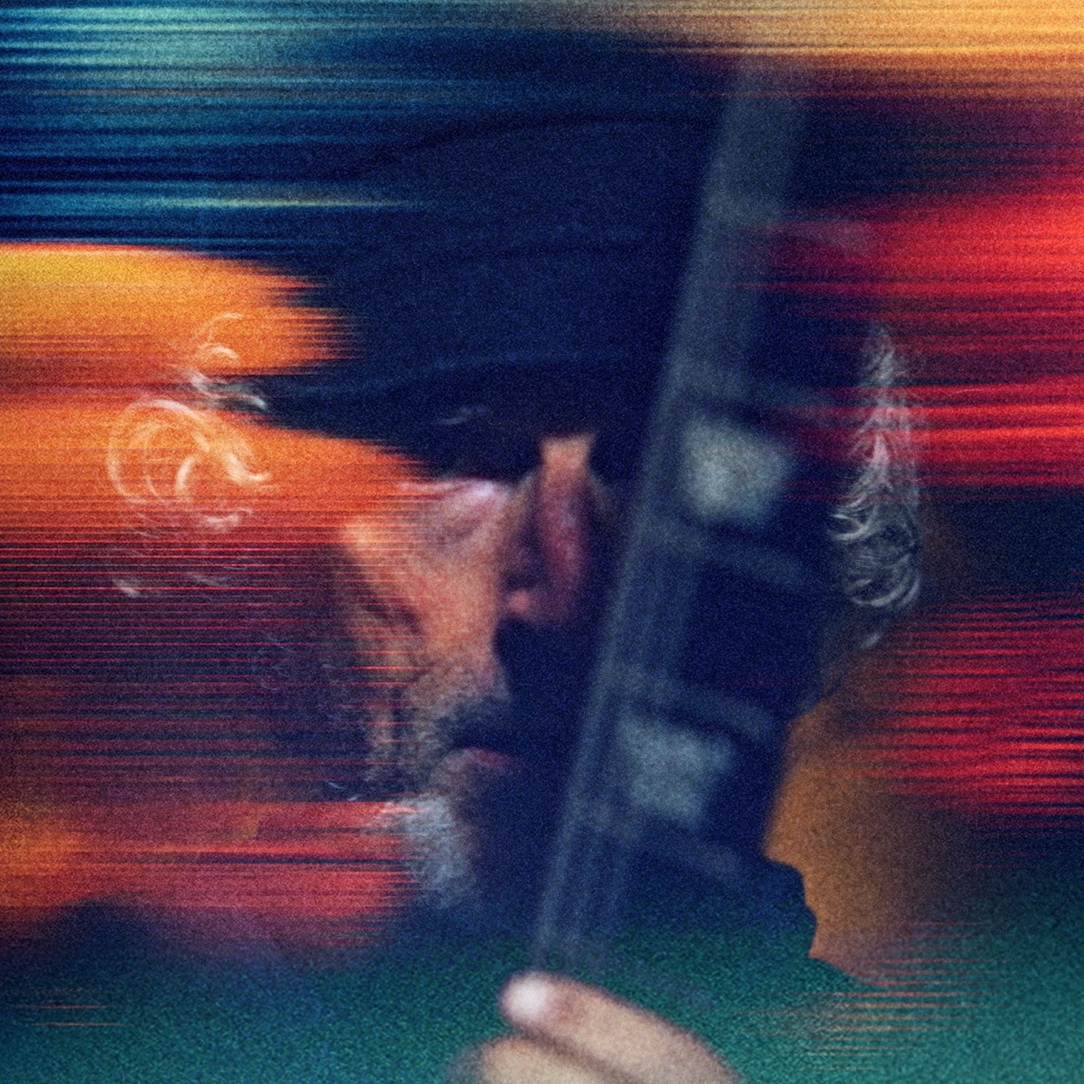
SEATTLE, WA — Seattle’s arms around the world returns on 23rd October with “Right Now,” the first single from Connection, the second album from Jon Rimmerman’s evolving music project. It is a dark, driving rush of guitar, melody, and lyric as rhythm. Momentum is the point.
“Right Now” is about hunger: for everything, all at once, all the time. Its rough, physical edge comes from Rimmerman’s early 1970s Les Paul “gold top,” channelling Berlin-era Bowie with a sustained, abrasive forward push. Rimmerman’s vocals, meshed with Hazel Stanfield’s backing harmonies, add an almost dreamlike beauty. That contrast gives the song its pull: hypnotic and assertive. The relentless repetition is deliberate. It represents this year, 2026.
“From the moment I wrote this song, it was like a magnet calling out to me. It seems to have a life of its own.” — Jon Rimmerman
For all its noise, urgency, and repetition, there is something strangely vulnerable at the centre of the song: the recognition that wanting is never just about the thing we want. It is about the feeling of reaching, and the eventual realisation that asking for more has consequences.

Connection is due in January 2027 on Shy Sounds, and “Right Now” hints at a record that feels looser, deeper, and more instinctive than its predecessor. Rimmerman wrote all the music, lyrics, melodies, and arrangements himself. The album was recorded between Seattle and Paris with a small circle of collaborators, and mostly live, capturing the chemistry between players rather than smoothing it away by over-tracking each song into “perfection.”
Vocal and lyrical tracks sit alongside long instrumental passages. Guitars stretch and collide. Moments of beauty emerge from noise and uncertainty. Spontaneity and the interaction between the musicians are, as the project puts it, the grit in the oyster.
Contributors to the evolving sound include Hazel Stanfield, Geoff Stanfield (Farmer, Black Lab, Sun Kil Moon), Tim Lefebvre (David Bowie’s Blackstar), Jeff Taylor, and Sheridan Riley.
If the first album was about finding his sound, Connection takes everything to another level. Rimmerman wanted to connect.
The self-titled debut, arms around the world, was released by Shy Sounds in January 2026. Rimmerman wrote, sang, arranged, and played every instrument on it. The album drew on the melodic pull of 1990s alternative rock, pairing his vintage Rickenbacker sound with cinematic textures, pop hooks, and the heavier weight of American 1970s rock.
The US radio campaign found a real audience on college and specialty radio. The album charted on the NACC Sub-Modern albums chart, peaking at #16, and earned airplay on more than 40 stations in 20 states.
Rimmerman is perhaps best known as the founder of Garagiste, which he built from a temperature-controlled garage in Seattle into the world’s largest email-based wine business. For three decades he has made a career of finding things before they become obvious: small producers, overlooked places, extraordinary makers, and stories that sit outside the established system.
The New York Times Magazine profiled him under the headline “Drunk With Power.” GQ called him “the man who blew up the whole wine world.” Around 400,000 people read his emails daily.
What runs through all of his work is a fascination with what happens when you look closely enough at something ordinary to see everything connected to it: the people, the place, the history, the choices, the dominoes that fall together to create what we call culture. Wine was one way into that world. Music is another.
“Everything is connected: wine, food, music — one thread.” — Jon Rimmerman
Rimmerman grew up between Chicago and Wisconsin, the grandson of a 1920s jazz singer and the son of a literature scholar. He picked up the bass in high school, then moved to Seattle after graduating from DePaul Law School, arriving during the early-1990s collision of grunge, independent culture, and the early internet. In 1995 he started Garagiste with $500 on a student credit card and built an audience one email at a time.
After more than 30 years on the road, he drove into the American West alone in his Fiat 500, with no music equipment, not even a plectrum. He slowly acquired used and vintage instruments at pawn shops in small towns and began writing, pouring all his wine and food curiosity into music.