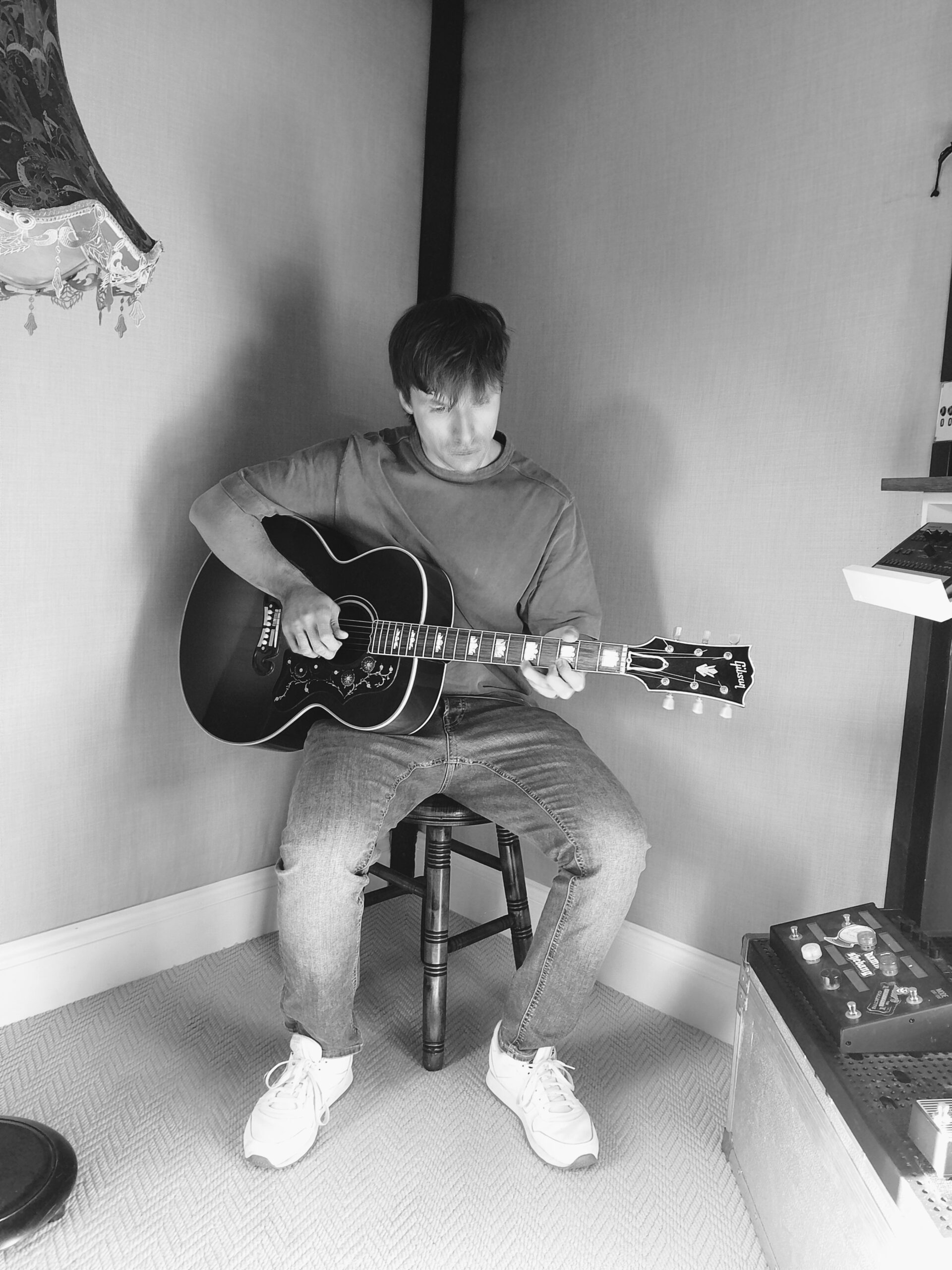
Butchered Blues, the alternative and indie rock studio project of Tom Dowling, presents its debut EP, When We’re Turned Into Stone. It is the place where his passions for music and philosophy meet.
The EP begins in naive tranquillity, drops into spiritual homelessness and Hell, and ends by reconciling with reality. The lyrics are deep, esoteric, and at times abstract. Dowling is clear that it is not a concept record. It is an introspective, cathartic journey inspired by the lived experience of an overqualified, underachieving, and therefore alienated millennial from middle England.
⇒ Check our Butchered Blues’ EP review here.
“If you like the harmonic languages of Oasis, Kasabian and The Beatles, the sonic textures of Queens of the Stone Age and Pink Floyd, and the lyrical themes of Joy Division and Radiohead, this will be right up your street.” — Tom Dowling
All six tracks are part of a twelve-track LP scheduled for release next year.

At 27 minutes and 11 seconds, the EP’s six songs span more than a decade of writing, and each comes from a different place.
1. Eudaimonia (4:48): The song first came together in summer 2017, in a gated student community in Clerkenwell, London, with an intense crush on a girl from the Mediterranean. The lyrics, finished this year, are now inspired mainly by Dowling’s love of philosophy from his studies at UCL, and by the sense that, despite late nights in the library’s classics and philosophy sections, he was only ever engaging with the concepts at the shallow end.
2. Gone, again… (3:01): Written in 2023 in York, it draws on hauntology, cultural memory loss, nostalgia, the modern world’s fixation with infinite progress, and the social consequences the resulting system can’t come to terms with.
3. My Angel is an Only Fan Girl (5:18): The debut single, released on 31 July. It was composed to be exciting, hedonistic, hilarious, depressing, painful, and culturally poignant all at once. It began as an impulsive response to loneliness and romantic failure, and grew into a satirical critique and parody of today’s commodifying, cold, and solipsistic dating culture. Its lyrics voice what Dowling describes as a disturbingly rational catharsis from a lonely, frustrated young man’s point of view.
4. Socials in Ravenholm (6:25): The most recent song written and recorded. Its name comes from “We Don’t Go to Ravenholm,” a level in Half-Life 2, where a town of flesh-eating headcrab zombies serves as a metaphor for a transactional, atomistic, and narcissistic zeitgeist. For readers of Marxist literature, it is a song about reification.
5. Not About You (3:07): The logical conclusion of the world described in “Socials in Ravenholm”: one shaped entirely by fear, coercion, and unregulated power, told from the predator’s perspective. The first two verses and choruses are fictional but loosely based on the culture of exploitation documented at the highest levels of Hollywood. The final verse and chorus draw on Dowling’s own experience of being manipulated for someone else’s gain.
6. Steed of Silence (4:32): Written on Christmas Day 2010 for a school band, with the chords coming while he listened to the 2009 remaster of The Beatles’ Magical Mystery Tour. Dowling later revised the lyrics and added a coda. The original lyrics were guided by the aesthetic of Sergio Leone’s Spaghetti Westerns, and the title nods to “Silent Stead” in Red Dead Redemption. The rewritten lyrics argue that struggle, conflict, pain, and self-limitation are the conditions for becoming a better version of ourselves, told through a rancher protecting his family from bandits.