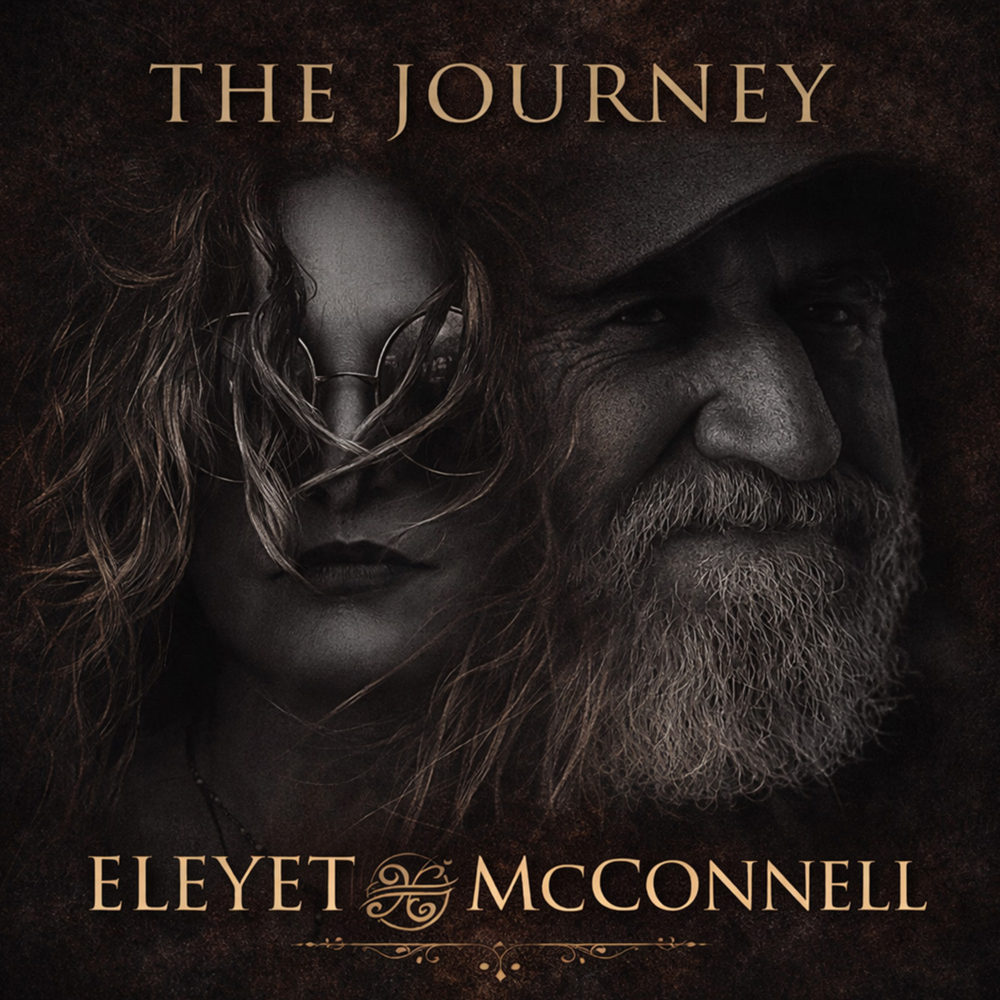
Rock and roll, at its best, isn’t about spectacle. It’s about conviction. On The Journey, Eleyet McConnell make it clear they understand that difference. This isn’t a record chasing trends or flirting with nostalgia. It’s a guitar-driven statement about survival, accountability, and standing your ground when the weather turns ugly.
The album opens with “The Horizon,” and it wastes no time setting the tone. A firm backbeat, muscular guitars, and Angie McConnell’s unwavering vocal delivery push the song forward with purpose. When she sings, “I’ll take it head on; that’s my way,” it doesn’t come off as empty bravado. It sounds like someone who has already been tested and decided not to fold. There’s no irony coating the lyric. It’s plainspoken and deliberate, which in 2026 feels almost rebellious.
That plainspoken approach carries into “The Ledge,” one of the album’s toughest cuts. Built around a tight groove and sharp-edged phrasing, the song confronts betrayal without melodrama. The repetition of “my way” isn’t a tantrum; it’s a line drawn in the sand. The guitars don’t shimmer—they bite. And that bite matters. Too much contemporary rock smooths its edges in the mix. Here, the edges stay intact.
“Your Eyes” shifts gears without losing gravity. It’s reflective, yes, but not sentimental. The song acknowledges time’s erosion—the gray hair, the distance—but refuses self-pity. Angie’s vocal restraint gives the track weight. She doesn’t oversell the emotion; she lets it stand on its own. That’s confidence.
“King of Glass” may be the album’s most pointed metaphor. The image of fragile authority—of a ruler whose kingdom can shatter—feels both personal and political without spelling out either. Musically, it leans into classic rock architecture: twin guitars, steady drums, and a hook that lands clean. The message is simple: illusion doesn’t last. And rock and roll, when it’s honest, has always been about exposing illusion.
“Without You” introduces vulnerability, but even here the band resists drifting into softness. The chorus lifts, but it doesn’t float away. It stays grounded in lived experience—regret acknowledged, renewal pursued. The repetition of “fallin’ again” suggests risk, not fantasy.
The title track, “The Journey,” ties the themes together. Growth isn’t portrayed as epiphany. It’s friction. It’s endurance. And the closing cut, “Dreamy,” offers hope without bombast. The refrain about holding tight through storms avoids cliché because the album has earned it. We’ve heard the storms. We’ve felt the bruises.
Produced with clarity rather than gloss, The Journey lets the band sound like a band. Guitars have weight. Drums have presence. The vocals aren’t buried under studio sheen. That choice reinforces the record’s central truth: strength comes from honesty, not polish.
Eleyet McConnell aren’t reinventing rock. They’re reminding you why it mattered in the first place. Conviction. Craft. And songs that look adversity in the eye without blinking.
–David Marshall