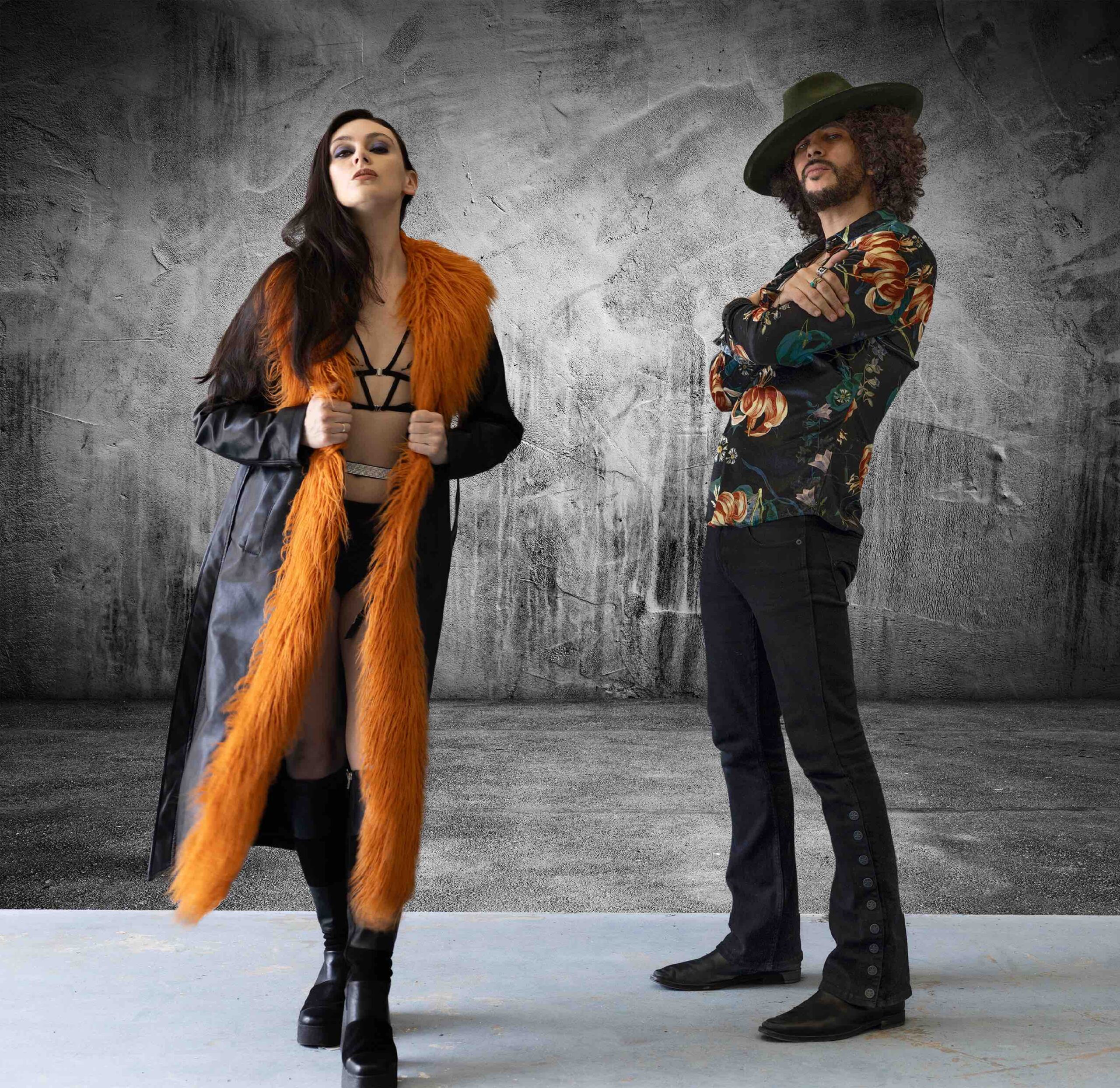
Las Vegas duo Mojo Juju built their sound on the creative partnership between vocalist Lea Cappelli and guitarist Nazim Chambi, and “Misfit,” out June 9th, is the clearest showcase yet of what that chemistry actually sounds like. The pair first connected in 2021 playing Amy Winehouse and Jimi Hendrix in the Las Vegas revue “27: A Musical Adventure,” and that instinct for channeling other people’s intensity clearly carried over into their own material. Naz’s guitar work, shaped by years touring with Jody Watley, gives the track its driving, cinematic backbone, while Lea’s vocals, already heard across more than 150 television placements on Netflix, HBO, and The CW, do the heavy lifting on “Misfit” itself.

Lea’s vocal command is the real centerpiece here. There’s a genuine power in how she delivers this one, moving from a more restrained, aching register in the verses into something considerably bigger by the chorus, and she never oversells it to get there. That range matters because “Misfit” is fundamentally a song about people who feel unseen, kids who carry their pain quietly and get told they’re too much for the world around them. It’s a theme that’s only gotten more relevant as isolation has become such a defining feature of modern life, and Mojo Juju leans into that directly rather than writing something vague enough to apply to anyone. The song reframes that isolation as something closer to armor, turning the pain into a badge rather than something to hide, and Lea’s vocal delivery is what actually sells that reframing instead of just stating it.
Musically, the track sits comfortably in the band’s modern rock lane, big, hook-driven, built for the kind of rooms Mojo Juju has already been playing, from Las Vegas residencies at The Cosmopolitan and Caesars Palace to international shows for military audiences overseas. But “Misfit” doesn’t lean only on scale. The push and pull between Naz’s instrumentation and Lea’s vocal performance is what keeps a fairly big, anthemic song feeling personal rather than generic, and that push and pull is really the story of this band as a whole: two performers who found each other playing other people’s icons and are now building something that’s unmistakably their own.