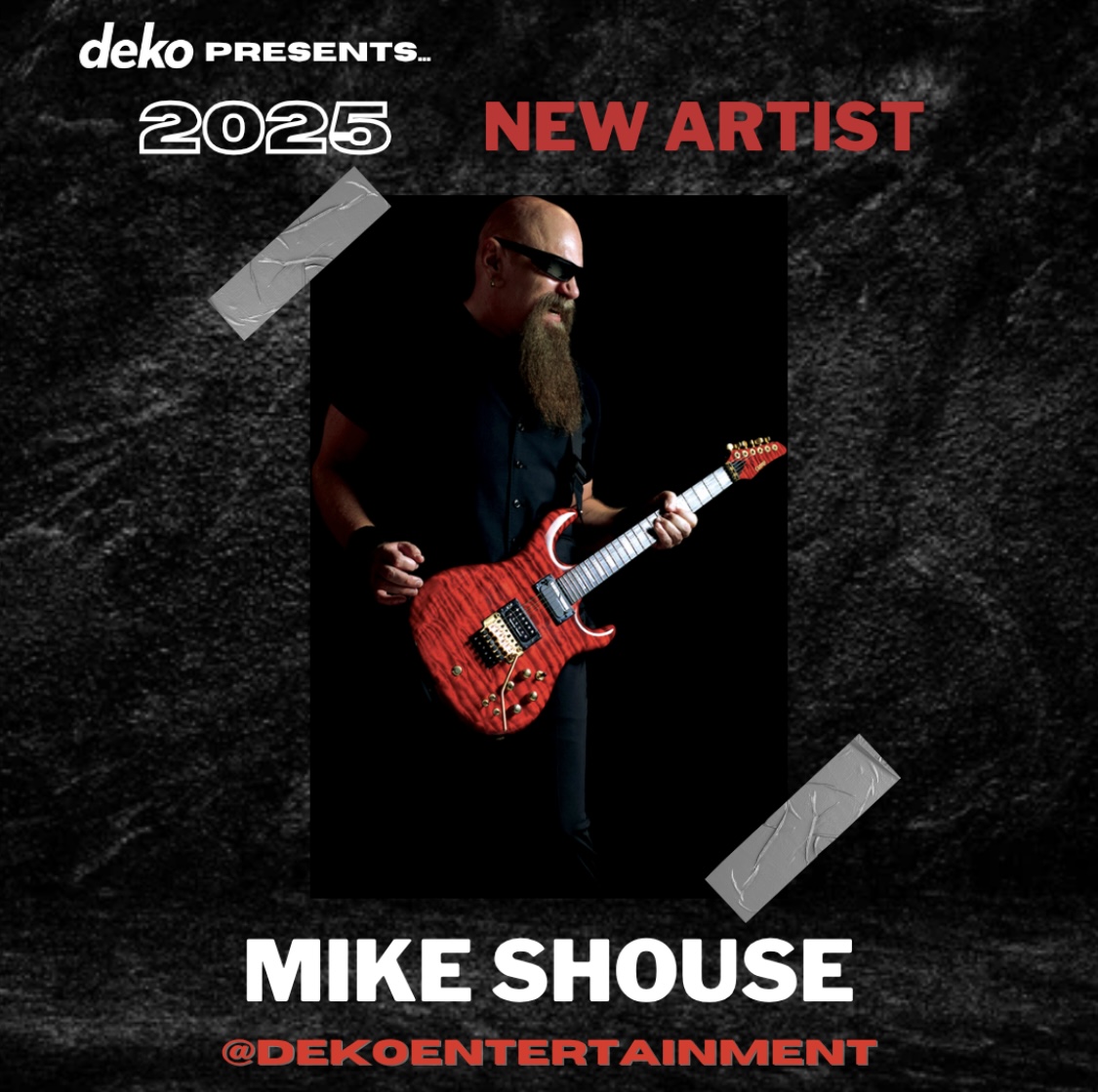
After a fifteen-year silence, guitarist and composer Mike Shouse returns with Jaded, an instrumental tour de force that channels resilience, transformation, and sheer creative will. Emerging from years marked by personal loss, a devastating house fire, and global stillness, Shouse forged his comeback one key change at a time. The album’s intricate architecture, boasting tracks with over seventy modulations, merges precision with passion, pulling from the legacy of hard rock and prog while carving something entirely personal.
Featuring guest performances from guitar greats Michael Angelo Batio, Ron “Bumblefoot” Thal, and Tony MacAlpine, as well as powerhouse contributions from drummer Charlie Zeleny and bassist James Pulli, Jaded feels both monumental and intimate, a sonic autobiography told through strings and distortion.
We caught up with Shouse to talk about the creative sparks, challenges, and revelations that shaped his long-awaited return.

- It’s been fifteen years since your last release. What did it feel like stepping back into the studio after such a long silence?
Honestly, a little clumsy as a lot of things technologically had changed. So, there was a learning curve. But, emotionally it was an out pouring of emotions, feelings and anxieties that had built up over the years. My soul finally got to get those out and onto the mix. It was healing.
- Did you always know you’d make another record, or did Jaded emerge more unexpectedly?
I’d really not planned to record again so it came from the need to express myself after a few bad years. Put it behind me in a way.
- How do you think your relationship to music has changed during your time away?
No illusions or expectations from the final product. It is what it is, and if people like it or not I did it for purely personal gratification.
- You’ve spoken about major life challenges, the fire, the breakup, the pandemic. How did those experiences directly inform your sound or writing process?
I’d pretty much quit playing for years, other than picking up the guitar and creating little licks, rhythms, melodies or theory and chord change ideas. Those ideas I took into the studio and they became the tracks on this and my next release. So, they’re a window to that place in time I came up with it. A snapshot of my soul. Which is what I think all music is, just that.
- You recorded guitar parts at home and collaborated remotely with musicians across the U.S. and beyond. What was that process like creatively and emotionally?
It’s freeing. I do what I want the way I want to a click track. Then trusting the rest to seasoned legends knowing they will only add to it. So, I tell them it’s just as much their instrumental piece as it is mine because, other than a few spots where I wanted specific things, they had full say in what they brought to the track.
- One of the album’s most striking features is its use of extreme key modulation, over seventy in the title track alone. What draws you to such complex harmonic movement?
I dabbled in mirroring and have always used a lot of changes in my music. I feel you need to in an instrumental where you don’t have a lyrical storyline to keep you interested. I came up with a way to go from a major to a minor key using the 4th chord of the minor key change so it flows. As long as you use the similar intervals in each key and play the different notes over the correct change you can pull it off. It’s different.
- How do you keep music with that level of technicality feeling organic and emotionally engaging?
Once I’ve laid down the changes, I listen and sing out the melody. That’s my ear working and is also your ear working. Then I put that to the guitar. It may change with the guitar, adding bends and technical stuff but keeping it melodic. If I can’t get it to make music and melodic sense then I scrap it and find another way.
- Jaded features an impressive lineup of guest guitarists and musicians. How did these collaborations come together?
I’d met Michael Angelo Batio, and given him and Bumblefoot a copy of my last CD years ago. They both liked it and we’d stayed in touch on messenger. So, when I wanted to use guests I asked them and after 15 years, they still agreed to play on it. Tony agreed to soon after. Although I had to go through his agent which was a lot more impersonal. But they all exceeded expectations.
- Who were your earliest guitar influences, and how do they still echo in your playing today?
Ace Frehley, may he RIP, was my earliest. I’d dress and play him as a kid not knowing his influence in my playing guitar later in life. Eddie Van Halen was who got me to put down the saxophone and get a guitar. Then it all changed when I heard Satriani. He made me want to create instrumental albums.
- How has your background in art and visual education informed your approach to sound and composition?
It’s all art. Same principles. The genre and style are my canvas and subject. All the things I have at my disposal like sweeps, scales, picking etc are my colors on the palette. I want to use the colors and arrange them in a way to make a track musically appealing just as my paintings would be visually pleasing. A lot of thought and theory go into each track.
- Do you feel this album closes a chapter or opens a new one?
Both. Closed a door on the last 15 and opens a new door. I’ve got 5 tracks recorded for my next release and plan to have Greg Howe play on a track and also Stu Hamm on bass. Now I’m retired, no other obstacles in my way. Other than care for my parents, it can be my focus. I used to be an art teacher who played guitar. Now I’m just a guitarist.