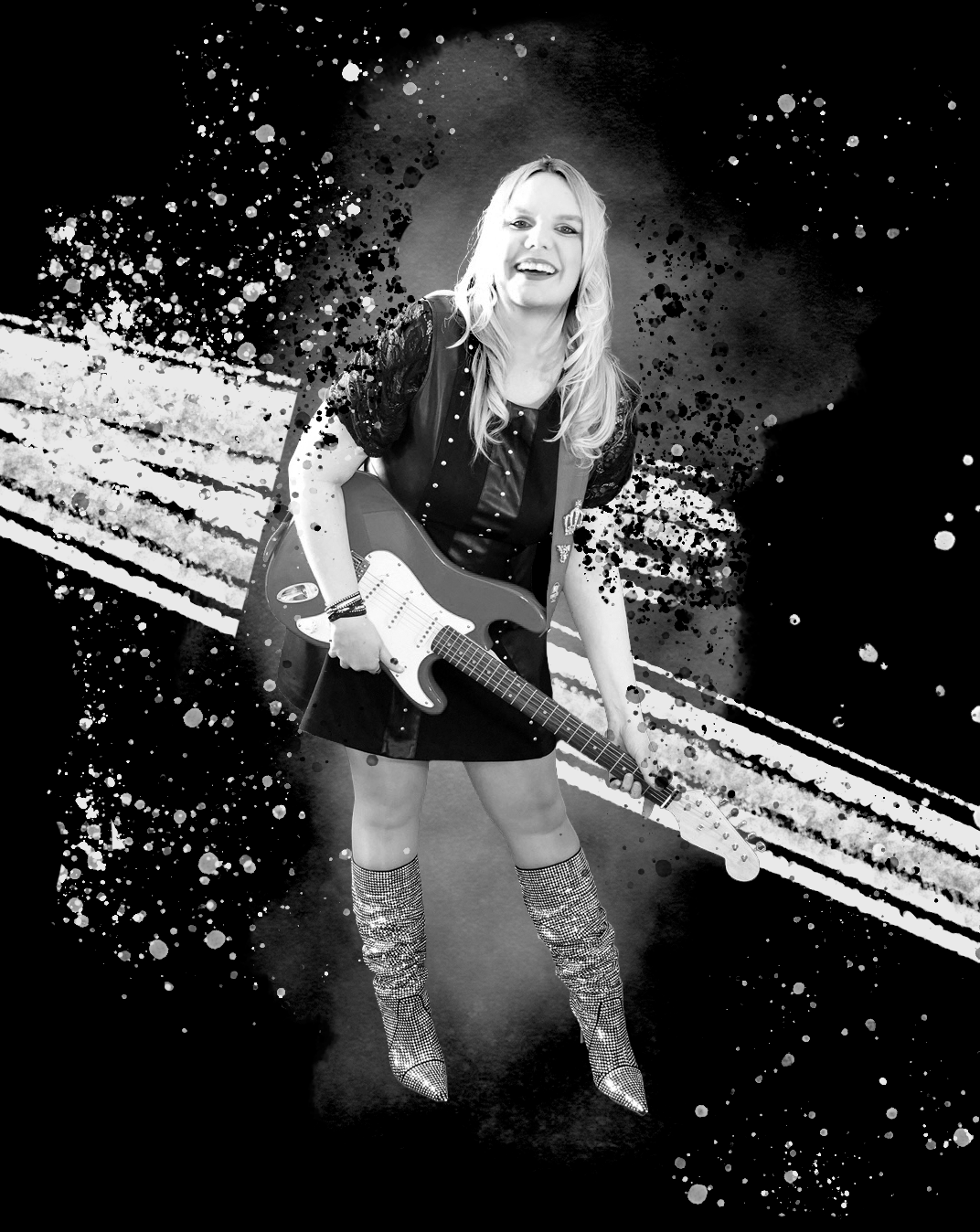
German rock artist Kat Madleine has never been one to follow the expected path — and her upcoming single “Heat of the Night“, dropping May 15th, 2026, makes that louder and clearer than ever. Following a series of intimate acoustic releases, this 90s-inspired rock anthem marks a bold sonic shift: cinematic, driving, and unapologetically powerful. Rooted in her “Vocal Kinship” project and fueled by a message of empowerment through solitude, Kat is stepping into what she calls her “stage armor” era — and the world is about to take notice. We sat down with her to talk about the new music, the journey behind it, and the quiet rebellion at the heart of it all.
- “Heat of the Night” is described as a definitive shift toward a driving, cinematic rock sound after a period of more intimate acoustic releases. What pulled you back toward rock — and what made this the right moment for that return?
Rock has always been in my DNA, but music, to me, is about seasons and storytelling. After focusing on intimate, acoustic releases like ‘If you knew what I knew’, where raw emotion and storytelling stood at the very center, I felt this intense surge of energy again. I didn’t just want to tell a story; I wanted to build a massive, cinematic landscape. ‘Heat of the Night’ required that driving, heavy rock foundation to capture the exact tension and atmosphere I had in mind. It’s powerful, it’s unapologetic, and after the quietness of the acoustic tracks, this was the absolute perfect moment to break the silence with a bang. It shows the full spectrum of who I am as an independent artist and producer—sometimes quiet and close, and sometimes explosive and cinematic.
- The song’s message centers on that moment in the dark when you finally shut out the world and find yourself again. Was there a specific personal experience that sparked this song, or is it something you’ve been carrying for a while?
This song actually brings together both: a deeply rooted feeling I’ve carried for a long time, and a very specific, quiet realization that brought it all to the surface. For a while now, my musical journey has been focused on an empowering theme—creating music that feels strong, intentional, and resonant. But true strength isn’t just about being loud or constantly pushing forward; it’s also about the resilience it takes to look inward. The spark for this specific message comes from that contrast. In the middle of managing independent music production, building a brand, and navigating all the noise that comes with putting yourself out there, you realize how easy it is to give pieces of yourself away to the world. The true turning point happens when you step into the quiet. That moment in the dark—when the screens are off, the external expectations are shut out, and it’s just you—isn’t about loneliness. It’s an empowering, sacred space where you reclaim your identity, ground yourself, and find your center again.
- Your “Vocal Kinship” project draws a deep artistic alignment with the energy and grit of rock legends like Bryan Adams. What does “vocal kinship” mean to you as a concept — and how does it shape the way you approach writing and performing?
As a musicologist, I’ve always been fascinated by voices that carry a certain raw truth, power, and vulnerability—much like rock legends such as Bryan Adams. For me, “Vocal Kinship” means recognizing that same fire in my own voice and building a bridge between the timeless spirit of 90s rock-pop and modern production. I don’t look for flawless, polite melodies. I write honest stories that give the voice room to breathe, scrape, and deliver massive but deeply personal hooks. It’s my guiding light for authenticity. It forces me to perform from the gut, leaving perfection at the door to chase the actual feeling instead. Whether it’s an up-tempo rock track or a ballad, my goal is to strike a chord directly in the listener’s heart.
- You studied music theory at the University of Heidelberg and have developed serious studio craft as both an artist and producer. How does that academic and technical foundation coexist with the raw, emotional energy that rock music demands?
It’s the classic tension between the mind and the heart, but for me, they don’t just coexist—they actively fuel each other. My time studying in Heidelberg gave me a deep structural understanding of music theory, while developing my studio craft as a producer gave me the technical tools to build those sonic worlds from scratch. However, rock music isn’t a science experiment; it’s a lightning strike that demands raw, unfiltered emotion and grit. For me, the technical foundation is the architecture, and the emotion is the performance. Knowing how to construct a powerful arrangement ensures the house is solid, which actually gives the emotional chaos of rock a safe place to explode. Because I am deeply familiar with my studio tools, the technical execution never interrupts my creative flow. Ultimately, theory gives me a map of the rules, but true rock thrives on rebellion. Having that foundation simply means I know exactly how to break those rules intentionally to catch the listener completely off guard.
- The lyrics of “Heat of the Night” paint a very vivid picture — shadows, open doors, locking gates, leaving town. Are you a visual writer, and how do you build that cinematic quality into a song from the ground up?
Yes, I absolutely write visually. For me, a song shouldn’t just be heard—it should feel like a movie playing behind your eyes. When I build a track from the ground up, I treat the music like a film score and the lyrics like a script. I swap abstract emotions for concrete, physical imagery like locking gates or open doors. These elements act like a camera lens, shifting between tight, tense close-ups and wide, panoramic shots that create real momentum. Relying on an archive of over 300 original lyrics has taught me to trust these vivid flashes. By blending this visual storytelling with a driving rock foundation, the cinematic quality comes alive naturally from the very first beat.

⇒ Read our review for “Heat of the Night” here.
- You’re specifically targeting the Canadian, UK, and US rock scenes with this release while maintaining your European foundation. What does a truly global rock audience look like to you — and what bridges are you actively building to reach them?
A truly global rock audience is bound by a shared mindset, not geography—it’s a collective craving for raw authenticity and that timeless rock energy. By blending my musical background with a powerful, modern vocal approach, I create music that feels deeply familiar yet fresh across borders. While my roots remain firmly planted in the rich European tradition, I am actively building bridges through targeted digital campaigns and direct playlist curation tailored to the vibrant rock scenes in Canada, the UK, and the US. For me, reaching a global audience means bypassing traditional gatekeepers, connecting authentically on social media, and uniting rock purists worldwide through the universal language of a great, honest song.
- “Heat of the Night” carries a strong message about empowerment — saying no to the world in order to say yes to yourself. How much of that is autobiographical, and how much do you think it reflects something universal that listeners are hungry to hear right now?
It’s deeply autobiographical, yet I believe it taps into a universal truth. For a long time, especially as a female creator, I found myself trying to meet everyone else’s expectations. But true empowerment begins when you stop looking for external permission. Writing ‘Heat of the Night’ was my personal turning point—a conscious decision to say no to the world’s noise so I could finally say yes to my own vision. Right now, people are exhausted from constantly performing and putting on a mask for society. Listeners are hungry for authenticity. It is an anthem for anyone reclaiming their power, stepping out of the shadows, and choosing their own path.
- You’ve described this as your most prolific era yet. What does the creative pipeline look like beyond this single — are there more releases already taking shape, and is a full project on the horizon?
Absolutely! I’m currently in a very inspired flow, and the creative pipeline is moving fast. Following my recent singles like ‘Falling back in Love’ and ‘Heat of the Night’, I’m preparing a very exciting shift in gears. Next up is ‘Taormina’, a vibrant summer song that captures a warm, beautiful Italian flair—showing a completely different, non-rock side of my artistry. Right after that, I’m returning to heavy guitars with a massive rock track called ‘Tonight’. All these releases are pieces of a larger puzzle. A cohesive, conceptual body of work is absolutely on the horizon, moving toward a strong, empowering narrative.
- In such an AI-driven era, how do you see the future of indie artists in particular — and the music industry in general?
I see AI as a powerful technical tool, but it will never replace the human soul. AI can analyze structures and generate clean tracks, but it cannot duplicate a lightning strike of raw, unpolished emotion, grit, and vulnerability. The future of the industry belongs to absolute authenticity. Because the digital space is flooded with perfect, automated content, listeners are becoming hungry for the opposite: real human stories and genuine flaws. By relying on concept-driven artistry and honest vocal performances, indie creators can build deep, organic connections that algorithms can’t replicate. AI handles the data, but humans still hold the heartbeat of rock ‘n’ roll.
- For someone discovering Kat Madleine for the very first time through “Heat of the Night” — what do you want them to feel, and where would you send them next to understand who you truly are as an artist?
Through ‘Heat of the Night,’ I want new listeners to feel an immediate, electrifying surge of empowerment—the absolute freedom of reclaiming your own power. To truly understand my artistic depth, I’d then send them on a journey through my musical spectrum: first to my intimate ballad ‘If You Knew What I Knew’ to experience the raw vulnerability, and then straight to my upcoming summer track ‘Taormina’ to feel that sun-drenched, melodic warmth. Moving from the cinematic storm of rock into these different acoustic and atmospheric spaces shows the full spectrum of my world, where the grit, heart, and independent production craft always take center stage.