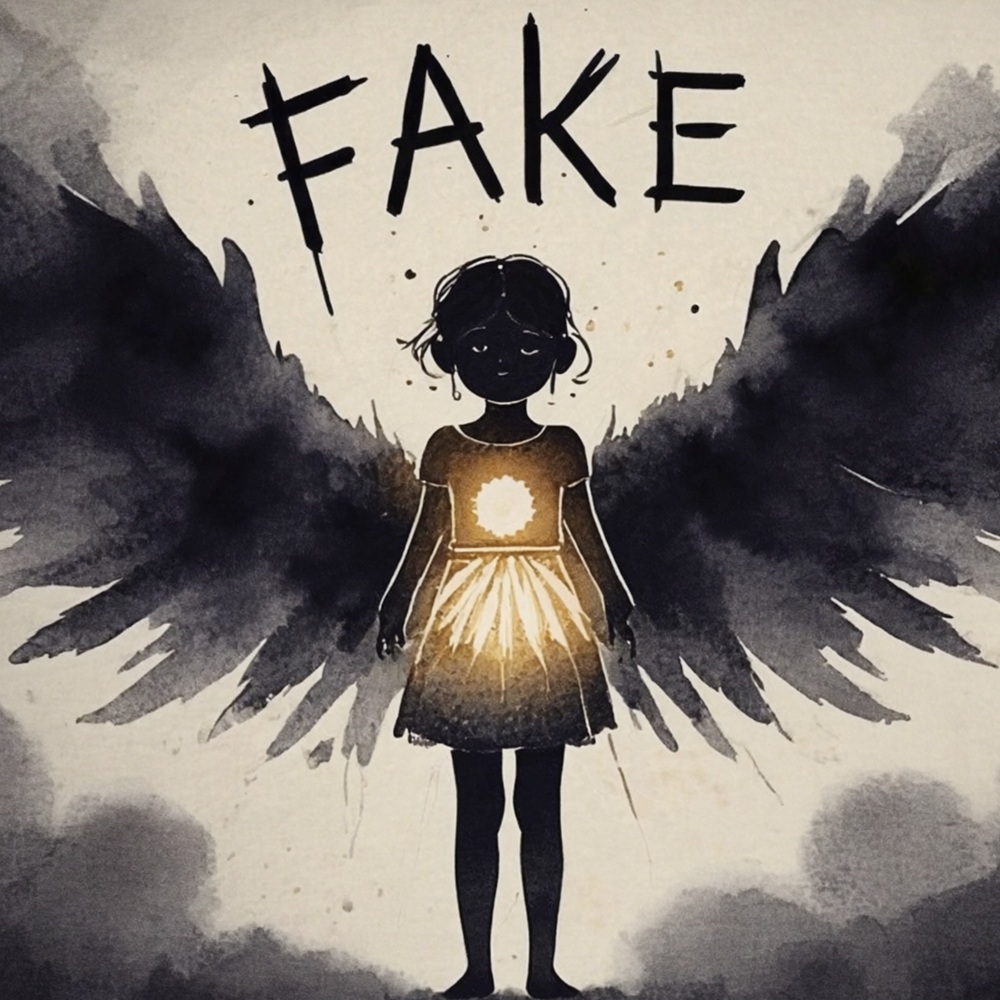
“Fake blood.” “Fake tears.” “Synthetic dross.” The language of “Fake” by Garbage Garden is deliberately accusatory, but the song refuses to remain on the defensive. Instead, every accusation becomes part of a larger act of reclamation. Blending metalcore and post-hardcore with distorted guitars, industrial synths, electronic textures, glitch, and bursts of death vocals, the Kobe-based project turns a deeply personal story into an unsettling question about voice, identity, and what it means for something to be authentic.
At the center of “Fake” is a narrator who has spent years speaking for others while remaining voiceless herself. Then comes the wound: a blade opens her throat, but instead of silencing her, it becomes the place from which her own voice is finally born. It is a striking image that gives the track much of its emotional force. The wound is not romanticized; it is transformed. What once represented pain becomes a source of expression.
That transformation unfolds through constant tension. Distorted guitar riffs push against synthetic textures, while industrial synths and glitch create an increasingly fractured atmosphere. Bursts of death vocals add visceral intensity, while dance-inflected rhythms introduce an unexpected sense of movement beneath the heaviness. The result feels simultaneously mechanical and deeply human, a fitting contradiction for a song preoccupied with artificiality.
That contradiction becomes even more compelling through the track’s relationship with AI. “Fake” emerges from a complicated reality: the same technology threatening musicians and artists can also become a means of expression for people who previously felt unable to pursue creative work. Garbage Garden does not dismiss the anger surrounding AI-made music; instead, it allows that discomfort to remain part of the story.
This makes “Fake” more than a defense of AI-generated music. It is caught between accusation and liberation, artificiality and sincerity. As the song progresses, the question shifts from whether the medium is artificial to something more uncomfortable: if expression comes from a genuine human experience, does its artificial origin make the voice itself less real?
With “Fake,” Garbage Garden transforms a personal struggle into a dark meditation on authenticity, technology, and the desire to be heard. Rather than deciding what is real, Garbage Garden leaves us with a question worth sitting with: who gets to decide whether a voice is real?