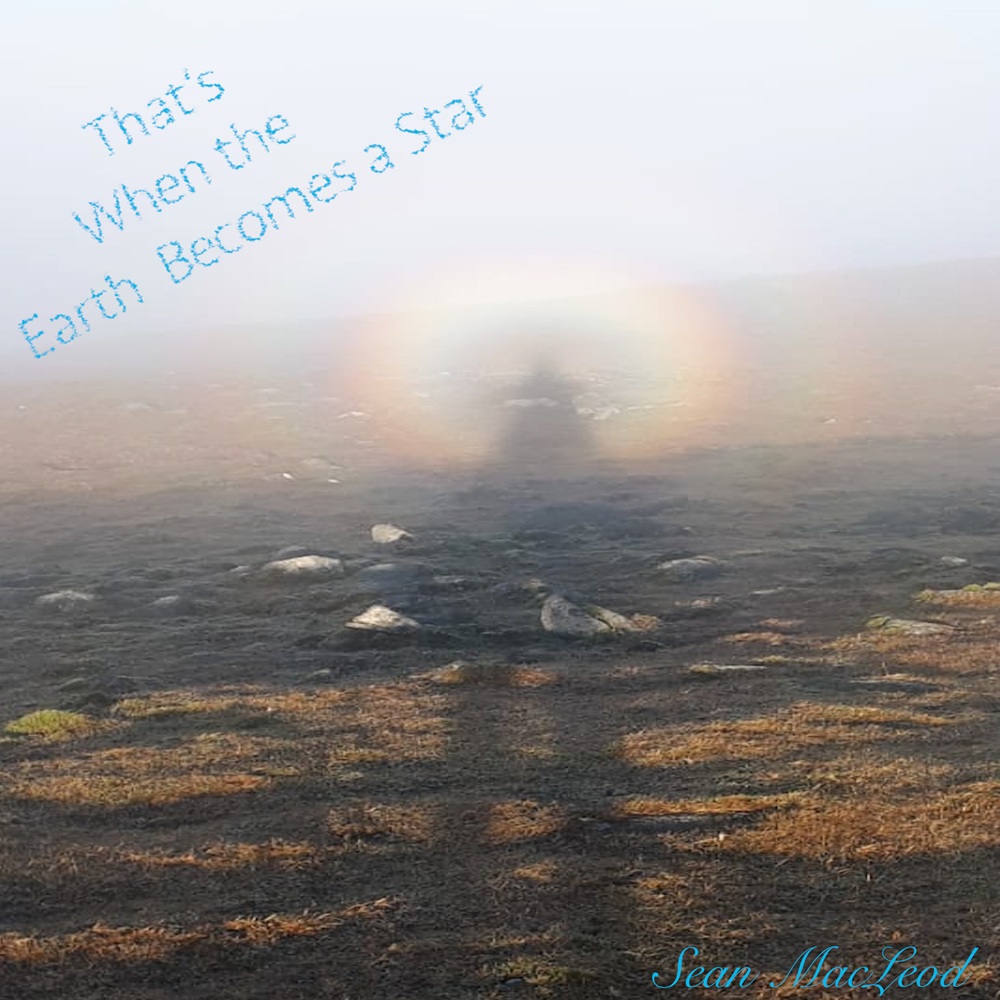
Sean MacLeod has been at this for more than three decades, going back to his time as a founding member of the Dublin band Cisco, and his fifth solo album, That’s When the Earth Becomes a Star, out September 4th, is his most ambitious solo statement yet. Pulling from influences like The Beatles, Bowie, the Beach Boys, the Stone Roses and Blur, and leaning on his own background in alternative tuning systems, the album digs into alienation, technology, consumerism and the search for meaning in a world that feels increasingly disconnected from itself. It arrives alongside a companion record, We Don’t See That We Don’t See, an experimental piece focused on tuning and timbre, but where that project asks how we hear, this one is more concerned with what we feel and perceive once we start seeing the familiar differently.
The last thing I covered from Sean MacLeod was a single called “Light up the Sun,” which I described at the time as warm and intimate. This album takes a very interesting leap, still true to MacLeod’s style, into the psychedelic realm. “Who Unchained the Earth From the Sun” asks an intriguing question right from its opening moment and explores it with rich psychedelic harmony that sits somewhere between 70s psych rock and modern dream pop, genuinely immersive listening. The title track works almost as a thematic sequel to that song, a continuation of the same psychedelic, spacious sound. “Illuminate” then shifts toward a more rhythmically interesting groove while still holding onto that same atmosphere, which is high praise for an album like this, one that needs a consistent sonic thread running through it for the immersion to actually work, the same way those old psychedelic records demanded to be heard start to finish rather than in pieces.
That through-line matters because the album’s title captures exactly what MacLeod is going for: that sudden shift in perspective where something completely familiar can appear newly illuminated. The lead single, “Inside Out (Radio Edit),” backs that idea with brooding guitars and a solid indie-rock groove wrapped around a meditation on modern identity, proof that even at his most conceptually ambitious, MacLeod keeps the song itself front and center rather than burying it under the ideas.
Coming from someone who holds a PhD in music composition and has written books on Phil Spector and 1960s girl groups, it would be easy for a project this thematically dense to tip into something more academic than listenable. That’s When the Earth Becomes a Star avoids that trap by staying genuinely melodic throughout, an album that rewards close attention without demanding it, and one that marks a real evolution for an artist who’s clearly still finding new ground after thirty years of looking.