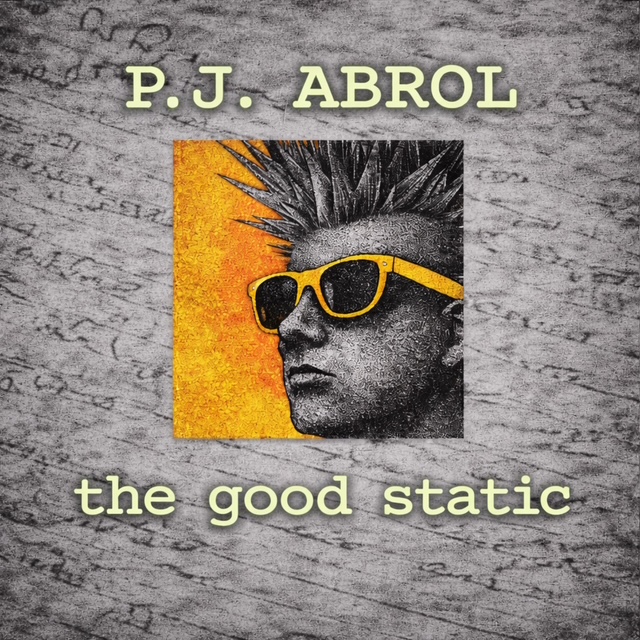
Some albums carry a sense of distance within them: geographical, emotional, and even temporal. The Good Static is one of those records. With “Airspace” leading the way, it unfolds like something shaped across years and places, gathering meaning before finally settling into sound. After a twenty-year silence, PJ Abrol returns not with urgency, but with clarity, like someone who took the long way around just to arrive exactly where they needed to be.
“Airspace” doesn’t drift in, it lands with intent. The bass arrives first, grounded and immovable, giving the track a sense of gravity before the guitars begin to gather around it. They don’t just fill space, they define it. There’s a density here that feels lived-in rather than constructed, the kind of tone that comes from years of searching rather than quick decisions. And yet, for all its weight, the track is remarkably controlled. PJ Abrol understands tension not as noise, but as architecture. The build, the release, the earned arrival of the chorus, it all unfolds with precision.
 Midway through, the track pulls back. The layers fall away, leaving the voice exposed, unguarded. It’s a striking shift. Not performative vulnerability, but something more direct, something that feels like it exists to communicate rather than impress. That contrast between fullness and fragility is where “Airspace” finds its emotional core, and it quietly sets the tone for everything that follows on The Good Static.
Across the album, PJ Abrol leans into what he describes as “positive friction,” the idea that the static we move through is not an obstacle, but a necessary part of finding clarity. The record moves with intention, balancing anthemic drive and quieter introspection without losing its center. Tracks like Waking Up push forward with urgency, while moments like Unadulterated Love Song and Stars open into something softer, more reflective. There’s a careful discipline in how these shifts are handled. Nothing spills over. Nothing feels excessive.
The Good Static sits in that compelling space between alt-rock grit and power-pop brightness. The guitars are thick, the hooks are undeniable, but what stands out most is the restraint. Every element feels placed rather than piled on. You hear the seven months of studio immersion not as polish for its own sake, but as a commitment to getting things exactly right.
There’s also a quiet narrative threading through the album, one shaped by distance, return, and the passage of time. The years spent away, the eventual homecoming, the sense of carrying unfinished ideas across continents. None of this is overstated, but it lingers in the background, giving the record a depth that extends beyond its sound. It feels like something that has been waiting, patiently, to take form.
With The Good Static, PJ Abrol doesn’t just return, he refines, distills, and delivers something that feels both immediate and long in the making. And with “Airspace” leading the charge, PJ Abrol makes it clear: this isn’t about reclaiming the past, but about finally giving shape to everything that survived it!