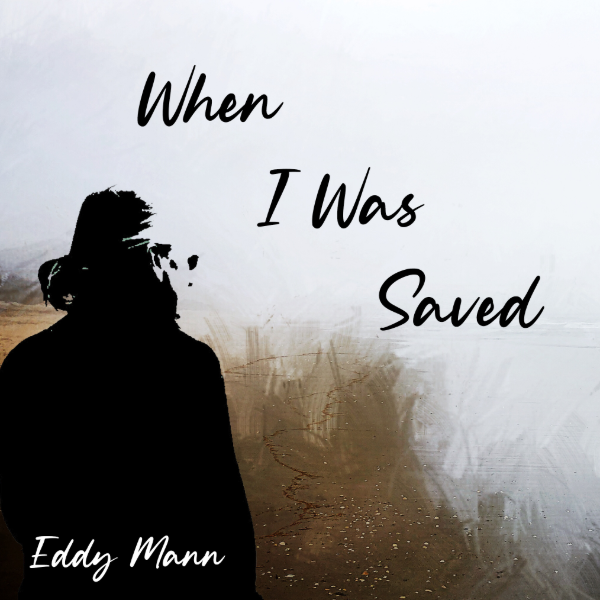
There’s something refreshingly unvarnished about Eddy Mann’s “When I Was Saved,” a track that doesn’t chase trends or polish itself into oblivion. Instead, it plants its boots firmly in the dirt at the foot of the cross and lets the story speak—raw, reverent, and real. This isn’t about spectacle. It’s about substance.
Mann has always leaned into storytelling, but here, he strips it down to its spiritual core. Inspired by Luke 23:26–43, the song walks straight into the crucifixion narrative without flinching. No metaphors to soften the blow, no modern reimagining to make it more palatable—just the stark, unfiltered truth of that day. And that’s what gives it its punch.
The line that anchors the entire track—“I was saved the day my best friend died”—isn’t just memorable, it’s disarming. It flips the script in a way that forces you to sit with it. This isn’t theology wrapped in comfort; it’s faith delivered with a bruise. Mann understands the paradox at the heart of the Gospel, and he doesn’t shy away from it. He leans in.
Sonically, “When I Was Saved” lives in that sweet spot between Americana grit and Contemporary Christian reflection. Acoustic guitars carry the weight, supported by a rhythm section that knows when to step forward and when to stay out of the way. There’s restraint here, and it works. The arrangement gives the lyrics room to breathe, which is exactly what a song like this needs.
Mann’s vocal performance is grounded and believable. He’s not trying to overpower the message with vocal gymnastics. Instead, he delivers each line with a steady, lived-in tone that feels earned. You believe him because he sounds like he believes it.
Then there’s Liz Collins, whose backing vocals add a subtle but essential layer. She doesn’t dominate the track—she elevates it. Her presence is like a quiet echo, reinforcing the emotional gravity without pulling focus. It’s a smart, tasteful addition that enhances the song’s spiritual atmosphere.
What sets this track apart is its willingness to sit in the tension. The crucifixion wasn’t clean. It wasn’t easy. And Mann doesn’t try to make it either. He touches on the mockery, the confusion, the mercy—all of it unfolding in real time. There’s a cinematic quality to the songwriting, but it never feels overproduced or forced.
In a genre that often leans toward uplift and resolution, “When I Was Saved” chooses reflection. It asks the listener to slow down, to consider, to remember. And in doing so, it becomes more than just another Christian single—it becomes a moment.
Eddy Mann didn’t just write a song here. He carved out a space for contemplation. And sometimes, that’s exactly what music is supposed to do.
–Lonnie Nabors