There’s a tendency in modern worship music to equate spiritual significance with sonic magnitude. The bigger the chorus, the more dramatic the arrangement, the more emotionally overwhelming the moment, the closer we supposedly get to God. But the history of Christian music tells another story. From the simple hymns of rural congregations to the intimate spiritual reflections of Rich Mullins and John Michael Talbot, some of the most enduring expressions of faith have emerged not from grandeur but from the willingness to pay attention.
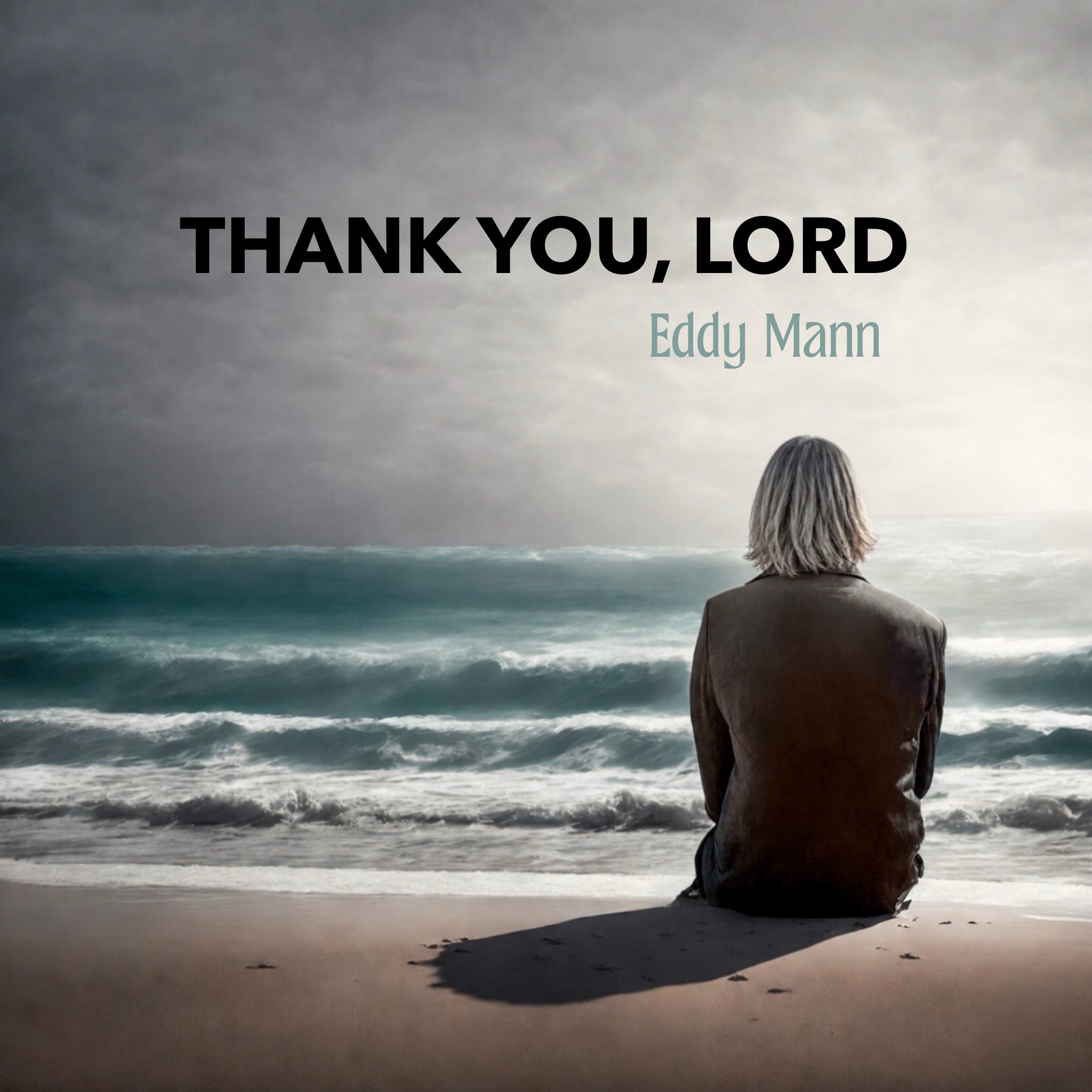
Eddy Mann’s “Thank You Lord,” arriving November 6, 2026, belongs to that quieter tradition.
The Melbourne, Florida-based singer-songwriter has spent years navigating the intersection of contemporary Christian music, folk, gospel, and Americana. His career includes chart-topping singles, international recognition, and industry awards. Yet his latest release, the first from his forthcoming Dreaming with God album, demonstrates that artistic maturity sometimes means knowing when to resist complexity.
The story behind the song is almost as compelling as the spiritual message it carries.
During the summer of 2009, Mann’s mother filled her journals with prayers, observations, and reflections on her relationship with God. Four years later, she passed away. Recently, Mann began revisiting those handwritten pages, discovering that her particular way of communicating with the Creator possessed a musical quality all its own.
Her language had rhythm. Her phrasing suggested melody. Her personal vocabulary carried the unmistakable fingerprints of an individual spiritual journey.
Rather than translating those writings into familiar worship conventions, Mann allowed their natural character to guide the composition.
That decision matters.
One of the challenges facing contemporary Christian music is its tendency toward uniformity. Songs written for congregational accessibility can sometimes sacrifice the distinctive personality that makes art memorable. There’s nothing inherently wrong with musical simplicity, but simplicity becomes powerful only when it communicates something authentic.
“Thank You Lord” demonstrates the difference.
Its lyrics offer straightforward expressions of gratitude for the blessings, wonders, grace, favor, and mercy found in everyday life. A recurring prayer for God’s loving care provides the composition’s spiritual center. The repetition is intentional, recalling devotional traditions where familiar words become increasingly meaningful through meditation.
It’s worship music designed to encourage reflection rather than manufacture excitement.
The biblical inspiration, Psalm 118:24, is familiar territory, but Mann approaches its message through a deeply personal lens. The passage’s celebration of each day as God’s creation becomes something more intimate when connected to the handwritten prayers of a mother whose earthly life has ended.
In this context, gratitude becomes an act of remembrance.
What’s especially interesting is Mann’s description of the recording process. He entered the studio with a skeletal arrangement and evolving harmonies, capturing the song at a particular stage of its development rather than treating it as a rigidly finished product.
There’s a theological resonance to that creative philosophy. Faith is rarely static. Prayer evolves. Understanding deepens. The spiritual life is continually being shaped by experience, memory, and grace.
The same can be said of meaningful art.
Of course, “Thank You Lord” isn’t without potential limitations. Its restrained lyrical vocabulary and recurring phrases may leave listeners accustomed to more narrative development wanting additional dimensions. The song asks its audience to embrace stillness, something increasingly difficult in a culture conditioned toward constant stimulation.
But perhaps that challenge is part of its purpose.
The Christian music tradition has always been strongest when it allows artists to bring their complete humanity into their work. The best songs of faith don’t merely communicate theological statements; they reveal what belief looks like when lived through ordinary circumstances.
Mann’s latest single succeeds conceptually because it understands that distinction.
His mother’s prayers weren’t composed for an audience. They weren’t crafted for radio programmers, streaming playlists, or commercial recognition. They were personal expressions of a relationship with God. By transforming them into music, Mann preserves their intimacy while inviting others into their meaning.
As the opening chapter of Dreaming with God, scheduled for September 2027, “Thank You Lord” points toward an artistic journey rooted in listening, reflection, and spiritual inheritance.
In a musical landscape frequently driven by trends, Mann offers something refreshingly uncalculated: an invitation to recognize God’s presence in the ordinary rhythms of life.
And perhaps the most profound aspect of the song is that its original author never intended to write one.
She was simply praying.
Her son was listening.
And somewhere between those two acts, music was born.