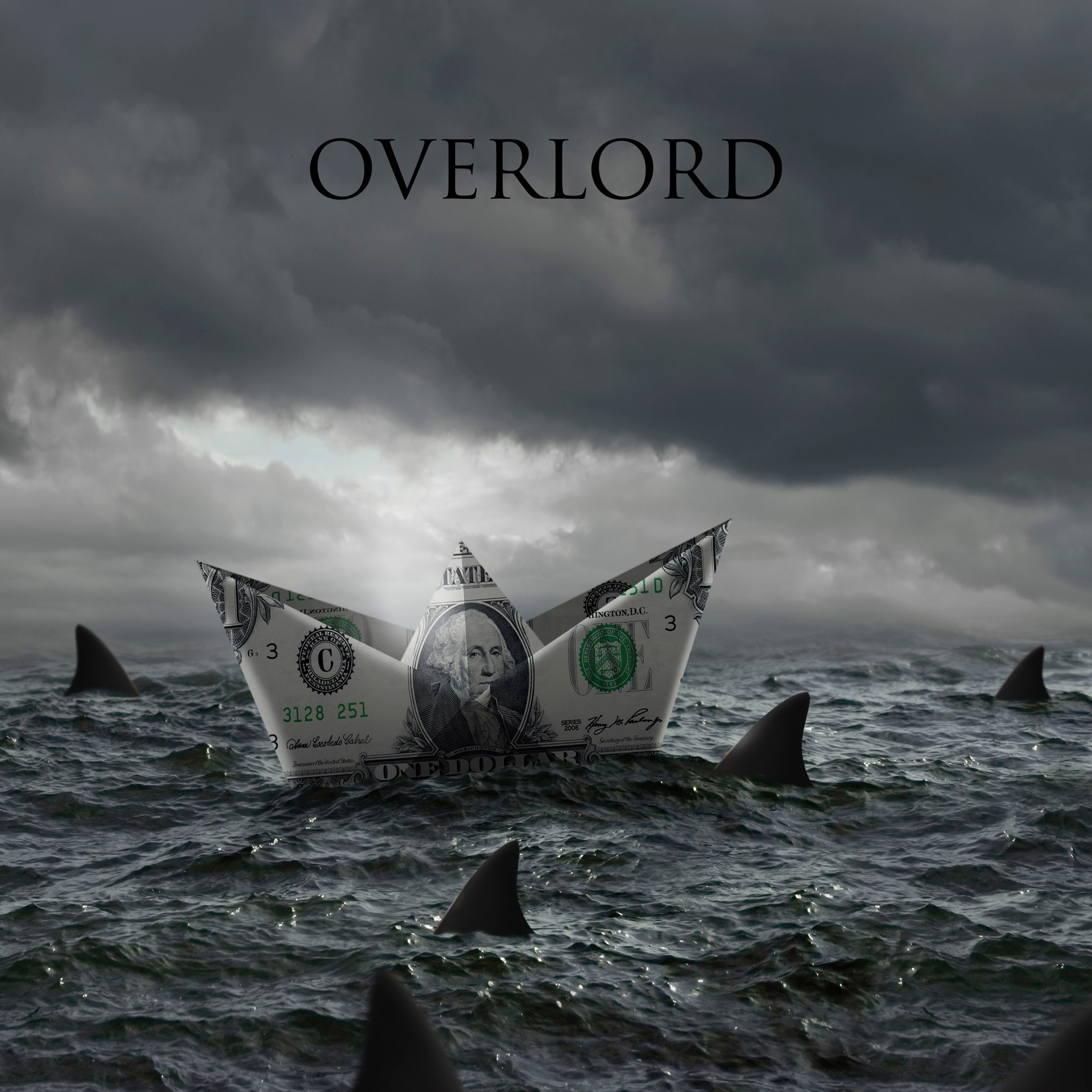
From its opening moments, Overlord by Forgotten Garden makes its point without raising its voice. The track doesn’t arrive with spectacle or urgency; instead, it settles into place with a steady, almost patient confidence, as if it knows the weight of its subject will speak for itself. What follows is a measured meditation on excess, not loud or dramatic, but quietly unnerving in its restraint.
The arrangement moves with deliberate control. A commanding bassline keeps the song grounded, pulsing with a sense of inevitability, while guitars and darkened synth textures drift around it like unanswered questions. The presence of layered pianos adds depth rather than ornamentation, creating a sense of emotional density that never spills over. Drums push forward with contained energy, giving the track momentum without ever letting it tip into chaos. Everything feels purposeful, balanced on the edge of tension.
The vocal performance traces an internal arc rather than a simple melodic one. The verses carry a subdued melancholy, delivered with an almost deceptive calm. As the song unfolds, that softness tightens into something sharper: not explosive, but edged with quiet fury. The shift feels psychological rather than theatrical, mirroring the way power and greed rarely announce themselves loudly at first.
This release avoids moral grandstanding. Instead of condemning from above, it observes from close range, exposing how wealth and authority can hollow out desire rather than fulfill it. The protagonist’s endless hunger becomes the real antagonist, making the song feel less like a critique of one figure and more like a reflection on a recurring human flaw. It’s familiar territory, yet the delivery gives it renewed relevance.
The strength of the track lies in what it withholds: resolution, reassurance, relief. In the end, Forgotten Garden’s Overlord doesn’t shout its message; it lets it linger, proving that sometimes the most cutting observations are delivered in a whisper.