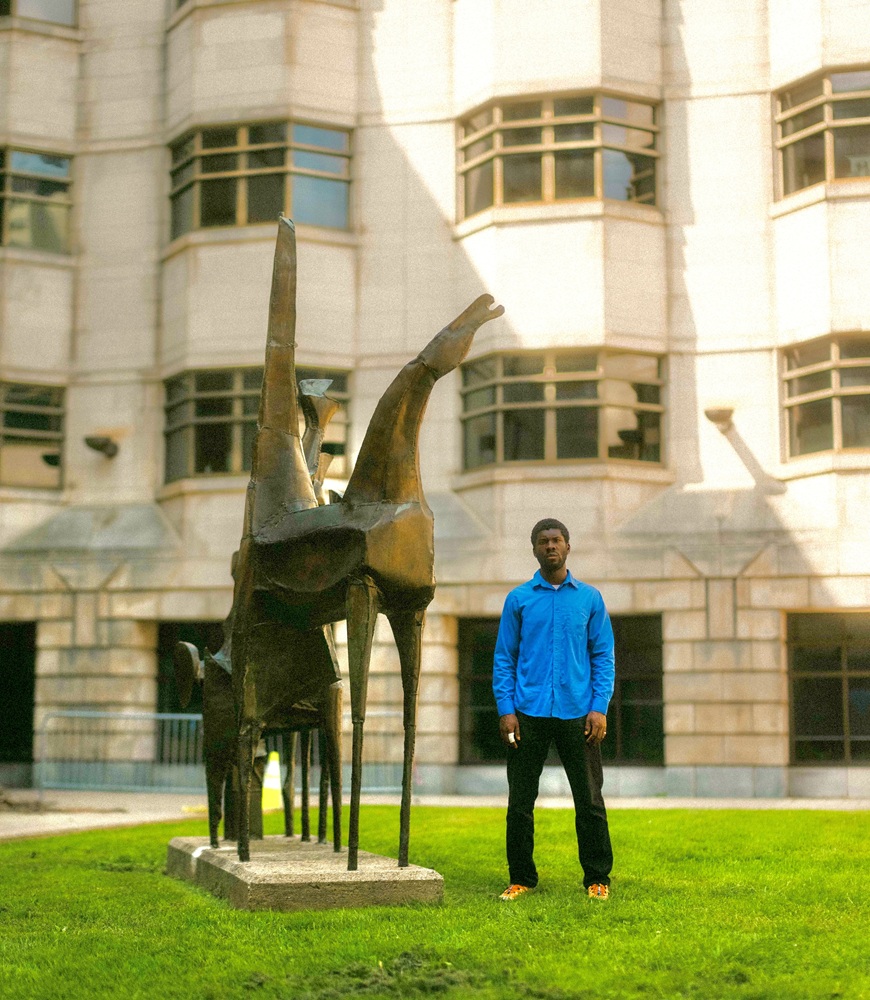
Pierre-Stéphane made GLASS, his debut EP, entirely on his own, writing, producing, and recording it in a small townhouse in South Ottawa after moving out of his parents’ place for the first time. By day, a construction glazier, he cites the city’s glass-and-steel skylines as a direct influence on the project, alongside the rock and hip hop he grew up on, name-checking Jimi Hendrix and Jay-Z as touchstones. Released October 21, 2024, the EP tracks the pressures of that period directly: work, rent, relationships, and the process of figuring out independence while still chasing music on the side.
The EP is overall very unique, and you can immediately tell it has a lot of soul and character. There is a very clear R&B and hip hop influence here, but it’s not as simple as a beat with some singing over it. There is a very unique blend of jazzy piano chords and very fresh usage of percussion elements to create addictive rhythms, and that is extremely apparent, especially in the first song, “Hot Girls.”
The only explicit track on the EP, “Monster,” opens with a sample of Samuel L. Jackson’s famous line from Snakes on a Plane, a memorable intro before what I think is the most blues-rock song on the EP, with a guitar line serving as the main hook and the vocal delivery being very bluesy, and so are the chord changes, now that I think about it.
My favorite song overall on the EP, though, is probably the last song, and it’s called “Trust.” The beat is very rhythmically unique due to the very clever layering that gets more complex with its syncopation as the song progresses. The rhythm is incredible to listen to; the instrumental could be its own song, but the cherry on top is that the vocals are actually incredibly tender and take the song from good to great.
That range, from the percussive, jazz-inflected opener to the blues-rock detour on “Monster” to the tender closer on “Trust,” is really the throughline of GLASS. Pierre-Stéphane isn’t just splitting the difference between rock and hip hop; he’s finding a handful of different ways for those two languages to talk to each other across four tracks, all without a producer or co-writer to lean on. For a debut built entirely in spare hours around a construction job and a first apartment, that range is the most impressive part of the project. GLASS plays like an artist figuring out exactly what he sounds like in real time, and by the closing track, he’s found it.