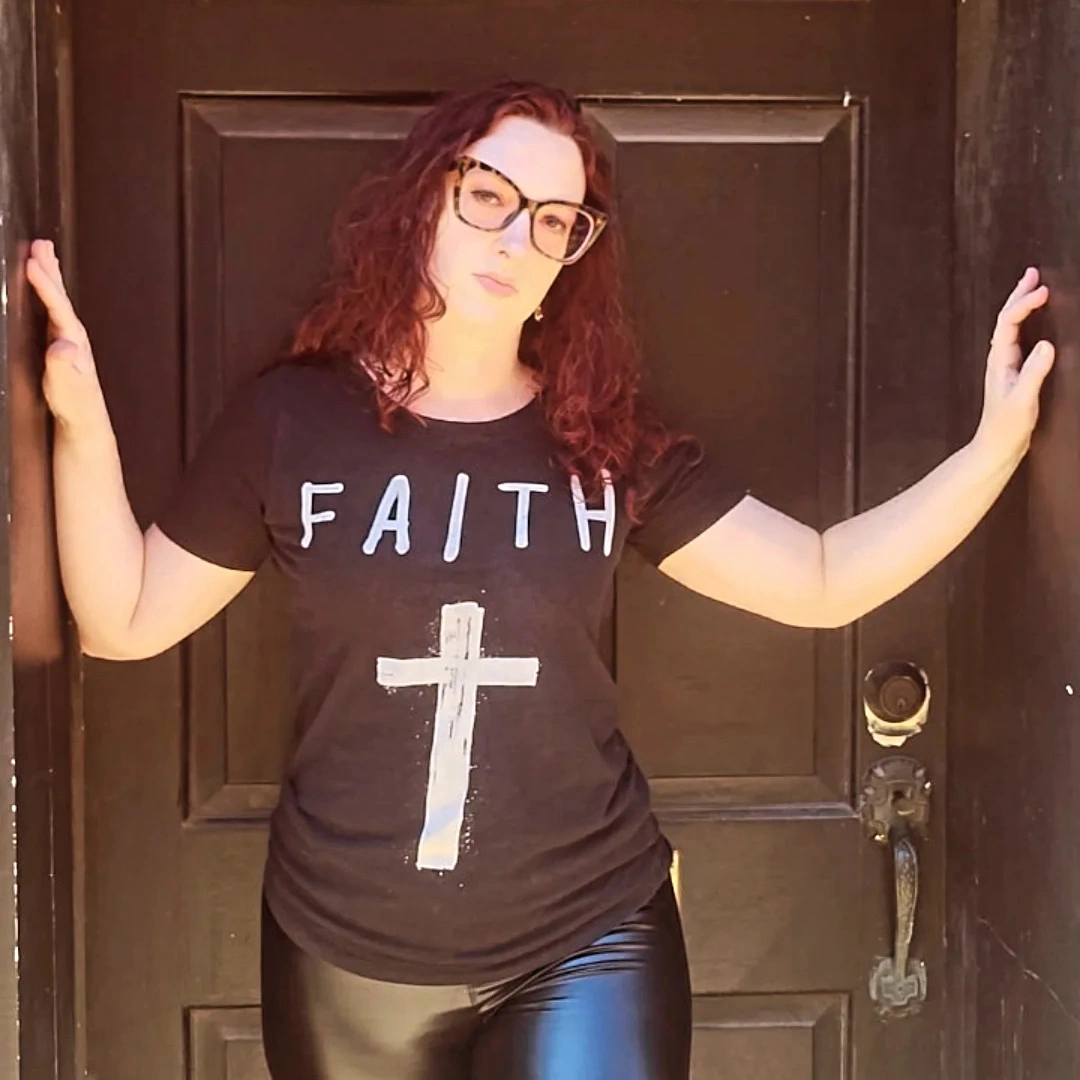
Kristin Ambuhl is a Nashville-area recording and performing artist whose journey from classical piano lessons to scripturally-grounded songwriting is as inspiring as it is unique. With her upcoming CCM single “No Other” dropping on all major streaming platforms on April 17th, Kristin is stepping into a bold new chapter — one rooted in faith, authenticity, and a sound shaped by some of Nashville’s finest studio musicians. We sat down with her to talk about the new music, her remarkable journey, and what’s next.

- “No Other” is your first CCM release and it draws heavily from Isaiah and Psalms. What was the spiritual and creative process behind writing it — and what do you hope listeners take away from the song?
The spiritual process behind the song really came from the realization that no message seemed worth conveying to me right now except letting people know about the hope that is found in Christ alone. My middle name is Hope, and I believe hope is something God wants me to share with others. And hope is something our world so desperately needs right now. As far as the creative process goes, I just got back into songwriting during the summer of 2025 after years of a creative drought. I started writing song after song. Most of which didn’t turn into anything, but four of those I found worth recording. “No Other” starts out almost directly quoting Isaiah 40:8, but I just made it rhyme: “The grass withers and the flowers fall, but the word of our Lord stands with us through it all.” That theme – that the only sure thing is life is the foundation that God provides – continues on into the main point – there is No Other. The song goes on to expound upon that idea with various scripture references – No other Truth, no other Way, no other Life, no other Rock, no other Name by which we can be saved.
- Your musical journey started with classical piano at age 9 and a love for poetry. How did those two early passions eventually come together to shape the songwriter and artist you are today?
I always knew music was my favorite activity and also wrote poetry on and off as a child and throughout high school. In my early adulthood, I started to put some of the poetry to music and then took songwriting classes in college to learn how to better make it flow. Before that, I had always received praise from my teachers and parents for my writing. My high school English teacher told me she fully expected to see me in print one day and my first college English teacher immediately (during the first week of class) recommended me for the honors program after seeing some of my writing. I needed that encouragement and am grateful that God put people into my life who took note that I had a gift. For songwriting, it was more a matter of finding how to work with putting lyrics to a melody or, in some cases, finding lyrics for a melody that had come to me. Lately, sometimes melodies come to me from out of nowhere and I hum them into a recording app on my phone so I don’t forget them. I think that God allows words and music to come naturally to me, but it was a matter of putting them together that I needed to learn. I am still learning and hope I’ll always be learning to further develop musical skills my whole life. With songwriting, I also re-write lyrics multiple times before I consider them done, which was a bit different from the freer flow of poetry that I learned in English class. In short, learning the art of songwriting was different than playing piano and writing poetry, but both very much provided the foundation I needed to write music. I’m very grateful that my family always encouraged me to play piano and my parents provided me with the biblical and musical education I needed. I don’t know that I would have had the songwriting skills that I have now if I hadn’t started out with learning first how music works. I know a few people can write a great song with no music theory knowledge at all, but I personally needed all that training.
- Stage fright is something a lot of artists quietly struggle with. You’ve spoken about overcoming it before stepping into performing your original music. What finally pushed you past that barrier?
I learned to separate myself from the fear rather than dwell on it. Singing is the most fun activity I can imagine, so focusing on that part of it helps. God created people in His image, so we are made to be creators ourselves. For some people it’s making music or art, for other people it’s decorating, baking, or building something. We all have different gifts and talents, and when we use those, we tend to shine. I decided I wasn’t going to let my fear keep me from shining. There’s too many bitter or jealous people out there who will try to keep me from shining! So why would I let a fear of doing something I love get in the way of doing something I love? God wants us to shine for Him and, for me, that involves making music. There were a couple of other factors that helped me too: One of my professors told me that over-preparation is key to overcoming stage fright and I think there’s something to that. I also used to go do karaoke with friends as a way to get onto a stage and sing in front of people without having to worry what anyone thought, so that was very helpful too.
- Your first EP featured acclaimed bassist Dominic John Davis and earned radio play and press in countries spanning the US, France, Brazil, Germany, Mexico, and Egypt — including our own corner of the world here. What did that international reception mean to you at that stage of your career?
It was more of a small reception via a few online radio stations in various countries, but it was a confidence boost to know that some people thought it was worth sharing! I need all the encouragement I can get! It was an honor to work with Mr. Davis and all the others who worked with me on that first EP, but I’ve also got some musicians with impressive resumes who have worked with and toured with some big-name artists that recorded with me on this current 2026 project. I am blessed and honored that God keeps sending very talented people my way – people who are way cooler than me haha. The guitarist/bassist (Jake Bartolic), the drummer (Kyle Jones) and the audio engineer (Ben Perkins) are all very talented and good at what they do. I wrote the melodies, chords, and lyrics, but these songs would be pretty boring without the musical additions that happened in the studio. I pray this music gets a much bigger reception than the music from a decade ago – The message is more meaningful this time and a message of hope that the world really needs.
- For this new project, you wrote all the lyrics, chords, and melodies entirely on your own — weaving scripture from Genesis all the way to Revelation. That’s a significant creative shift. What made you want to take full ownership of this body of work?
I knew very specifically everything I wanted to say this time around. I am open to co-writing again in the future and already have some plans arranged to do so, but for this particular body of work, I knew I just needed to say what the Bible says, make it have a rhythm, rhyme, flow and melody and not say much else. Not every line comes straight out of the Bible, but I do use a lot of Bible verses and tie them together into a common theme for each song.
- You have four singles lined up — “No Other,” “Who is He,” “A New Thing,” and “Set Free.” Is there a broader narrative thread connecting them, and can you give us a little preview of what’s coming after April 17th?
“No Other” is about how Jesus is the Way, the Truth and the Life and there is no other name by which we can be saved. This message was very important for me, because I do truly care about everyone I meet and want everyone to know Jesus. “Who is He” is a song that uses over 60 names for God and additional descriptions for God. It’s the closest you’ll ever hear me to rapping, but it’s really more like speak-singing just for the verses (and the chorus and bridge are sung regularly). “A New Thing” is very heavily based on Isaiah 43:9, “See I am doing a new thing. Now it springs up. Do you not perceive it? I am making a way in the wilderness and streams in the wasteland.” It is reflective of how I view this season of my life, and I finally wrote a song in my upper vocal range, so that’s exciting to share. I put not one, but two key changes into that song. “Set Free” is a bit different from the other three songs lyrically and all-over-the-place musically. I was actually researching how to write a K-pop song when I wrote that song. (I don’t listen to K-pop, but was curious about the writing process.) “Set Free” didn’t turn out at all like a K-pop song except that musically, it has several very distinct sections and it does get stuck in your head. That song breaks a few songwriting rules (as does “No Other” in the bridge), but was a favorite among those who worked on it in the studio. All four songs are very different. “No Other” is the most “pop rock” of all four songs, and quite possibly the one with the most important message, so it was the song I decided to release first. The broader thread connecting all four songs is the biblical worldview and heavy use of scripture references. After April 17th, the other three songs will be released in 2026 with generally about 4-6 weeks between each song’s debut.
- In such an AI-driven era, how do you see the future of indie artists in particular — and the music industry in general?
I do sometimes worry for the future of the music industry with AI becoming more and more a factor. I know God is in control and I don’t dwell on it, but it’s concerning. That being said, I wonder if over time people will crave something real. I read an article recently that said more and more young people are reading the Bible, because they are so tired of misinformation on the internet, and they are looking for a source of Truth. Following that thought process, I think that AI music and art won’t prevail, because deep down people do want something real and authentic. I think music made with real instruments and human voices will always be around.