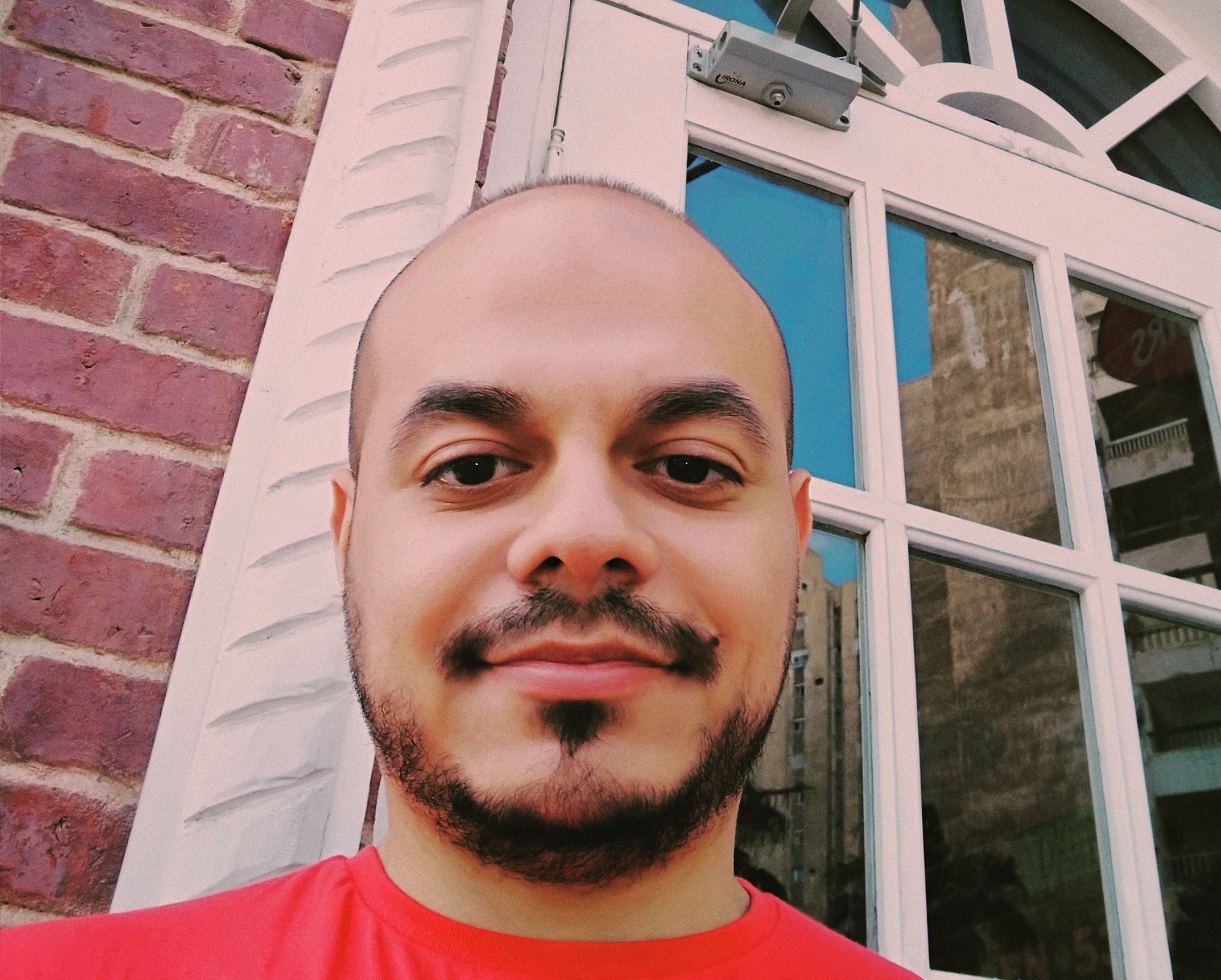
SHELNZ (Mahmoud Hesham) is an Egyptian independent composer and producer based in Alexandria. His latest album “Those Days” – a fifteen-track instrumental journey through 1960s rock and analog textures – was released in December 2025. We caught up with him to talk about the creative shift, the DIY process, and what it means to revive a sound that was never really part of his own cultural landscape.

- Your earlier work was rooted in electronic and house music, and “Those Days” is a pretty dramatic departure into 60s rock territory. What triggered that shift?
As a composer, I have always believed that music shouldn’t be confined to a single genre or a fixed digital template. My earlier electronic and house tracks were an exploration of rhythm and modern ambient soundscapes. Still, I felt a deep, artistic calling to explore something more organic, raw, and emotionally grounded.
The shift to 1960s rock territory wasn’t planned; it was triggered by a profound nostalgia for the warmth of analog sound. The 60s era was the golden age of sonic storytelling, where every instrument felt alive and breathed with character. I wanted to challenge myself to capture that specific, vintage essence—blending live orchestral arrangements, guitars, and atmospheric elements like the theremin. This shift allowed me to break away from the repetitive nature of commercial electronic beats and create a cinematic journey that speaks directly to the soul, much like the timeless instrumental works of masters who inspired me.
⇒ Check out our album review here.
- The album is entirely instrumental. Was that a deliberate decision from the start, or did it evolve that way during the recording process?
It was a 100% deliberate and non-negotiable decision from the very first spark of the album. For me, instrumental music isn’t just songs missing lyrics; it is a supreme, universal language that speaks directly to the human subconscious without the limitations or boundaries of spoken words.
When you add a vocalist, the listener’s mind is automatically guided by the specific story the lyrics are telling. But with a purely instrumental track, the listener becomes the co-author of the story. The music creates a cinematic canvas, and the listener paints their own emotions, memories, and visuals onto it. During the recording and arranging process, my focus was entirely on making the instruments—the guitars, the strings, and the vintage synths—act as the “voices.” I wanted the arrangements to rise, fall, and emote so powerfully that words became completely unnecessary.
- You’re working out of a home studio in Alexandria. How do you get an analog, vintage sound in that kind of setup – what’s the process actually look like?
Achieving that authentic, warm 1960s analog vibe in a modern home studio setup is a fascinating challenge, but it is entirely about understanding the physics of vintage sound. The process is a careful marriage between hardware textures and meticulous digital emulation.
In my Alexandria studio, the process begins right at the source. Instead of relying purely on clean, sterile digital instruments, I route signals through analog preamps and hardware saturation units to inject harmonic distortion and warmth into the tracks. When recording guitars or layering orchestral elements, I avoid the modern “perfectly polished” sound.
The real magic happens during the arrangement and mixing stages: Tape Emulation & Saturation: The 1960s sound is defined by magnetic tape. I use high-end tape machine emulations (like Studer and Ampex models) on individual tracks and the master bus to introduce subtle tape hiss, wow-and-flutter, and natural compression. Vintage Reverbs & Delays: I heavily utilize spring reverbs and plate reverbs, which were the staples of 60s rock and cinematic scores. This gives the instruments a haunting, physical space rather than a generic digital echo. The Theremin and Vintage Synths: Integrating rare, atmospheric instruments like the Theremin adds that distinct, eerie retro-futuristic texture that pulls the entire mix into the past.Imperfection by Design: Modern digital audio workstations (DAWs) make everything perfectly on-beat and pitch-perfect. To counter this, I leave slight human timing variations and microtonal imperfections in the performances. Ultimately, the setup in Alexandria proves that you don’t need a massive commercial studio from the 1970s to capture that soul; you just need to know how to manipulate harmonics, air, and space to give digital tracks an analog heart.
- Egypt’s mainstream music scene is a long way from 1960s rock. Do you feel like you’re making music in isolation from your immediate surroundings, or does the local context feed into the work somehow?
It is true that the mainstream Egyptian music scene today is heavily dominated by commercial pop and electronic street genres, which are worlds apart from 1960s rock or cinematic instrumental music. On the surface, it might look like I am creating music in total isolation, but the truth is quite the opposite. My immediate surroundings feed into my work in a very deep, subconscious way.
Living and working in Alexandria plays a massive role in shaping my sonic identity. Alexandria is not just a city; it is a mood. It has a unique, melancholic, and deeply nostalgic atmosphere, especially during the winter. The architecture, the old cosmopolitan history, and the vastness of the Mediterranean Sea all naturally evoke a sense of cinematic storytelling.
So, while I may not be influenced by the current mainstream trends of Egypt’s music market, I am deeply fed by the timeless spirit of my surroundings. The isolation is actually a creative choice—it acts as a filter that shields my art from commercial noise, allowing me to translate the deep nostalgia of Alexandrian streets and the cinematic vastness of the sea into a universal 1960s analog rock canvas. I am not escaping my environment; I am simply scoring its hidden, wordless emotions.
- The album has apparently found listeners in Chicago, Los Angeles, and Germany. Did that surprise you, and do you think about audience geography when you’re making music?
It was a beautiful and deeply validating surprise, but at the same time, it felt like the natural destiny of this project. Seeing listeners tune in from places like Chicago, Los Angeles, and Germany is incredibly rewarding because it proves exactly what I set out to demonstrate: instrumental music carries no passport.
When I am in my studio composing, I absolutely never think about audience geography, borders, or specific demographics. If you start composing with a specific geographic market or target audience in mind, the music loses its honesty and becomes a commercial product. I focus entirely on the emotional truth of the melody and the texture of the sound.
Because my music has no lyrics, it doesn’t get stuck behind language barriers. A listener in Los Angeles or Germany doesn’t need to speak Arabic to understand the nostalgia or the cinematic weight of Those Days. They instantly feel it. The global response proves that human emotions—like nostalgia, longing, and wonder—are identical worldwide. My music is made in Alexandria, but it is built to live anywhere in the universe.
- “Those Days” has fifteen tracks, which is a substantial body of work. Were all of these written in the same period, or did some come from earlier sessions?
Delivering a 15-track instrumental album was a conscious effort to offer a complete, uninterrupted cinematic narrative, but the music itself actually bridges different timelines in my creative journey.
About 60% of the album was written and recorded in intense, continuous sessions over the last year. During this recent period, the specific vision for the 1960s analog rock aesthetic became very clear, and I wrote new material to form the core backbone of the album’s concept.
However, the remaining 40% came from my personal creative archives—earlier sessions and raw melodic sketches that I had been keeping in the dark for years. Some of these melodies were originally conceived as ambient or electronic ideas, but they never felt entirely complete. When I decided to dive into the warm, vintage instrumentation of Those Days, I went back to those older archives. Re-imagining those earlier sessions with live guitars, orchestral arrangements, and analog tape saturation felt like finding the missing puzzle pieces. Combining the freshness of the new tracks with the mature depth of the older sessions is exactly what gives the album its rich, multi-layered emotional weight.
- Looking at the tracklist, there’s a lot of tonal variety – “Hey Duck” feels very Zeppelin-adjacent, while something like “Cannaregio” goes into jazz and bossa nova territory. How do you think about sequencing an album that covers that much ground?
Sequencing a 15-track instrumental album with this much tonal variety is like editing a feature-length film; if the pacing is wrong, you lose the audience, but if it is right, the variety becomes an immersive experience.
When dealing with genres ranging from Zeppelin-adjacent rock riffs to the smooth, late-night jazz and bossa nova textures of “Cannaregio,” I don’t look at the tracks as separate genres. Instead, I treat them as different emotional scenes within a single movie. My goal with the sequence was to create a fluid sonic journey with natural highs and lows.
I think of the tracklist in terms of energy and lighting. A heavy, driving rock track builds adrenaline and sets a powerful mood, but the human ear needs a break from that intensity. Transitioning into something like “Cannaregio” acts as a sophisticated cooldown—it shifts the light from a bright, energetic stage to a smoky, nostalgic Mediterranean lounge. The sequencing is designed so that each track prepares the listener for the next one, ensuring that the leaps between rock, jazz, and ambient soundscapes feel like natural, fluid chapters of the exact same story.
- What’s next after “Those Days”? Is this a permanent direction, or do you see yourself moving between the electronic and rock worlds?
For me, “Those Days” is not a permanent destination, but a beautiful door that I have unlocked. I never want to be a composer who finds a successful formula and gets comfortable replicating it. The moment an artist settles into a single permanent direction, the sense of exploration dies.
What comes next will definitely be a continuous movement between worlds. I don’t see the electronic and rock universes as opposites; instead, I see them as two powerful colors on the same palette. My ultimate goal moving forward is to bridge these worlds even closer together—fusing the raw, emotional energy of vintage analog rock instrumentation with the hypnotic, infinite soundscapes of modern electronic music.
I am already sketching new ideas that experiment with these hybrids. Whether my next project leans heavily on guitars or synthesizer waves, it will always remain completely true to my core philosophy: pure, uncompromising instrumental storytelling. The journey is about constant evolution, and I want my listeners to always expect the unexpected.
- Thanks for taking the time to speak with us. “Those Days” is an ambitious record and a genuinely unusual thing to find coming out of Egypt’s independent scene right now. Keep up with SHELNZ on Spotify and YouTube – links below.