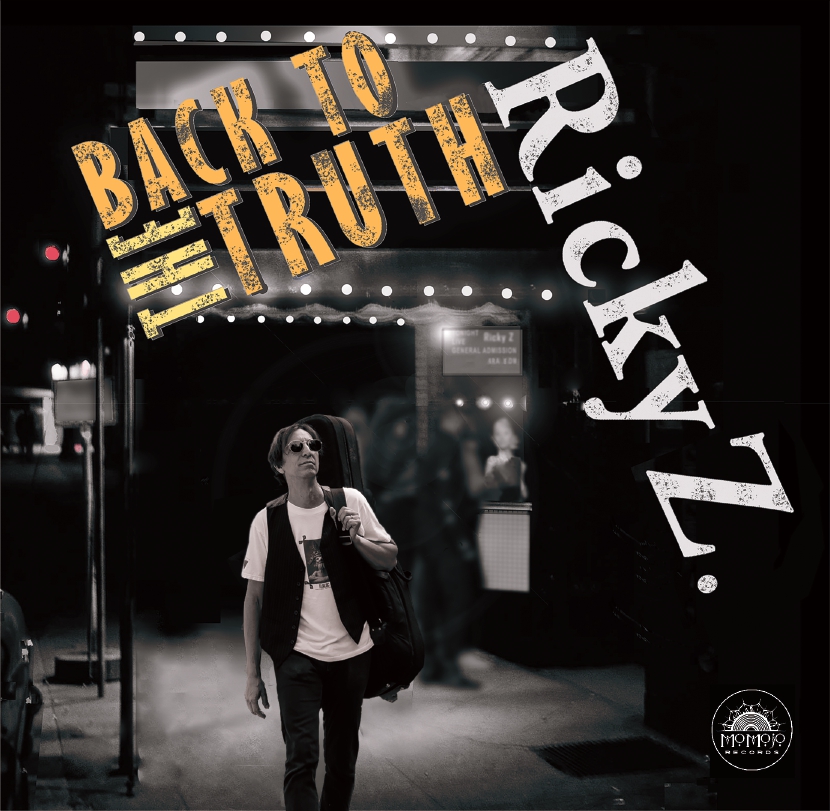
There is a particular paradox in becoming an experienced artist: the more one refines a musical language, the harder it can become to distinguish instinct from expertise. Years of technique, collaboration, and professional discipline can make an artist unmistakably accomplished, yet not necessarily more revealing. Back To The Truth finds RICKY Z. somewhere within that tension, using the blues, rock, gospel, jazz, and Cajun traditions not simply as stylistic reference points, but as a means of asking what remains when a lifetime of musical experience finally turns inward.
After a 25-year career spent recording and performing alongside an extraordinarily diverse range of artists, RICKY Z. has accumulated the kind of résumé that could easily overshadow the music itself. His work has taken him from John Fogerty and Josh Groban to BTS and JPEGMAFIA, alongside film, television, musical theatre, and a Latin Grammy-winning recording with Juan Gabriel. Yet Back To The Truth is most interesting precisely where those associations recede. This is not an album built around reminding us what Zahariades has already accomplished; it is an attempt to hear what all those years have left behind.
That makes the album’s title feel less like a declaration than a question. What exactly is “the truth” after decades of adapting to different artists, genres, environments, and expectations? For RICKY Z., the answer seems to lie somewhere in the musical traditions that initially shaped his sensibility. Blues, rock, gospel, jazz, and Americana become less like genres being performed than different ways of processing memory, struggle, faith, desire, and resilience.
“Mister Please,” featuring Teresa James, immediately establishes that emotional vocabulary. Its central plea is simple and almost painfully direct: the feeling of having tried everything and still finding oneself unable to move forward. James’ presence expands that frustration beyond a single perspective, while the blues framework gives the song an appropriately worn texture. Rather than dressing up its desperation, the track lets repetition do the emotional work.
“Time Served” takes that weariness into more intimate territory. Built around the aftermath of a relationship that has become emotionally imprisoning, the song carries the language of heartbreak without becoming consumed by it. Zahariades’ vocals retain a certain rough-edged vulnerability, while the guitar seems to articulate the resentment, exhaustion, and eventual release underneath the words. There is something particularly effective about the song’s refusal to romanticize endurance: sometimes staying is not evidence of devotion, but simply time served.
“Congo Square” turns toward history. Its rip-roaring blues-rock energy draws on the cultural significance of one of the foundational spaces in American musical history, while Zahariades’ climactic guitar solo connects technical confidence with a sense of lineage. The performance does not feel like an academic reconstruction of tradition. It feels alive, restless, and physical, as though history is something that can still be felt through rhythm.
The instrumental title track, “Back to The Truth,” offers perhaps the clearest demonstration of the album’s central paradox. Without lyrics to tell us what to think, the guitar has to speak for itself. Zahariades possesses more than enough technical command to make the track a showcase, but the more meaningful moments are those where technique gives way to phrasing and expression; because after decades of being an in-demand player, the challenge is no longer demonstrating what the instrument can do. It is deciding what is worth saying with it.
That seriousness is balanced by the album’s more playful turns. “Dancing Shoes” brings an uncomplicated romantic warmth, while “We Make a Good Gumbo,” featuring accordionist Teddy Andreadis, embraces its Louisiana influence with humor, sensuality, and swagger. The latter in particular adds an earthy looseness to the record, reminding us that returning to one’s roots can also mean returning to pleasure. Not every truth has to arrive through suffering.
The spiritual dimension becomes more pronounced with “Hallelujah” and “God Has Smiled On Me.” RICKY Z.’s treatment of Leonard Cohen’s “Hallelujah” is sparse and tasteful, wisely resisting the urge to compete with the song’s enormous cultural legacy. “God Has Smiled On Me” provides a more openly devotional counterpoint, shifting the album’s emotional register toward gratitude. Together, they reinforce one of the record’s recurring tensions: between doubt and faith, exhaustion and renewal.
That tension ultimately expands into something larger on “Looking For The Light.” Its concerns with inequality, exploitation, social division, and collective responsibility move the album beyond autobiography. The search for light here is not merely personal; it becomes a question of whether people can recognize their shared circumstances before it is too late. The song’s urgency gives the album’s inward reflection an outward consequence.
Perhaps this is where the paradox at the heart of Back To The Truth becomes most compelling. RICKY Z. has spent much of his career helping other artists sound like themselves, yet his own artistic statement emerges from years of having absorbed so many different musical worlds. The album does not attempt to sound inexperienced, spontaneous, or untouched by history. Instead, it asks whether experience itself can become a form of authenticity.
In that sense, Back To The Truth is not really about going backwards. It is about discovering that sounding like yourself may require carrying everything you have learned with you, while still deciding what belongs to you; and that is the most convincing thing about RICKY Z. on Back To The Truth: after a career spent contributing to other people’s voices, he finally allows his own accumulated experience to finally become the voice!