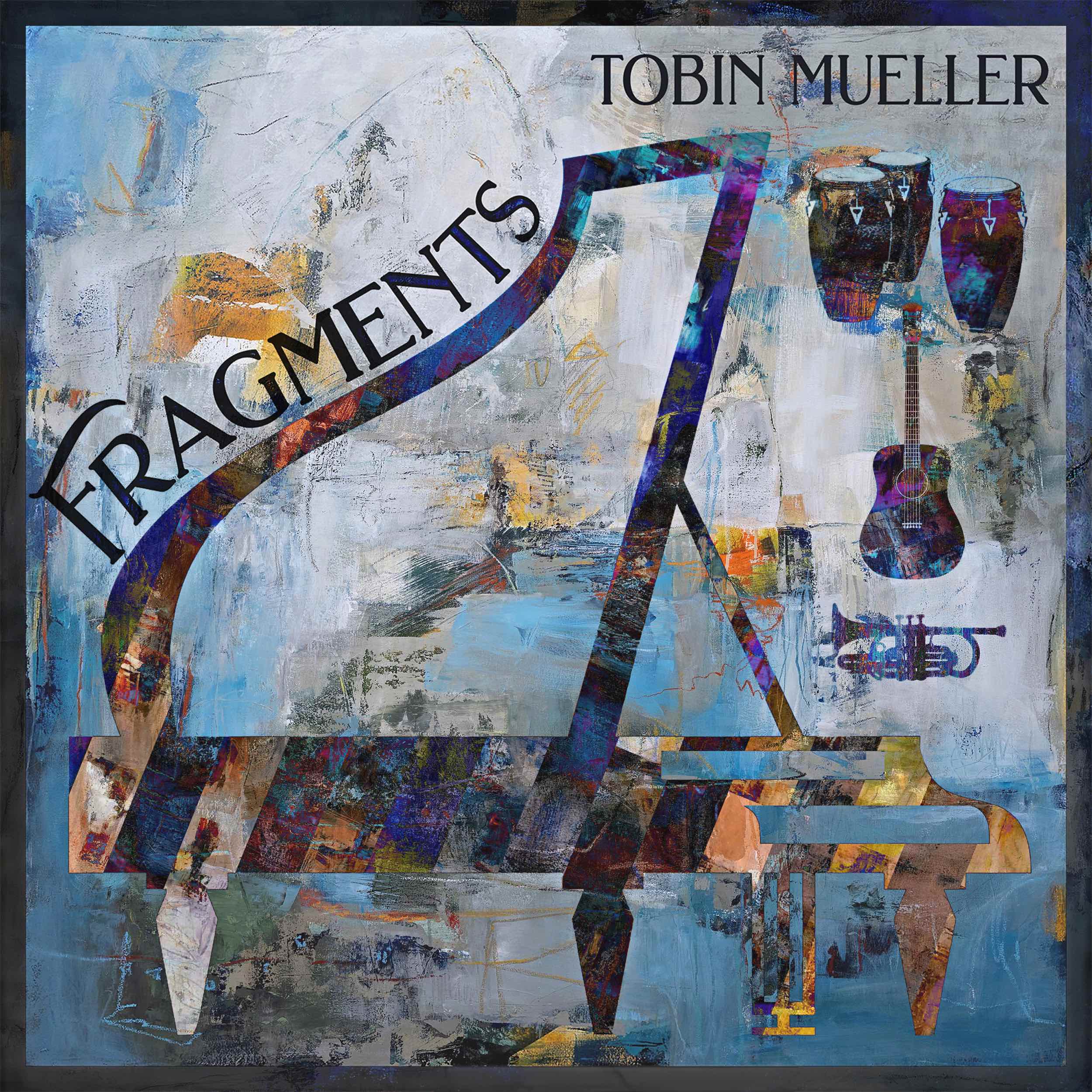
Tobin Mueller’s Fragments is a sonic memoir written in the language of jazz fusion, world rhythms, and reinterpretation. At first glance, its premise appears simple: musical fragments, echoes of melodies and riffs from Lennon to Hendrix, Simon to Arlen are unearthed from memory and reconstructed into entirely new compositions. But Fragments is more than homage or reimagination. It is Mueller’s intimate way of charting the mind’s musical map, one composed not of songs, but of the emotional residues they leave behind.
The album begins not with a whisper but with a raucous, rolling celebration of Tobacco Road, taken far from its blues roots into a world of jazz-rock interplay. Guitars duel with horn sections, keys run riot, and Mueller sets the tone for what’s to come: this isn’t about simply covering tracks but rather re-experiencing them from the inside out. The transition into Feels So Good preserves the lighthearted soul of Chuck Mangione’s original while making room for deeper grooves and the expressive brilliance of guitarist Bob Lanzetti (Snarky Puppy). This piece exists in multiple versions on the deluxe edition, each shedding new light on Mueller’s melodic intentions.
The album’s title isn’t metaphorical. Fragments is quite literally a tapestry of sonic echoes, musical shards that once caught the ear of a teenage Mueller and stayed buried, only to resurface now in the form of original works that shimmer with layered instrumentation and improvisational fervor. Tracks like Electric Boots and Dreamer don’t merely reference Elton John or John Lennon; they breathe their spirit into new structures. The former takes the swagger of “Bennie and the Jets” and drops it into a horn-laced, percussion-heavy fusion track. The latter dances with the dreamlike ethos of “Imagine,” but sways instead to Latin-inflected rhythms and joyous brass explosions.
In a sense, the album blurs the line between memory and composition, nostalgia and invention. All Come to Look for America builds from Simon & Garfunkel’s America, folding in quotes from Cecilia, blending 60s folk-pop with psychedelic jazz undercurrents. Winding Road sways with Brazilian flair, taking the introspective melancholy of McCartney’s ballad and converting it into a sunlit, syncopated groove.
Mueller’s choices are not arbitrary. These are the songs that shaped him, the fragments that clung. But instead of resting in sentimentality, he invites the listener into an ongoing creative process where influence becomes collaboration across time. Always Thought I’d See You Again emerges as a poignant tribute to James Taylor, its cello and piano pairing feeling like a heart-to-heart conversation, tender and vulnerable.
The album’s second half leans into more ambitious textures and time-bending experiments. Seasons Will Pass You By channels the elaborate structure of Yes’ Close to the Edge, not merely borrowing its progressive rock motifs but embracing its daring rhythmic spirit. Similarly, Is It Tomorrow or Just the End of Time? nods to Jimi Hendrix with electric energy and lyrical abstraction, with Woody Mankowski lending vocals that haunt as much as they provoke.
Perhaps most telling is No Place Like Home, a closing track that brushes against Over the Rainbow without ever fully quoting it. It’s less a reinvention and more a meditation on longing, a musical expression of return, rendered through acoustic piano, hand percussion, and soaring soprano sax. In the quiet restraint of this piece, the emotional center of Fragments becomes clear: this isn’t about tribute. It’s about how music lives within us, how it mutates, returns, and becomes part of our own creative voice.
A huge part of the album’s richness stems from the international ensemble Mueller assembled. From Ruben de Ruiter’s masterful global percussion to solos by world-class artists like Roy Agee (trombone), Noah Hoffeld (cello), and Amit Erez (guitar), each track feels like a dialogue across geographies, genres, and generations. Mueller himself anchors the ensemble with his signature versatility, moving between acoustic piano, B3 organ, vibraphone, marimba, and an array of digital and analog textures that never feel synthetic.
There is no conventional drummer on most tracks, only the organic, tactile energy of hand percussion, an artistic choice that adds a layer of intimacy and physicality to the listening experience. The rhythm breathes rather than drives, allowing for flexibility and emotional fluidity.
Technically, the album stands as a marvel of arrangement and sonic sculpting. But it’s also deeply human. The listener is guided through a world that’s half-memory, half-fantasy; a liminal space where familiar hooks and progressions are peeled apart and reassembled as new emotional journeys. Mueller’s decades of experience shine through not in showmanship, but in sensitivity. He knows when to pull back, when to build, and when to let the music speak in quiet harmony.
Fragments is dedicated to Paul Nelson, the late blues legend whose encouragement sparked the project. It’s a fitting tribute. In many ways, Nelson’s influence and spirit permeate the album, especially in the blistering guitar work and blues-rock undercurrents that bubble up in tracks like Tobacco Road and Is It Tomorrow. Mueller’s gratitude becomes a driving emotional force, reminding us again that music is never only technical. it is relational, communal, and ancestral.
Ultimately, Fragments is not a mere exercise in variation. It’s a meditation on what we carry within us. As classical composers once turned themes into symphonic journeys, Mueller turns memory itself into the musical material: reshaped, not replicated. It’s a beautiful, unpredictable record. At times jubilant, at others pensive, always exploratory. In doing so, it offers a rare feat: making reinterpretation feel like an act of invention.
This is not jazz for background ambiance. It’s a full-body, full-spirit experience. The kind of album that encourages you to listen with new ears to what you hear now, and to the echoes you didn’t know were still ringing inside you. This album simply encompasses exquisite talent and musicality.