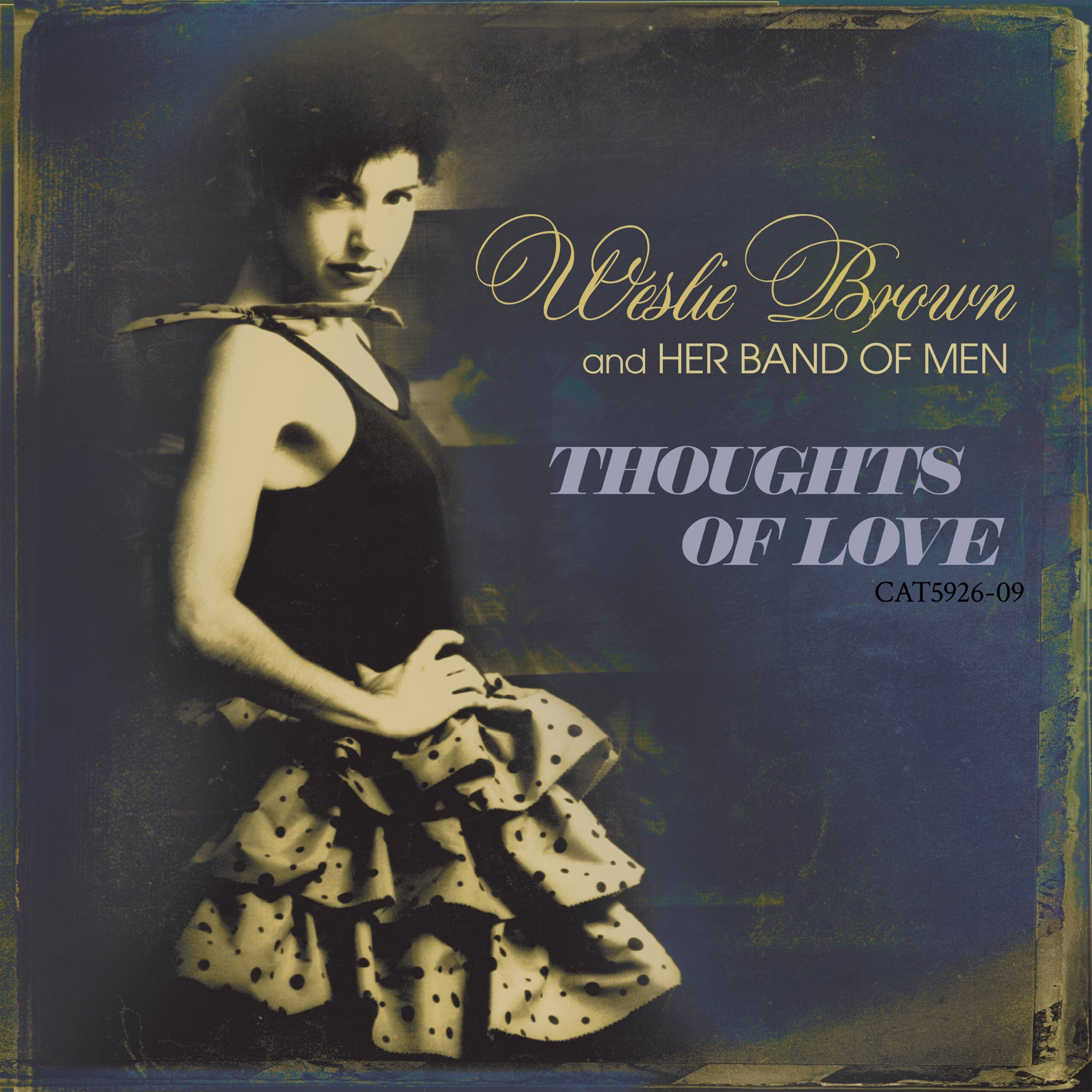
Country inflections, jazz standards, theatrical vocals, and atmospheric storytelling might seem like unlikely companions, but Thoughts of Love finds a curious balance between them. Across ten recordings, Weslie Brown and Her Band of Men move between styles with a sense of theatrical freedom, revealing an artist more interested in exploring musical possibilities than settling into a single genre. The result is an archival release that feels surprisingly varied and alive.
Released by Barton Avenue Records, Thoughts of Love brings together a collection of previously unheard recordings by Brown, a songwriter, arranger, and vocalist whose artistic journey began in the experimental Los Angeles scene of the late 1980s. Alongside figures such as Sandra Bernhard, Lydia Lunch, and Katey Sagal, she became part of a creative movement that blurred the boundaries between jazz, cabaret, punk, and performance art. Just as her reputation was gaining momentum, Brown left the scene behind to sail around the world. Following the release of her debut EP, Theatrical Jazz, too, this full-length archival collection offers another opportunity to discover an artist whose work has remained largely out of reach.
The album establishes its eclectic character from the outset. “Other Side of This Life” opens with a country-leaning sensibility, complemented by Brown’s distinctive vocal texture, which brings a classical jazz quality to the arrangement. The combination is intriguing, setting the stage for an album that frequently finds its character in unexpected stylistic intersections. “Will My Survival” takes a more understated approach, beginning with a pizzicato introduction before a piano line ushers in the vocals. The relatively sparse arrangement draws attention to Brown’s phrasing and vocal harmonies, while a subtle groove gives the track a sense of forward motion.

The theatrical dimension of Brown’s artistry becomes particularly apparent on “Run Run Run.” Its harmonised vocal entrance, “we run like spiders, insightful insiders,” immediately catches the ear with its unusual imagery and delivery. A staccato piano figure follows, almost mimicking the physical act of running. The rhythmic interplay between piano and vocals reinforces this sense of movement, giving the track a distinctly musical-theatre character. Rather than simply accompanying the lyrics, the arrangement actively participates in the storytelling.
“Ships” offers a striking contrast. Built around sustained, atmospheric textures, the track gradually unfolds into an expansive, cinematic soundscape. Brown’s vocals feel almost ethereal against the arrangement, carrying the listener into the maritime imagery of the lyrics: “I love ships when they sail through the sea.” The music evokes the openness of the ocean, creating a sense of distance and movement that extends beyond the words themselves. Its storytelling quality makes it one of the collection’s most evocative moments.
Elsewhere, Brown turns towards the jazz standards, bringing a different kind of intimacy to the collection. “Love Is Here to Stay” delivers a compact dose of classic jazz charm, while “My One and Only Love” leans into smooth piano accompaniment and a more relaxed atmosphere. “That Old Black Magic” continues the album’s engagement with the jazz tradition, adding another familiar standard to a repertoire shaped by Brown’s distinctive sensibilities. These interpretations sit comfortably alongside her original compositions, illustrating the versatility of a performer equally drawn to established forms and more unconventional approaches.
The title track, “Thoughts of Love,” returns to the country influences heard at the beginning of the album, reinforcing its stylistic fluidity. Meanwhile, “Meditation” offers one of the collection’s more unexpected turns. Rather than adopting the subdued, contemplative mood its title might suggest, the track is surprisingly groovy and dreamy. It is a reminder that Brown’s musical imagination does not always follow the most obvious path, even when working with familiar ideas.
Thoughts of Love is more than an archival curiosity. Its ten recordings preserve a singular artistic voice, shaped by jazz tradition, cabaret theatrics, and a restless experimental spirit. The meticulous restoration brings the performances into clearer focus, allowing their arrangements, textures, and contrasts to emerge. For listeners discovering Weslie Brown for the first time, Thoughts of Love by Weslie Brown and Her Band of Men offers an invitation into a musical world where country meets cabaret, jazz becomes theatre, and even a song about the sea can open onto an entirely different journey!