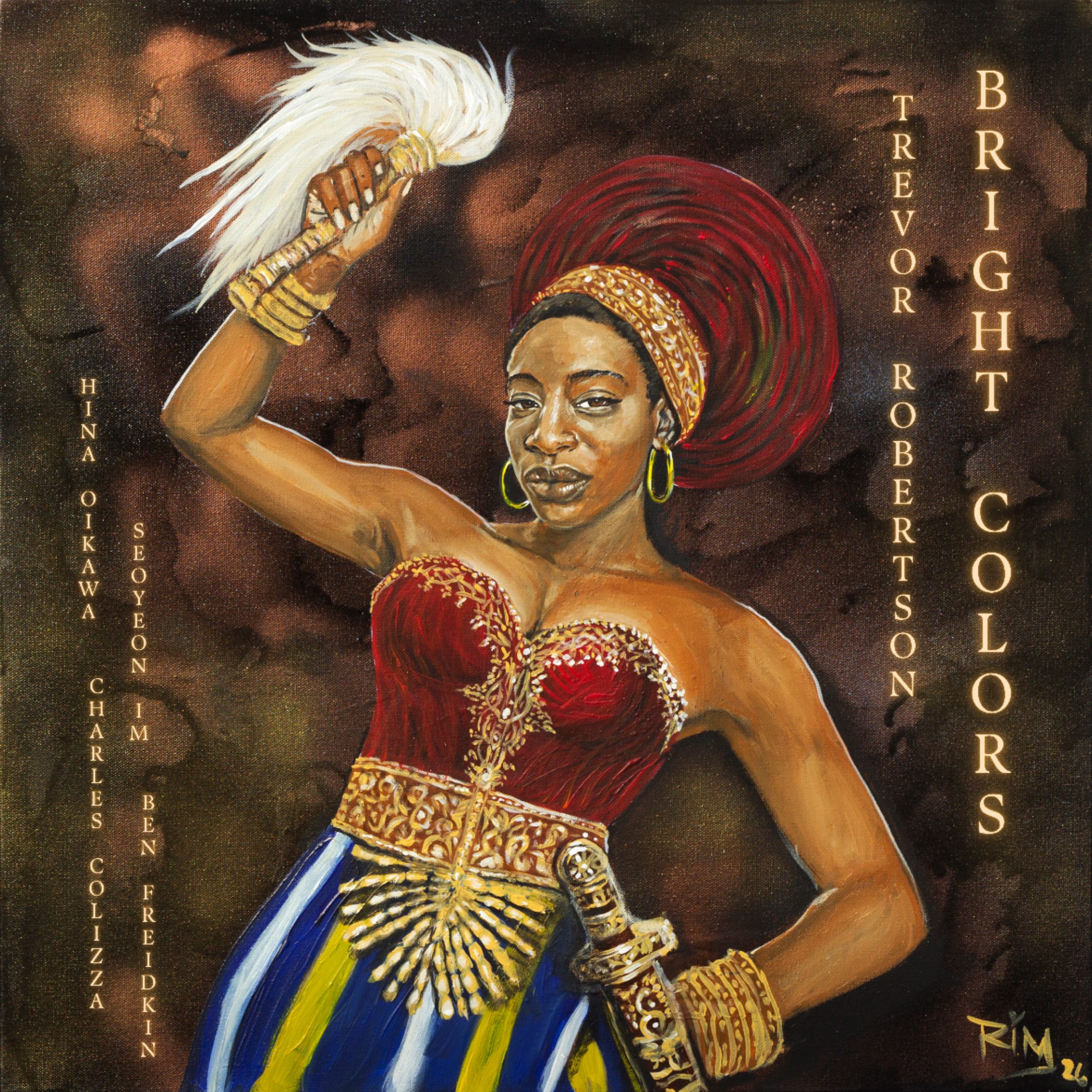
One moment, the music draws you into a soothing web of harmonies; the next, it unsettles you with urgent gestures, jagged textures, or rhythms pushing beyond their limits. This constant movement defines Bright Colors, the debut album by bassist and composer Trevor Robertson. Blending contemporary jazz, Western classical, Afro-Cuban grooves, funk, rock, and experimental improvisation, the record explores contrasting musical worlds while maintaining a deeply personal core: a meditation on loss, remembrance, and the celebration of life.
Dedicated to Robertson’s late former partner, Iesha Renee Spence Oyabunmi, Bright Colors takes its title from her vibrant personality and love of vivid colors. This sensory richness finds a musical parallel in the album’s shifting textures and moods. Rather than approaching grief through a single emotional register, Robertson allows it to unfold through moments of intensity, tenderness, contemplation, and playfulness.
The opening track, “Bright Colors,” immediately establishes this appetite for contrast. Driving swing passages alternate with heavier, headbanging halftime rock grooves, creating a restless energy that keeps the listener engaged. Robertson moves between arco and pizzicato bass playing, demonstrating an improvisational vocabulary rooted in jazz tradition yet open to experimentation.
On “Intersection,” a percussive introduction establishes an earthy, almost tribal atmosphere before a classically inflected melodic line emerges. The transition leads into remarkably soothing harmonies, revealing Robertson’s ability to bring different musical languages together without sacrificing their individual character. Drawing on Afro-Cuban Bembé-derived grooves, the composition finds its strength in the interplay between rhythmic vitality and melodic delicacy.
Elsewhere, “The Axe Did Not Forget, for Alas! It Was Made Out of Wood” takes a more confrontational approach, venturing into experimental noise and free improvisation. Its urgency resists easy resolution, making room for the friction and uncertainty that accompany loss. In contrast, “Ibae” begins with a melancholic melody before gradually opening into a contemplative atmosphere. The electric guitar introduces a conversational quality, as though the instruments are exchanging thoughts that words cannot quite capture.
The album’s stylistic range continues through the funk-inflected “On” and the expansive explorations of “The Deepest”and “More Powerful Than You Can Possibly Imagine.” Across these compositions, the bass extends beyond its conventional role as a rhythmic anchor, becoming an expressive voice within an evolving musical dialogue.
Memory also finds a place in the album’s structure. “Hyacinth Season (Slight Return)” revisits earlier material, suggesting how familiar ideas can return in altered forms. The closing “She Never Says Goodbye, Only Later” offers an especially evocative sentiment: its title transforms farewell into something less definitive, leaving room for the enduring presence of those we have lost.
Robertson’s ensemble: Hina Oikawa on saxophone, Seoyeon Im on violin, Charles Colizza on guitar, and Ben Freidkin on drums, plays an essential role in this musical exchange. Recorded live across three Brooklyn venues in 2025, the album captures the spontaneity of musicians navigating intricate arrangements and improvisational possibilities together.
Bright Colors is less about escaping grief than learning to accommodate its many shades. Through its restless rhythms, unexpected contrasts, and moments of quiet reflection, Trevor Robertson transforms personal remembrance into a celebration of life. Bright Colors reminds us that those we lose can continue to shape how we experience the world, their presence lingering in the music long after words fall silent..