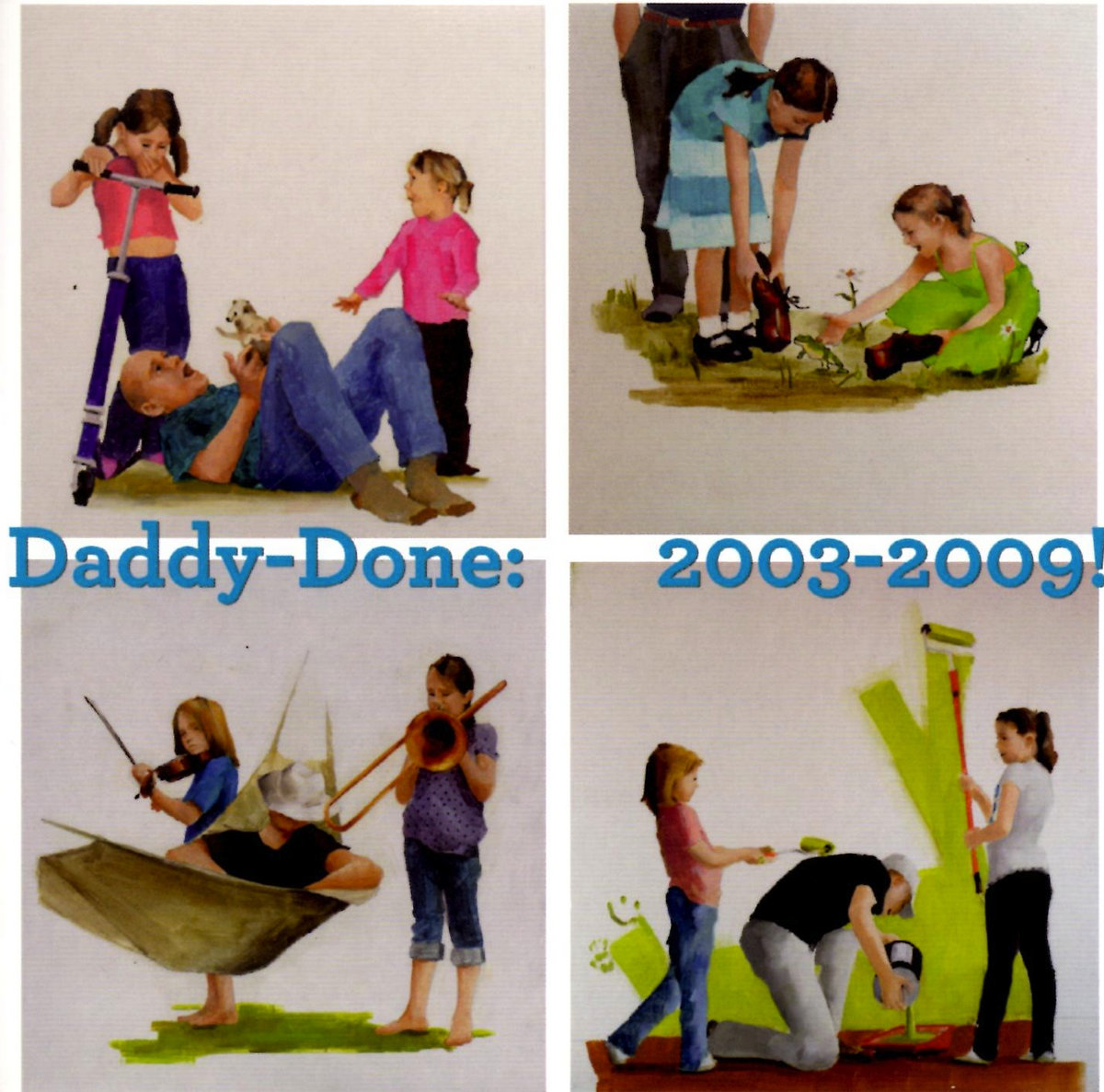
Todd Kolod, the prolific singer-songwriter and former early childhood educator from Saint Paul, Minnesota, first channeled his creative energy into the community-driven Daddy-Doo Band between 2003 and 2009, assembling a group of professional musicians from his parenting classes to record heartfelt acoustic folk and alternative rock. The new compilation Daddy-Done: 2003-2009, released independently and available on Bandcamp, gathers these early one-take wonders and later polished tracks into a window of raw emotional storytelling, with all original proceeds having supported Saint Paul Public Schools. In the conversation below, Kolod reflects on the origins and evolution of this foundational project, the significance of the compilation, and his current and future creative directions.

- As an early childhood teacher and parent educator from 1985 to 2012, how did your professional role in Saint Paul Public Schools directly inspire the formation of Daddy-Doo Band and the selection of its members from parenting groups?
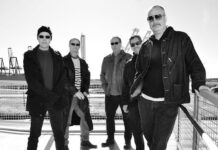
My father was killed in a boating accident in 1958 at age 22. My family lived in Las Vegas. (Both my grandfathers were involved in the hotel and casino business there, a legal opportunity for gambling after years of trouble with the law in other states.) I was almost 3 years old. My mother didn’t deal openly with the death and she told me “your dad went away.” Then a year later my mother remarried and she changed her story. I came to believe that my stepfather was my biological dad. This white lie worked well until she divorced when I was around 11 and she said, “By the way, he’s not your real dad.” So began my journey in life. Though I didn’t realize it at the time, this set in motion my career choice to specialize as an early childhood teacher working with kids around age 3, the age I was when my dad died. And then later pursuing my parenting education license after I had kids of my own, I developed the specialty of leading fathers-only groups. I had an insatiable father-hunger in my soul. The Daddy-Doo Band is composed of participants from the fathers groups which I led: Michale Carvale (bass), Robert Lipscomb (keyboard), Mike Pretel (drums), John Richardson (rhythm guitar), and Ben Woolman (fingerstyle guitar). Anne Zielske (backup vocals & flute) was recruited from another group at our program with mostly moms.
- The band’s name originated as a playful nickname from your younger son. In what ways did this personal family connection influence the lighthearted yet emotionally charged tone of the early songs written during the 2003–2009 period?
My younger son Joel who coined the band’s name used to poke fun at my idiosyncrasies. My first song “Daddy-Doo” captures this with references to me falling asleep while reading his bedtime stories and famously gobbling up all the foods he didn’t finish on his plate. Joel would playfully mock my resultant “big gut” too. Joel had some growth hormone issues as a young child. This likely inspired “Last But Mighty”.
- Many tracks on Daddy-Done: 2003-2009 were captured as live, first-take recordings with the full band. What unique challenges and rewards arose from embracing these unpolished performances rather than pursuing multiple studio takes?
Time was a precious resource for the band members. They all had young children at home and busy lives. It was difficult finding rehearsal and recording dates when everyone could assemble all at once. We had few opportunities. Out of necessity we had to go with many first or second takes. Steve Lambert, our producer for the early albums, did the best he could to clean up the tracks. But there they were, honest but with flaws. Let’s just say that keeping a steady beat was not my forté. There were no click tracks for most of the recordings.
- Later songs on the compilation benefited from the skilled production of John Richardson. How did the shift from raw live sessions to more refined production reflect your growth as the band’s main songwriter and sole musical amateur?
The band thrived through 2007. But the demands of family life for its members led to a transition with more studio production with the talented John Richardson as producer and John Ostby with backup vocals. With this new format we were able to release songs which required fewer scheduling demands and personnel. John played many of the extra instrument parts himself. This partnership was to be the successor to Daddy-Doo Band. I even copyrighted the name: SoulFolk. In the end, fate had a different idea.
- The band sold 5,000 cassettes and CDs with all proceeds directed to the Rondo ECFE Parent Advisory Council. What lasting impact did this community fundraising model have on your approach to music as a vehicle for social good?
We had a wonderful built-in fan base with the Rondo Early Childhood Family Education program of the Saint Paul Public Schools. Each year the program enrolled over 125 families. The band donated a few thousand dollars to the parent advisory council during our run. The advisory council used the funds to purchase play equipment for the program and pay for field trips.
- The compilation serves as a sonic bridge to the music that would later define your subsequent projects. In curating these 19 tracks, what criteria guided the selection to illustrate the organic development of your songwriting voice over those six years?
I wasn’t convinced I could actually write my own songs. But then “Daddy-Doo” was born in 2003 to my surprise. I borrowed some chord shapes from John Mayer’s “No Such Thing” and America’s “Ventura Highway.” This gave me the confidence to continue, one song at a time. One song led to another. I didn’t over analyze or fuss over the tunes. They just came to me.
- Themes of family, resilience, and everyday humanity run through songs such as “Growing,” “Welcome Home,” and “Last But Mighty.” How did your experiences as a parent and educator shape these lyrical motifs during the Daddy-Doo Band era?
These three songs emerged from all of my life experience, including teaching. “Growing” stems from a lifelong focus on the passage of time. Even as a little boy, I had a chair in our living room that I would return to every now and then to contemplate how quickly time had passed. You could say I became a ‘dweller’ at an early age. “Welcome Home” conjures up the difficult teen years with my older son Ethan. “Last But Mighty” refers to my consistent desire to champion the underdogs. It’s in my DNA.
- With the band featuring a mix of professional players—including Michael Carvale on bass, Mike Pretel on drums, and Anne Zielske on flute and backup vocals—how did the dynamic between your amateur songwriting and their expertise create the lush, somber acoustic sound captured on the compilation?
The sum was more powerful than the individual parts with the Daddy-Doo Band. The band members were always able to surprise me and take my simple demos to another level. Like I said earlier, we had very few rehearsals but the result was several one-take wonders. Special thanks to Robert Lipscomb who rounded out the lineup on keyboards.
- The release of Daddy-Done: 2003-2009 arrives at a moment when you are actively engaged in humanitarian efforts in Ukraine. In what ways has this current work influenced your perspective on the enduring value of the music you created two decades ago?
Ukraine is defending its sovereign borders established in 1991. International law generally honored this concept until Russia illegally invaded in 2014 and again in 2022. Fighting for democracy often feels like being the underdog. The Daddy-Doo Band with a decent catalogue of music but with little recognition is a musical underdog.
- Having now compiled and shared these early recordings, what reflections on the passage of time and personal growth have emerged from revisiting the material after more than fifteen years?
Creating music between 2003-2009 with the band members was a magical experience, but it was time limited. I know for a fact that I couldn’t repeat what we had accomplished. The ideas and the spark were there between 2003-2009, but now they are gone.
- The compilation highlights a period of spontaneous creativity before your songwriting output reached seventy songs across seven decades. How did the Daddy-Doo Band experience lay the groundwork for sustaining such prolific output in the years that followed?
For me personally, the Daddy-Doo Band and JustFolk were one continuous stream of consciousness. The name changed, but it was the same musical spirit. The songs flowed, 70 in 70 years, one after another. It was only in the years 2019-2025 when songwriting began to feel a bit more forced. I had to build songs around kernels of ideas, but the one-take wonder years were gone.
- Looking ahead, are you considering any live reinterpretations, expanded reissues, or new acoustic arrangements of Daddy-Doo Band material to introduce it to contemporary audiences?
My first song “Daddy-Doo” was recorded in 2003. We went back and re-recorded an unplugged version in 2005: “Daddy-Doo Unplugged”. The honest truth is that I am terrible in a live format. I know my limitations. And I’ll be 71 in July. The time to hang it up is now.
- Beyond this archival release and your ongoing humanitarian commitments, what new musical projects or collaborative formats are you developing that build upon the community-focused spirit established during the Daddy-Doo Band years?
Now in my twilight years, I have taken to focusing on the music of others. I recently purchased a second hand turntable and a tuner with tubes. While I enjoy music from many different decades, my musical bedrock remains the albums released in 1970 during my most formative year at age 15: Cat Stevens, James Taylor, Elton John and Crosby, Stills, Nash & Young.