Fajr is an Egyptian progressive rock band that sings in Arabic, and by its own account it exists because the music its members wanted to hear didn’t exist in their language. Its name means dawn, the first light that breaks the night before the sun rises, and every song it writes follows a single journey from a dark place, to realisation, to awakening. With its debut single “فوق” (Fou2) – The Awakening arriving on November 11th, I wanted to ask the band about where the idea came from, why they write in Egyptian Arabic, how the song was built and what they have planned next. The questions below cover the band’s origins, its sound and its story.

- Fajr means dawn. What made you choose that name, and what does it stand for in the band’s story?
FAJR began at a time when we were looking for a way out of a creative standstill. Tarek had started writing music without a fixed concept in mind, and when he shared the early material with Adham, we heard the same emotional movement in it: from tension and darkness toward something opening up. Adham suggested the name FAJR, and we both felt it belonged to the music. Dawn isn’t the end of the night in an instant; it’s that first sign that the darkness won’t last forever. That idea became the heart of what we’re building together. As one of our lines puts it: من ضلمة الليل بيطلع الفجر.
- You’ve said the music you were looking for didn’t exist in your language. What were you looking for, and when did you decide to make it yourselves?
We were looking for a particular combination: the weight and atmosphere of the rock and metal we love, melodies that stay with you, lyrics with something real to say, and production that feels contemporary. There are talented artists in the Arabic scene, and we respect the work that has kept it alive, but we weren’t hearing that exact combination often enough. We wanted to make progressive music without treating complexity as a competition. A section should earn its place because it moves the song forward, not because it shows off. We also didn’t want to make music only for people who already call themselves rock fans. Our aim is something modern, cinematic and impactful, without molds or boundaries. Once we started working together, it made more sense to try creating that sound ourselves than to keep waiting to hear it.
- How did the band come together, and who is in the lineup?
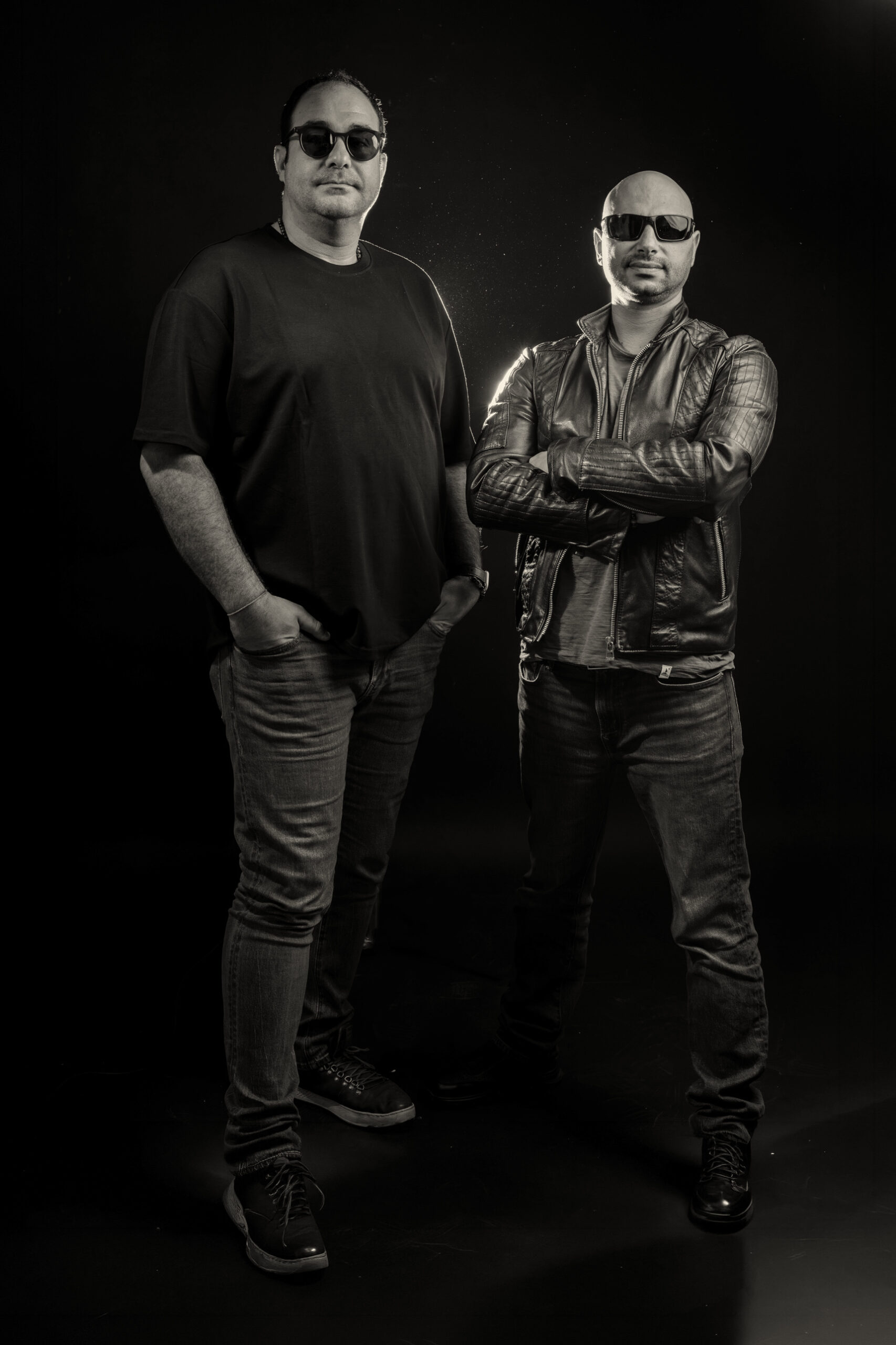
We’re two longtime friends who have been talking about music, sharing ideas and giving each other honest feedback for more than fifteen years. Tarek has been a trusted ear for Adham’s work with Anarchy and other projects, and that trust existed long before FAJR. Tarek began composing new material on his own, then thought of bringing Adham into it because of that friendship and the confidence we have in each other’s judgment. Once we started pre-production on the first demo, we realized this could become a real band rather than an occasional collaboration. FAJR is Tarek El-Far on composition, instruments and production, and Adham Kafafy on vocals and lyrics. But the finished songs are shaped together: we challenge arrangements, vocal lines, transitions and even individual words until they feel right to both of us.
- Why did you choose Egyptian Arabic for the lyrics, and how does it shape the way you write melodies and vocal phrasing?
We didn’t begin with a rule that FAJR had to be in Arabic. Choosing Egyptian Arabic became part of the challenge that made the project exciting. Adham had spent years writing and singing in English, so this meant finding a new relationship between the words and the melodies. Arabic has an extraordinary range of expressions and shades of meaning, but it also has its own rhythm, stresses and vowels. We don’t want to force the language into an English-shaped vocal line or sacrifice the natural pronunciation of a word just to fit a riff. Sometimes we change the phrasing; sometimes the music needs more space. We discuss the story and often debate the exact words because a small change can transform how a line feels. The goal is for the Arabic to sound completely at home in the music, not like something added afterward.
- “Fou2” means “wake up.” What was going on in your lives, or around you, when you wrote it?
There was a shared feeling of being stuck and wanting to move again, creatively and personally. The music came first, carrying a sense of pressure and a need to break through it. As we developed the lyrics, that feeling became a conversation with someone who is still caught in their own darkness. ‘فوق’ isn’t about pretending that waking up solves everything. It’s about the moment you recognize that something has to change. That can mean different things to different people: a habit, a relationship, a lost ambition, or a situation they’ve stopped questioning. We deliberately leave room for listeners to find their own meaning. For us, awakening is the beginning of action, not the finish line.
⇒ Check our thoughts on ‘فوق’ here.
- Every song follows a journey from a dark place to realisation to awakening to dawn. How did you arrive at that concept, and where does this first chapter fit in it?
The wider story wasn’t a blueprint we imposed on the first piece of music. We heard the tension and release in what Tarek had composed, then the lyrics gave that feeling a clearer direction. From there we began developing a connected four-phase journey: Darkness, Awakening, Struggle and Light. ‘فوق’ represents Awakening, the second phase. That distinction matters to us because realizing you need to change doesn’t mean the struggle is over. In many ways, it’s when the difficult part begins. We want each part of the project to have its own emotional character while belonging to a larger story. We’re keeping the remaining details close for now, because we’d rather let listeners discover that journey through the music.
- The song moves from a slow, atmospheric opening into heavy riffs, a guitar solo and a big chorus. How did you approach the arrangement and the build?
We wanted the arrangement to feel like a journey rather than a collection of impressive sections. The opening holds back and creates tension, so when the rhythm section and heavier guitars arrive, that shift means something. We pay a lot of attention to the spaces between sections: how long an idea should breathe, when a transition should build gradually, and when a sudden impact is more effective. The heavier passages carry urgency, while the more open melodic moments give the listener a sense of release. We approached the solo as another voice in the story, a moment when the instruments can carry an emotion without explaining it in words. Our decisions aren’t about making every minute louder or more complicated. They’re about making the whole song move, and making each contrast feel earned.
- Which bands, artists or scenes shaped your sound, both in rock and metal and in Arabic music?
Our backgrounds overlap, but they aren’t identical, and that’s a big part of FAJR. Adham grew up with the power and character of artists such as Dio, Metallica, Pantera, Slayer, Opeth and Lamb of God. He also has a deep appreciation for Umm Kulthum, particularly the imagery and layers of meaning in the poetry she interpreted, including رباعيات الخيام. That influence is more about the emotional weight of words than about copying a musical style. Tarek draws from a more modern, cinematic production world, with artists such as Linkin Park, Sleep Token, Opeth, Pink Floyd and Radiohead, and production influences including Mike Shinoda, Steven Wilson and George Lever. Hisham Nazih is another important reference for cinematic storytelling through music. We don’t try to average these influences into a formula. We let them challenge one another until something feels like FAJR.
- How do you see your place within the rock and progressive scene in Egypt?
We see a scene with real talent and a committed audience that has supported rock and heavier music through difficult conditions. We want to contribute to that, not claim that we’ve arrived to reinvent it. What excites us is the possibility of reaching beyond the existing audience. Someone shouldn’t have to know what a time signature is, or already love distorted guitars, to connect with a melody or feel what a song is saying. We want to make music that belongs in the present: modern, cinematic and emotionally direct, but still heavy and adventurous when the song calls for it. If FAJR introduces someone to Arabic progressive rock—or even becomes their doorway into heavier music—that would be something we’re proud of.
- What was the recording and production process like for your debut single, and what did you learn from it?
Our process starts with Tarek developing musical ideas and sharing sections for us to explore together. Adham often comes up with vocal melodies while listening in the car; when he’s safely parked, he’ll record a quick video of an idea and send it over. We go back and forth on what works, how sections connect and where the arrangement needs to make room for a vocal phrase. We agree on the story we want to tell, then Adham develops the lyrics, often discussing particular words with Tarek. The recording and production take place in Tarek’s studio, Arcwell, in New Cairo, which gives us the freedom to experiment without rushing. Tarek brings the composition, instrumental and production expertise; Adham brings the voice, lyrics and a different instinct for how a section should land. The biggest lesson has been that detail matters, but only when it serves the feeling of the song. We want weight without harshness, clarity without losing atmosphere, and enough dynamics for the heavy moments to actually feel heavy.
⇒ Check our thoughts on ‘فوق’ here.
- What do you hope a first-time listener, especially one who has never heard Arabic rock, takes away from the song?
First, we hope they feel something, whether or not they’re familiar with rock, progressive music or even the Arabic language. We want the music to communicate its own emotional journey, with the lyrics adding another layer for those who understand them. Of course, we’d love someone to discover a kind of Egyptian Arabic rock they didn’t know they could enjoy. But what would mean the most to us is something more personal: if even one listener hears ‘فوق’, recognizes something in their own life and decides to take a step toward changing it, then the song has done something meaningful. We’re not claiming music can solve anyone’s problems. Sometimes, though, a song can help someone hear what they already know they need to do. The action has to be theirs.
- What comes after the debut: more singles, an EP or album, and live shows?
‘فوق’ is one part of a larger four-phase story we’re developing for our first conceptual EP. We’re working on the remaining music and on how best to share the complete journey, but we don’t want to announce a release schedule or format before those decisions are made. We’re also exploring what FAJR could become on stage. It’s something we’re excited about, but it’s still in the planning phase, so there are no shows to announce yet. For now, we’re focused on making each piece of music as strong and honest as it can be. ‘فوق’ is the moment of waking up. There’s still a road ahead, and we’re looking forward to sharing it when it’s ready.
- Thank you to Fajr for taking the time to talk with us. “فوق” (Fou2) – The Awakening is out November 11th, and you can find the band on Spotify, Instagram and Facebook. The pre-save link is here, and Apple Music and Anghami links go live on release day.
⇒ Check our thoughts on ‘فوق’ here.