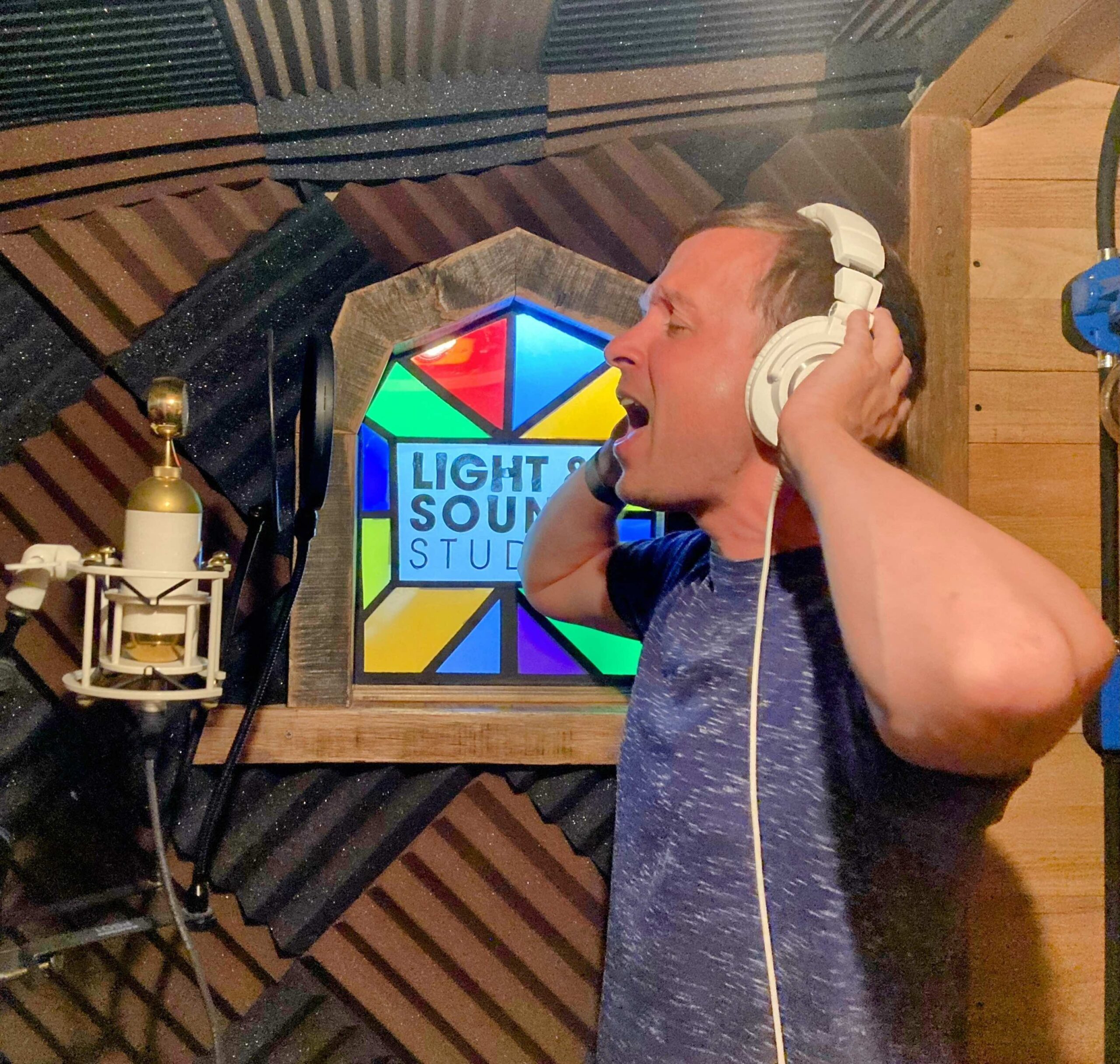
About four years ago, I had a conversation with the brilliant Joe Stanton, the mastermind of the punk project Merit Maker, and I was truly impressed by how he is transforming the punk scene. Today, I had the chance to delve deeper into his latest album, Better Days Ahead, as well as his insights on music and beyond. Let’s explore!
- You mentioned in our last interview that your passion for punk rock began in the early 2000s. How do you feel the punk music scene has changed since then?
My passion for punk rock did, for sure, begin in the early 2000s heyday! Since then, the scene has changed quite a bit. I mean, we did see a brief revival of pop punk music in the mainstream recently with artists like MGK dropping a couple of modern-day sounding pop punk releases. Other than that and the continuing legacy acts that have been around since back in the day, I can’t really think of all that many punk rock or similar genre bands that have emerged and made it super big over the past decade or so. Not to say that they aren’t out there, but this music just isn’t making the headlines like that now, the way that it did back in the early 2000s era. Twenty-some years ago, this scene was on top, and it had really become the “in” genre, so to speak, with new sounds and variations constantly popping up. Today, especially in the 2020s era, I feel as though it’s really taken a different place with most emerging artists not breaking into pop culture like that anymore. It’s just changed. The impact and influence are most definitely still there, though, and the people who care about and love the genre are just as active as ever. And really, who cares where it ranks on the “mainstream” scale anyway? Rock n’ roll!

- “Better Days Ahead” is an exceptional punk album. How long did it take you to write all of the tracks?
Really appreciate that! I truly feel as though new ground was reached on this one, and these are without a doubt some of the project’s most memorable songs to date. Tracking for the release began last winter. Of course, many of these riffs had already been in the works prior to, with one of the tracks actually being the very first punk rock song that I ever wrote 20 + years ago when I was just learning to play the genre. As far as going into the studio and putting these tracks down up until the release date, though, it was about six months, and that includes post-production as well. We got to work and made it happen! It’s the second release now featuring Blaise on drums and the fourth release to feature Mitchell on guitar. These guys really put in some hard work, as did the engineers who helped bring these songs to life. And I myself have been pushing my creative energies to the limit. It really takes a lot to write, record, and release an album. A lot of work in half a years time and it shows in the end result! It’s been a grind for sure. One hell of a grind.
- I really appreciated how prominent the bass is throughout the album; it emphasizes both the musical foundation and the melody. Do you plan to keep the bass as a central element in your upcoming songwriting process?
The bass IS the musical foundation always! It’s like the glue that holds everything together in a song. Let’s hear it for bass guitar! Bass for me has always been a central element in my songwriting process, as it’s what I write and play all of my riffs on. I’ve been playing bass for a decade and a half. That’s a while! I am a bass guitarist through and through, and the bass is where it begins, as far as how I write my songs. Wouldn’t have it any other way, and I think this project goes to show that bass is an excellent starting point for any song creation. Something about the bass guitar in songs always caught my attention and drew me in. Yeah, I did originally start as a guitar player, but I switched to bass relatively early on and ever since it’s been my go-to. It’s very hard for me to imagine picking up a guitar and writing the song that way. I’ve just done it this way for so long now, and it’s what feels right to me. Do whatever works, though, as long as it sounds good.
- Mitchell Layton did a fantastic job with the guitar lines. Did you provide him with specific guidance for certain riffs or licks, or did you allow him creative freedom during the production?
Mitchell Layton really did do a fantastic job, just as he has on each of these releases that he’s tracked for. So, the way it works is that once bass and drums have been tracked in full, I bounce those tracks to him and he starts writing guitar parts. I’ll give him some ideas for the kind of sound that I’m aiming for, but honestly, I usually don’t have to all that often. Dude just has an intrinsic sense of what works well in this genre and will almost always send me something that’s on par with what I had envisioned for the song, if not something even better! While rhythmically the guitars are often playing along something very similar to what I’m playing on bass, Mitch always seems to know the perfect tone to dial in to the rhythm guitars to make these songs shine. And when he writes the lead guitar parts, it really takes the tracks to a whole new level. The awesome leads he writes will often inspire me to then write a super catchy vocal pattern, and it keeps growing and evolving from there. This guy has really added a lot of depth to this project as far as song development goes, and it’s been a total blast creating with him on the past four releases!
- Additionally, did you collaborate with any other musicians? Could you share some names with us?
Well, as aforementioned, Blaise Rantanen, who tracked drums on the last EP, also tracked drums on this one. He cranked out some really solid beats that gave these tracks a super fun groove. Giorgi Ostatishvili, who was the backing vocalist on Pick Ups And Put Down, has also made a return on this album. Am I very happy with these collabs? You bet!
- I’m a bit unclear about the engineers involved. You mentioned working with several, but I also know that Michael Harmon (Studio Crash) was responsible for the mixing and mastering of the record. Can you elaborate on that?
Multiple engineers were involved in the production of this album. They are the same engineers who had worked on previous releases of the project, including James Ruggerio and Andrew Brown, during tracking sessions. Yes, Michael Harmon at Studio Crash mixed and mastered this album and every other release prior to it. Great team of engineers!
- Could you share more about the themes in your lyrics? What inspired Joe Stanton to write and perform those topics?
The themes in my lyrics come from various sorts of life experiences and are always an authentic way for me to express myself in my songs. When it comes to writing lyrics, I always keep it real and create lyrical content that is genuine and hopefully relatable. To me, lyrics are really the trickiest part of songwriting. At the end of the day, a good riff is a good riff. Just play it well, in tune, and in time, and it’ll sound great! Lyrics, however, are a much more touchy and personal sort of subject matter. On most occasions, I’ll revise my lyrics for a song at least once or twice until they feel right. Realness is key, though. Lyrics have to be real and honest. I think that if they’re not, it will be evident. So I sing about things that I’ve experienced in life. The highs and lows. The ups and downs. And everything in between.
- Oh! Speaking of singing, do you take any vocal lessons to keep your voice sharp and powerful?
I’ve actually never taken a single vocal lesson before. Nope, never. I’ve taken piano lessons, guitar lessons, and bass lessons. I think I even took some drum lessons once in a high school music class. Never have I ever taken vocal lessons,though. And I mean, with how “sharp and powerful” my voice is, why should I even bother with all of that? Haha. In all seriousness, though, I’m sure that it would help me to further hone my craft a bit, and it is something that I have actually considered doing in recent times. Maybe I will! So far, though, it’s all been self-taught. I learned how by singing along to all my favorite songs and biggest influences. In turn, I’ve developed my own voice and singing style. It’s very much so a DIY approach to it all, and in this style, especially, that’s definitely something to be highly regarded.
- I noticed that there don’t seem to be any music videos. Is there a particular reason for this?
No reason for the lack of music videos other than that, just haven’t gotten around to it. With pumping out so much new music each year, I haven’t really taken the time to focus on things like that. This year, I’m finally getting some merch in the form of T-shirts made though. And I’ve been talking with a film friend of mine about the possibility of doing a music video or two for the new release. So maybe some of these tracks will finally get one. We’ll see!
- Finally… In our fast-paced AI-driven digital age, what are your thoughts on the future of the music industry?
Well, that’s a good question. I think that for so many artists, one of the bigger concerns involving AI is how it can compromise authenticity. Any true artist doesn’t want AI to write their songs. Don’t get me wrong, there are for sure upsides when it comes to the whole realm of digital technology, but we don’t want AI replacing real artists or real songs. I can’t imagine a bleaker future. Only time will tell. In the meantime, though, keep on creating!