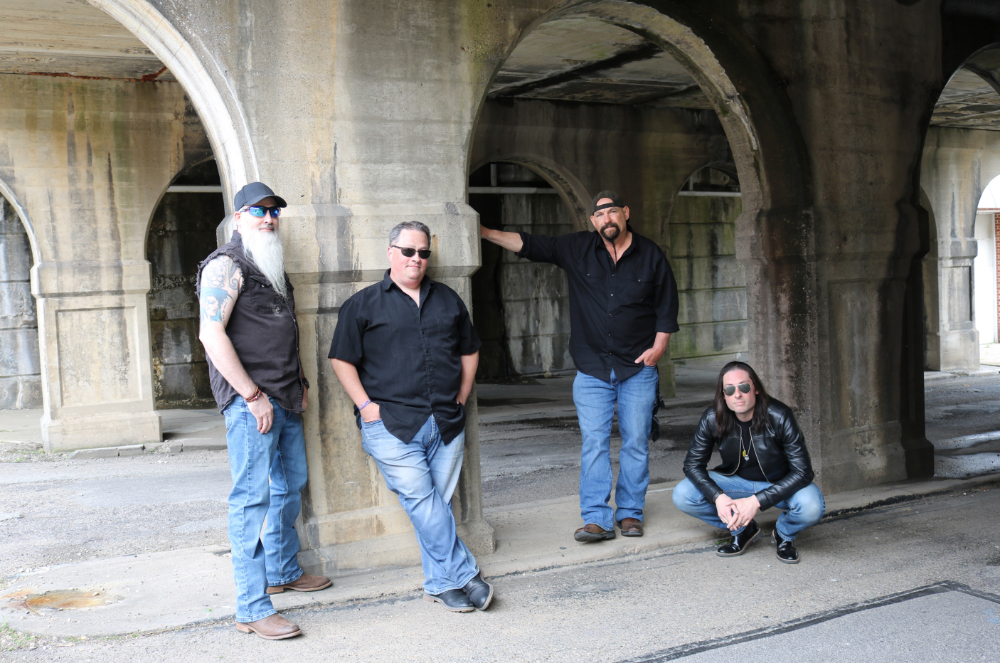
Few independent bands embody the working-class spirit quite like Noble Hops. Built on countless nights onstage, miles of highway, blue-collar experience, and a fierce commitment to doing things on their own terms, the Western Pennsylvania rock outfit has steadily developed a loyal following that frontman Utah Burgess affectionately calls the “Hop Heads.” Between an extensive touring schedule, multiple Josie Music Awards nominations, and the growing response to songs like “Music Man,” Noble Hops continues to prove that longevity in independent music has less to do with chasing fame than showing up, doing the work, and believing you belong on any stage. We caught up with Burgess to talk about life on the road, his years championing independent musicians, lessons learned in the steel mills, brotherhood within the band, and what authenticity means when opportunities begin knocking.
- Noble Hops has spent the past year playing an impressive number of shows across multiple states. Has all that time onstage changed the way you write songs or what you look for when deciding whether a new song really works?
Utah Burgess: It has a lot of impact on the songs we play, primarily because we are often playing in front of people we don’t know, and they may or may not have heard of us before. So, to get a positive reaction on what basically amounts to a “cold call” is very rewarding. It can help put a lot of attitude behind our songs.
- You’ve spent nearly 15 years hosting The Grass Roots Show and advocating for independent musicians. After almost 800 episodes, what have independent artists taught you about perseverance that you’ve carried into Noble Hops?
Utah Burgess: I’ve seen artists come and go, and some even come again. So the perseverance aspect directly tied to the artists themselves isn’t really something that’s grabbed me, but the consistency and quality of the artists in our local music scene together has shown me that we have a very thriving and enduring music scene in Western PA, and that our scene can stand with anyone on any stage.
I’ve tried to adopt that mindset with Noble Hops—that we belong anywhere with anyone else.
- “Music Man” celebrates musicians who keep going without fame or fortune. Now that you’ve had some distance from the release, have listeners shared stories with you that made you realize the song meant something different—or something bigger—than you originally intended?
Utah Burgess: Interesting question, but I’d say for the most part the feedback we have received has been in line with the song’s protagonistic approach. It’s fast become one of our more popular songs because of the relatable human element to it.
The “Music Man” is not the only person who gets up each morning, puts their boots on, and goes out and does it again. And although his legacy may be in song, for others it may be their kids or grandkids, or something they built, painted, or passed down.
- Noble Hops has received multiple Josie Music Awards nominations over the past two years. You’ve said that chasing recognition has never been your motivation, so how do you reconcile receiving that recognition with your determination to keep the focus on the music itself?
Utah Burgess: LOL. Low expectations. If we win something, great. I mean, I think our songs are as worthy as anything else I’ve heard that has won. It’s all subjective, right?
We’ve already won in many other ways, especially with our very rabid and ever-growing fan base. Hop Heads drive us more than anything else.
- You’ve worked steel-mill shifts, booked venues, promoted other musicians, hosted radio, written songs, and spent countless nights performing. Which of those experiences has had the greatest influence on the Utah Burgess who walks onto a stage today?
Utah Burgess: Working in the mills, without a doubt. I’ve worked in dozens of them across this great country. I’ve met a lot of different folks, different viewpoints and perspectives.
From the flatlands of Nebraska, where the winter wind can literally shear you in half as it rolls across the plains, to the bitter cold coming off the Great Lakes in the Detroit and Chicago areas, to river towns, inner cities, and rural farmlands, I’ve been exposed to a good bit.
- There’s a strong sense of brotherhood in Noble Hops, but keeping any band together through extensive touring, personal challenges, and changing circumstances takes work. What have Tony Villella, Johnny “Sleeves” Costa, and Brad Hurlburt taught you about being part of a band rather than simply leading one?
Utah Burgess: Trust.
- Your songs can move from humor and barroom rock and roll to darker subjects and serious social observations. Is there anything you haven’t written about yet because you haven’t figured out the right way to approach it?
Utah Burgess: I had to lean back and think on this one, as I’ve touched on many subjects. I’d say, though, that the one I’ve struggled with the most is being stabbed in the back, whether it was intentional or not.
- You’ve repeatedly emphasized authenticity and being “Me For Me.” At this stage of your career, what does staying authentic actually require—and are there opportunities you would still turn down if accepting them meant compromising what Noble Hops represents?
Utah Burgess: It requires strict adherence to your core principles. I’ve already turned down things that I feel compromise who and what Noble Hops represents.
I do think it depends on the scale of those things as well, and whether I can look myself in the mirror afterward—that steers a lot of it. You can’t say one thing while doing another. At least I can’t.
For Noble Hops, authenticity doesn’t appear to be a marketing phrase or a carefully constructed image. It is rooted in the places Burgess has worked, the people he has met, the musicians he has supported, and the bandmates and fans who have shared the journey with him. Whether Noble Hops is playing to longtime Hop Heads or facing a room full of strangers hearing the band for the first time, that same philosophy remains intact: show up, mean what you say, trust the people beside you, and never act as though you don’t belong. After years of steel mills, radio broadcasts, long drives, crowded stages, and songs written from lived experience, Noble Hops continues moving forward on its own terms—and for Burgess, being able to look in the mirror afterward may still be the most important measure of success.