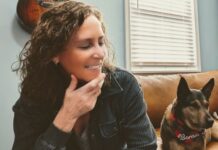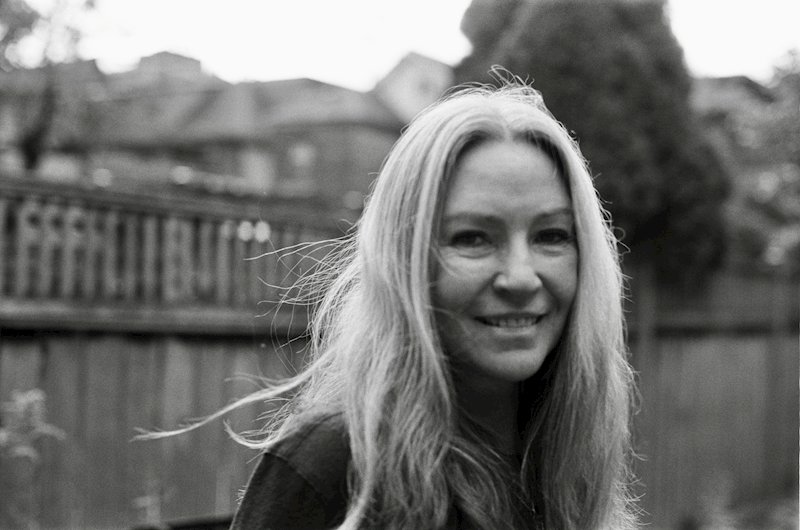
Suzanne Jarvie, a Toronto-based singer-songwriter renowned for transforming profound personal loss into evocative, genre-transcending narratives, has established herself as a compelling voice in folk and Americana through critically acclaimed albums such as Spiral Road (2014) and In the Clear (2019), the former nominated for Best Concept Album at the Independent Music Awards and the latter earning the Colleen Peterson Songwriting Award. Her third album, mother’s day—set for release on February 20, 2026, via Wolfe Island Records in North America and May 15, 2026, via Continental Record Services in Europe—delves into themes of grief, rage, acceptance, and mysticism, blending piano-driven compositions with symbolic imagery inspired by literature like Watership Down and historical events, produced by Hugh Christopher Brown and Jason Mercer with contributions from family and collaborators. Drawing parallels to PJ Harvey, Joni Mitchell, and Patti Smith, this work represents a bold meditation on motherhood, trauma, and renewal. In the subsequent discussion, Jarvie addresses her artistic progression, the conceptual intricacies of this release, and her prospective undertakings.
- Your musical journey commenced spontaneously with Spiral Roadfollowing your son’s accident, evolving through subsequent albums to incorporate increasingly impressionistic and mystical elements. How has this trajectory, informed by personal adversity and a lack of prior songwriting experience, refined your integration of folk roots with experimental textures?
The trajectory, or change from then to now, isn’t something entirely conscious. You move on from whatever was happening at the time that inspired your writing to new experiences, new textures and emotional landscapes. The journey continues insofar as I am still dealing with ever shifting aspects of loss, but I have changed and so the music changes.getting to a place of surrender and acceptance feels more spacious and peaceful, lending itself to more impressionistic and experimental sounds.
- Transitioning from guitar-centric compositions to incorporating piano in five tracks on mother’s dayhighlights your classical training. In what manner has this instrumental shift facilitated your exploration of subconscious and dream-like themes across your body of work?
I studied classical guitar for 3-4 years in my late teens. However there is something about the grid structure of the fret board that makes it harder for me to be impressionistic. Piano was my first instrument and I returned to classical study for a number of years through my 20s. It’s linear and unfolded. It’s so easy to run around in open watery lonely lines that lend themselves to dreamlike writing. In and out of chords with no contour lines. Everything feels deconstructed on the piano, laid out…the black and white keys like stepping stones. I drifted back to it and found more freedom and experimentation there.

- mother’s day emerges from a phase of grieving intertwined with anger and depression, manifesting in songs that confront unresolved realities and chaos. What guided the album’s narrative arc toward acceptance through surrender, particularly in tracks like “Temporary Emissary” as a tribute to your daughter Claire?
The narrative arc of the album reflects my own road towards radical acceptance. When terrible things happen to people you love, you want to fix, save, control. As a mother I did that for years but it was killing me and I had to change. The songs reflect that repeatedly, and some things can’t be resolved. Or the only resolution is to accept there’s no resolution. At least not the one I wanted. Claire is my youngest and was the most removed from my older son’s accident. My journey raising her was different and felt very new. Many memories of watching her grow up crept into temporary emissary. Also, there’s nothing like having a child to remind you of time and how fast it passes. Bringers of hope and reminders of transience. Everyone is a temporary emissary.
- The album’s symbolism, including references to Watership Down‘s rabbits and the Black Rabbit of Inle, permeates both lyrics and cover art by Kima Lenghan. How did these mythological motifs enhance the thematic interplay of predation, survival, and transformation in pieces such as “Honeycomb” and “Polonium”?
My experience of loss made me feel like a prey animal. Am I being stalked by some invisible malice etc. But that’s a story I tell myself. It’s just life, full of hardships of infinite variety. I love stories and storytelling. Richard Adams used the archetypal heroic journey to spin a great tale of flight, risk, leadership, courage and communal survival. The rabbits learn to survive because of each other. Adams created a rabbit language and mythology and at times the action stops and the rabbits tell each other mythic stories. The most powerful of these is when the prince of rabbits journeys to the underworld to bargain with the black rabbit of Inle, the angel of death, for the lives of his rabbits. The black rabbit, whose eyes are red with a light that gives no light, dwells in a cold stone burrow where his own silent shadowy army manages and maintains all the methods by which rabbits may die. The black rabbit speaks of an endless line of mothers, offering him their lives for their kittens. But there is no bargain, for what is, is what must be. This may be a story, but it is made of truth. The rabbits find a new home, where the great meeting place at the centre of the warren is called the ‘honeycomb’. Like a womb. In my song honeycomb, I’m singing about fear, encounters with mortality, corruption, and finding sanctuary after war. I sing a story inspired by a story within a story. Do you see the ripples? Polonium is also about death, more directly. The assassination of Alex Litvinenko, a former Russia KGB defector. Agents of Putin travelled to London with polonium 210, a radioactive isotope, which they put into a pot of tea used to poison him. He was dead in 3 weeks. State sponsored first degree murder. The crime preoccupied my lawyer brain, musically I was inspired by the pain it caused to his wife and son. and such methodical evil.
- Family involvement, with daughters Sara Jarvie Clark and Claire Alden providing backing vocals, adds a layer of intimacy to mother’s day. How did their contributions influence the emotional resonance of tracks addressing parental struggles and substance use disorders, like “40%” and “Caterpillar”?
It’s great to sing with family. We blend well together. But also, the girls participated in the catharsis of making art about our shared experience of trauma and finding meaning through artistic expression. It helps the family healing process. particularly on honeycomb and 40%. You release your experience in art. It helps to let go.
- The music video for “Caterpillar,” synchronized with footage from Jan van Ijken’s Becoming, celebrates life’s genesis amid lament. What considerations shaped this visual collaboration to mirror the song’s exploration of divine creation and personal helplessness?
The film itself is so elemental and life affirming. This is when love started for me – the primal state at conception, this awe inspiring process at work in the body. The song is a lament but it’s also about change and healing. At times the newt is confined, then twitching and writhing to break out and be born. I felt that way about my son. Beautiful, confined, needing to grow and change and break out. but stuck. I think the film highlights the helplessness because it shows what I can’t control, what I want for him in the last few frames, emergence and to find and live his purpose.
- With mother’s daypoised for staggered international release, what promotional approaches are you contemplating to engage global audiences, potentially through multimedia interpretations or thematic extensions that amplify its messages of hope and recovery?
I want to make more videos in the next few months, some before the european release For polonium, mother’s day, 40% and honeycomb. My plan is to continue making videos that are less traditional for artists in my genre. things that capture my themes. I’d like to do some visualizers. I would love to include some visual media in my shows and do a series on instagram where I talk about the album art, literature and storytelling and how it influences my songwriting. Maybe some shorts on Watership Down.
- Beyond this album, what new compositional avenues or partnerships are you exploring, such as further piano-led works or interdisciplinary projects that continue to blend mysticism, personal mythology, and societal critiques?
Hard to think too far ahead. I have a number of new songs ready to go. I have a plan for a bluegrass record, but I also have songs that might work in a folk rock record. We’ll just have to see!