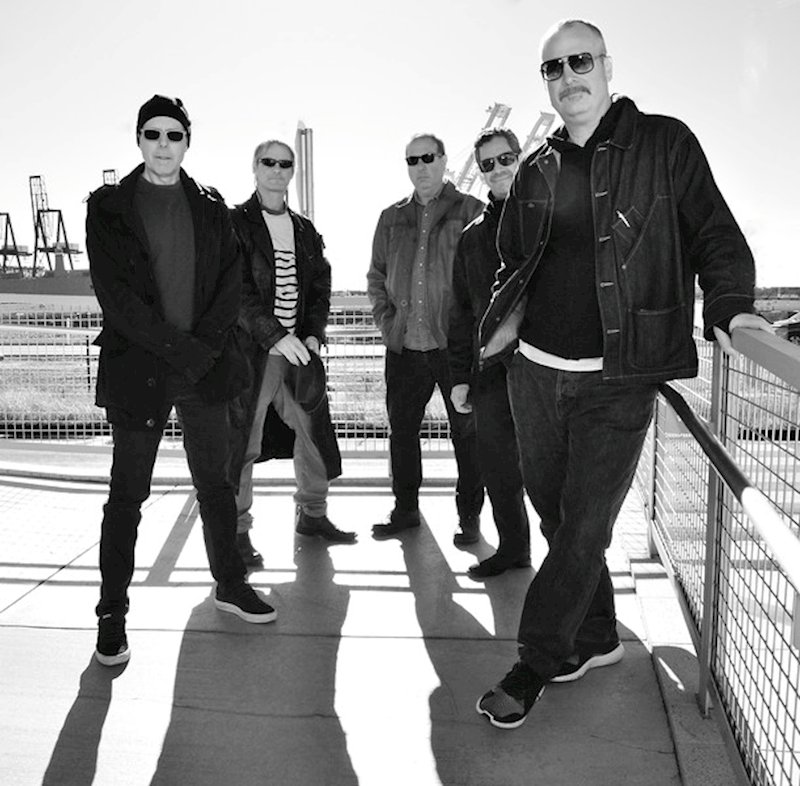
Six albums deep and still impossible to pin down — that’s Idiot Grins in a nutshell. The Oakland, California rock and soul outfit return with “Golf Cart Life”, released April 6th, 2026, and it’s as wide, wild, and defiantly unclassifiable as anything they’ve put out across a catalogue stretching back to 2012. Rock and roll, psychedelia, Americana, R&B, cinematic soul — all of it present and accounted for, worn with the band’s signature devilish glee. From Stax-inspired soul to a reinterpretation of a 1959 country-gospel album to a #3 digital radio hit, Idiot Grins have never once done the expected thing. “Golf Cart Life” continues that proud tradition. We sat down with the band to talk about the new record, the journey, and what keeps the creative engine running after all these years.

- “Golf Cart Life” is your sixth album and it spans rock and roll, psychedelia, Americana, R&B, and soul — seemingly all at once. At this point in the band’s life, is the genre-hopping a deliberate creative choice, or does it just reflect the honest range of what Idiot Grins naturally are?
A lot of reviewers mention the number of genres we “explore.” To be honest, we don’t ever set out to have a rockabilly number, a reggae number, and then a power ballad, etc. We all have been listening to lots of music our entire lives, so the way we play any particular song is an expression of who we are – the songs themselves really dictate how they are played. It’s hard to explain, but when John and I write a song, or if Mike or Evan come up with one, the songs seem predestined to come out the way they end up. For example, on this record, take Evan’s song Lizzie. I guarantee you if you heard it the first time he played it for us, you’d just know it was going to be a country/bluegrass type song. So now it’s genre-hopping. To be fair, Evan played it to us on a mandolin, so he might have tipped the scales.
- The album opens with “Hell No” — described as organically grown from a single member’s seed — and closes with “The End of Everything”, a campfire singalong ghost story. How intentional was that arc from defiance to something quieter and more ghostly, and how did you approach sequencing this record?
I think we approached sequencing by moods, trying to come up with a natural sounding flow. But it’s so entirely subjective that eventually you just have to make a decision and go with it. End of Everything was last primarily because it was written and recorded after the album was basically finished and the sequence pretty much decided. In fact, John had to be pretty much begged to come back to the studio to sing it. The rest of us recorded it without him and I sang a scratch track – in effect daring him to let an Idiot Grins song come out with my awful singing. It worked – he wasn’t about to let that happen! And, of course, it is last because it’s the End of Everything.
- “Riff 24” is described as simple rock and roll that’s just more enjoyable to play and listen to than complicated rock — and it’s also apparently a song about RFK, his mom, and his son. That’s a fascinating combination. How did those two things — the simplicity of the riff and the weight of the subject — end up in the same song?
That description came from Evan, the bass player. I guess he’s right. That riff was the first thing I played when I was trying out a new Telecaster a couple of years ago. Forgot about it until we started writing this album, and then remembered it might make a good song. There were completely different lyrics right up until the night we recorded the vocals. I’m pretty sure that was the day RFK, Jr. was announced as the new HHS Secretary. I started thinking about what an iconic hero his father was, how devasted his mom must have been with all the tragedy in her family, and how disgusting it would be to deny basic health care to children. That’s what that song is about. And there’s a line about Kristi Noem’s cosplay outfits.
- Your 2020 album “Thoughts & Prayers” was a full reinterpretation of the Louvin Brothers’ 1959 country-gospel record “Satan is Real” — one of the more unexpected creative swings in recent indie rock history. What possessed you to take that on, and what did that project teach you about your own range as a band?
The truth is that we had just released State of Health, which had a nice run and what we consider to be a hit song for a nowhere indie band (Get Busy Dying). We were pretty worn out by that and not ready to face writing an entirely new album. I thought it would be fun to try a cover album, thinking it would occupy us for a short period while we wrote some new songs. For some reason, I became fixated on Satan is Real. The other guys thought I was out of my mind. I’m grateful they went along with it, but I suspect they wouldn’t have if they knew how hard it was going to be. I think it was worth it, both because of the material and because of the growth. I may be the only one.
- “State of Health” remains arguably your most critically acclaimed record, with “Get Busy Dying” hitting the Top 10 on digital radio and praise from HuffPost, Blogcritics, and Seattle PI. Looking back at that album now — does its reception still surprise you, and how much did that moment shape where the band went next?
First and foremost, the Byrd Sisters are amazing people and performers, and their contribution was a revelation that took our songs places we could never go without them. This was also our second album with horns, which was a continuing delight and inspiration. We also brought in an incredible pedal steel player for a couple of songs. We’re quite proud of that record. I think at the end of that album, though, we felt like we had gone as far as we could go with outside musicians. Anyway, it was fun to experience that world where session players are routine, but it was time to dial it back. Hounds of Mess Around still had horns, and our friend Patty Spiglanin threw in some oohs and aahs with Evan, but not on every song. The current album, Golf Card Life, is just us and Johnny Bamont (sax) on a few songs. That’s our frame of mind right now.
- “Hounds of Mess Around” saw “Not Reggae” reach #3 on the Digital Radio Tracker Independent chart — and now “Golf Cart Life” arrives hot on its heels. Does commercial momentum change the way you approach making a record, or does Idiot Grins simply make whatever feels right regardless of outside expectations?
Digital Radio hits are good for the ego, but they are definitely not commercial successes. I guarantee you outside expectations never enter into anything we write or play. We are five guys who have been friends for decades who live to play music and hope to keep doing it as long as we can
- Six albums, fourteen years, and a catalogue that refuses to repeat itself. What does the road ahead look like for Idiot Grins — and is there a sound, a theme, or a creative territory you haven’t explored yet that’s quietly calling to you?
There’s that genre hopping question again! We’ve already started recording the next album – 5 songs pretty close to done. They sound like us.